

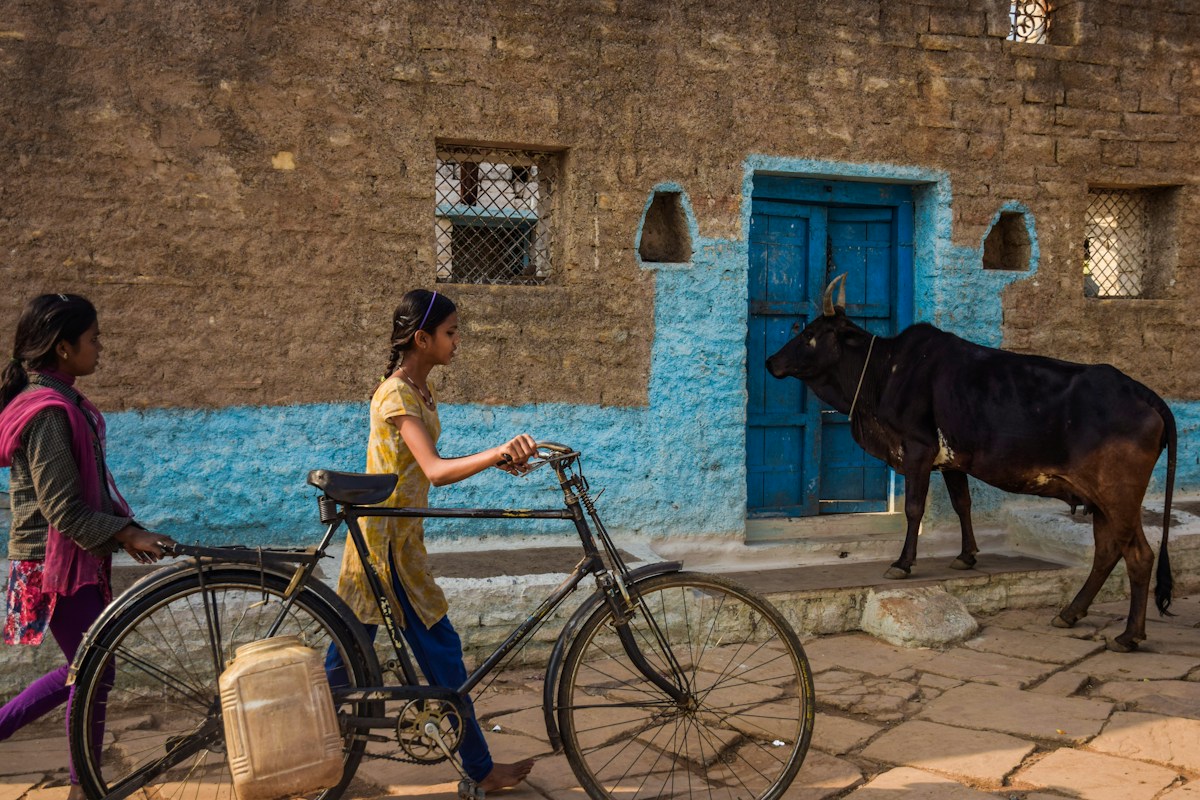
The Indian banking landscape underwent a historic structural paradigm shift on August 28, 2014, when the Ministry of Finance and the Department of Financial Services (DFS) launched the Pradhan Mantri Jan-Dhan Yojana (PMJDY). For decades following independence, access to formal banking institutions remained an elite privilege largely confined to urban centers and salaried classes, leaving nearly half of the nation’s households excluded from the formal financial perimeter. Vulnerable populations, agricultural laborers, street vendors, and rural households were left entirely dependent on unregulated informal credit networks and local moneylenders charging usurious interest rates ranging from 36 percent to over 100 percent per annum. By conceiving PMJDY as a National Mission on Financial Inclusion, the Government of India sought to dismantle these historic structural barriers, replacing systemic exclusion with universal, affordable, and dignified banking access for every household across the nation.
Over the past decade of continuous implementation, PMJDY has expanded at an unprecedented velocity, evolving into the world’s most extensive financial inclusion initiative. Official data published by the Department of Financial Services reveals that the scheme has successfully mobilized over 52 crore (520 million) bank accounts, accumulating an extraordinary deposit corpus exceeding Rs 2.3 lakh crore (Rs 2.3 trillion). Far from remaining dormant repositories, these accounts reflect deep and enduring community participation: more than 55 percent of all Jan Dhan account holders are women, and approximately 67 percent of the accounts operate in rural and semi-urban banking catchments. This demographic reach demonstrates how PMJDY has permanently altered the socioeconomic fabric of rural India, granting hundreds of millions of women their first independent, legally recognized economic identity and formal store of wealth.
The technical foundation powering this financial inclusion revolution is the world-renowned JAM Trinity, linking Jan Dhan bank accounts, the 12-digit biometric Aadhaar identity system, and universal mobile telecommunications connectivity. By integrating Jan Dhan accounts directly with the Aadhaar Payment Bridge System (APBS) managed by the National Payments Corporation of India (NPCI), the Indian state created an incorruptible, end-to-end digital highway for welfare disbursements. Today, central and state government ministries route hundreds of billions of rupees in welfare subsidies, agricultural support, scholarship grants, and emergency relief directly into beneficiaries’ accounts. This direct fiscal plumbing has eliminated exploitative intermediaries, ghost beneficiaries, and administrative leakage, delivering unprecedented transparency to public finance management in India.
To extract the full suite of socioeconomic entitlements embedded within this initiative, account holders and banking consumers must understand the specialized statutory protections and financial benefits governing Jan Dhan accounts. Many citizens remain unaware that their PMJDY account confers statutory zero-balance immunity under Reserve Bank of India (RBI) mandates, free accidental insurance coverage up to Rs 2 Lakh via their RuPay debit card, an overdraft credit line up to Rs 10,000, and automatic eligibility for subsidized micro-insurance and pension schemes. This comprehensive 2026 master guide examines the operational architecture of PMJDY. Across twelve detailed analytical sections, we decode the six core pillars of financial inclusion, examine regulatory safeguards against minimum balance penalties, detail the mandatory 90-day RuPay transaction rule, walk through branch and Bank Mitra opening protocols, outline procedures for converting commercial accounts to Jan Dhan, and provide step-by-step instructions for troubleshooting account dormancy. Official scheme guidelines and administrative statistics can be explored further on the official Pradhan Mantri Jan-Dhan Yojana Portal and the Department of Financial Services repository.
The Core Architecture of PMJDY: Six Pillars of the National Financial Inclusion Mission
The enduring success of the Pradhan Mantri Jan-Dhan Yojana rests upon a meticulously structured, six-pillar institutional architecture designed by the Ministry of Finance to address every dimension of financial vulnerability. When the national mission was conceptualized in 2014, policymakers recognized that financial exclusion was not merely a problem of physical bank branch scarcity, but a complex web of high documentation hurdles, punitive fee structures, lack of basic financial literacy, absence of formal credit histories, and complete exposure to catastrophic health and livelihood shocks. To systematically dismantle these barriers, PMJDY was launched with six interrelated operational pillars executing in phased sequence across both rural and urban India.
The first pillar established universal access to banking facilities by geographically mapping the entire country into Sub-Service Areas (SSAs). Each SSA comprised a cluster of villages encompassing 1,000 to 1,500 households, with a strict policy mandate ensuring that every citizen could access a formal banking touchpoint within a comfortable walking distance of 5 kilometers. The second pillar mandated the universal opening of basic savings bank deposit accounts for every unbanked household, bundled with a zero-balance facility, an indigenous RuPay debit card, and an emergency overdraft facility upon satisfactory operation. The third pillar institutionalized financial literacy programmes across rural branches and dedicated Financial Literacy Centres (FLCs), educating first-time account holders on basic budgeting, electronic payment methods, mobile PIN safety, and the perils of informal debt traps.
The fourth pillar created a dedicated Credit Guarantee Fund (CGF), administered through the National Credit Guarantee Trustee Company (NCGTC), to backstop and mitigate default risks associated with micro-overdraft facilities extended to Jan Dhan account holders. The fifth pillar introduced micro-insurance integration, creating a direct delivery channel for affordable social security schemes protecting economically vulnerable families against sudden mortality and disabling accidents. The sixth and final pillar established institutional access to unorganized sector pension programs, most notably the Atal Pension Yojana, guaranteeing defined, dignified monthly retirement income for informal wage earners, smallholder farmers, and domestic workers.
In 2018, the Government executed a strategic policy transition, evolving the mission from PMJDY 1.0 to PMJDY 2.0. The focal doctrine shifted decisively from ‘coverage of every household’ to ‘coverage of every unbanked adult’. This conceptual recalibration had profound social ramifications, particularly for gender equity. Under the household model, accounts were frequently opened in the name of the male family patriarch, leaving adult women economically invisible. Shifting the mandate to every individual adult resulted in a dramatic surge in female financial inclusion, bringing hundreds of millions of homemakers, agricultural workers, and self-help group members into formal banking. PMJDY 2.0 also augmented core incentives by doubling the accidental insurance cover on new RuPay cards to Rs 2 Lakh and elevating the maximum overdraft limit to Rs 10,000, cementing PMJDY as the bedrock of India’s inclusive welfare architecture.
Zero Minimum Balance Advantage: Eliminating Penalties and Negative Balances
One of the most transformative consumer protections delivered by the PMJDY framework is the statutory elimination of minimum balance requirements and maintenance fines. In conventional commercial banking, maintaining a regular savings account requires depositors to sustain a Monthly Average Balance (MAB) or Average Monthly Balance (AMB), typically ranging between Rs 2,000 and Rs 5,000 in rural or semi-urban branches, and climbing to Rs 10,000 or Rs 25,000 in metro centres. When low-income depositors suffer seasonal cash crunches or emergency expenses that pull their balances below these thresholds, commercial banks systematically levy non-maintenance penalties ranging from Rs 100 to Rs 600 per month plus 18 percent Goods and Services Tax (GST). For struggling daily wage earners, these recurring penalties historically wiped out their modest savings, fostering deep institutional distrust and driving vulnerable citizens back into the cash economy.
Jan Dhan accounts operate under a completely different regulatory standard codified by the Reserve Bank of India in its Master Direction on Basic Savings Bank Deposit Accounts (BSBDA). Pursuant to RBI circulars DBOD.No.Leg.BC.35/09.07.005/2012-13 and FIDD.GSSD.CO.BC.No.09/09.01.003/2019-20, PMJDY accounts are categorized as specialized BSBDA facilities that carry an absolute zero minimum balance requirement. A customer can open a Jan Dhan account with zero initial cash deposit and maintain a zero balance indefinitely without incurring a single rupee in fines, ledger maintenance fees, or non-maintenance surcharges. This statutory immunity ensures that depositors never have to fear that their hard-earned money will be consumed by automated banking fees during periods of financial distress.
Equally critical is the regulatory ban on savings accounts slipping into a negative balance. Under RBI circular DBOD.No.Dir.BC.53/13.10.00/2014-15, scheduled commercial banks and regional rural lenders are strictly prohibited from allowing any savings account balance to become negative as a result of penal charges. Prior to this regulatory intervention, banks routinely permitted automated service charge deductions to push zero-balance accounts into negative territory, effectively transforming impoverished depositors into unwitting debtors. Under current RBI directives, the moment an account balance reaches zero, all automated fee debits must immediately cease. A Jan Dhan account balance can never drop below Rs 0.00 due to administrative fees, safeguarding account holders from predatory institutional debt traps.
In addition to zero-balance security, the RBI BSBDA framework guarantees Jan Dhan holders a robust package of free essential banking services. Account holders enjoy unlimited cash deposits at bank branches and automated Cash Deposit Machines (CDMs) without value caps or processing fees. They are entitled to a minimum of four free cash withdrawals per calendar month across the bank’s own ATMs, other bank ATMs, and physical branch teller counters. Furthermore, banks are mandated to provide free passbook issuance, free monthly account statement generation, and free processing of incoming electronic fund transfers, including Direct Benefit Transfer (DBT), National Electronic Funds Transfer (NEFT), and Unified Payments Interface (UPI) credits. These binding consumer protections can be verified on the official Reserve Bank of India institutional portal.
RuPay Debit Card and Built-In Accidental Insurance Coverage
Every individual opening a PMJDY account is issued an indigenous RuPay Classic Debit Card, developed and operated by the National Payments Corporation of India (NPCI). The issuance of the RuPay card serves a twin objective: it democratizes electronic financial access by equipping first-time account holders with digital transacting power, while simultaneously embedding a cost-free social security safety net in the form of built-in accidental death and permanent disability insurance. Unlike international debit cards that charge annual card maintenance fees ranging from Rs 150 to Rs 500 plus GST, the basic PMJDY RuPay card is issued completely free of charge, with zero annual maintenance fees levied for the standard card lifecycle.
The insurance coverage embedded within the PMJDY RuPay card has evolved significantly across the mission’s operational phases. Under the original 2014 framework, all Jan Dhan accounts opened between August 28, 2014, and August 27, 2018, received built-in accidental insurance coverage of Rs 1 Lakh (Rs 100,000). To bolster this social safety net, the Union Government substantially upgraded the scheme parameters under PMJDY 2.0. For all new PMJDY accounts opened on or after August 28, 2018, the complimentary accidental insurance cover was doubled to Rs 2 Lakh (Rs 200,000) for accidental death and permanent total disability (such as the loss of both eyes, both hands, or both feet). In cases of permanent partial disability (such as the irrevocable loss of sight in one eye or the loss of one hand or foot), the insurance provides a payout of Rs 1 Lakh. The entire insurance premium is funded by NPCI, imposing zero financial liability on the cardholder.
To maintain the validity of this complimentary insurance cover, account holders must strictly satisfy the mandatory 90-day transaction activity clause. Under NPCI RuPay insurance guidelines, a claim is admissible only if the cardholder executed at least one successful customer-induced financial or non-financial transaction within 90 days immediately preceding the date of the accident. Qualifying transactions include cash withdrawals or balance inquiries at any bank ATM, point-of-sale (POS) merchant card swipes, e-commerce online purchases, micro-ATM cash withdrawals or biometric transactions at a Business Correspondent (Bank Mitra) kiosk, and Aadhaar-enabled Payment System (AePS) operations. Bank-induced debits or credits, such as annual interest credits, system charges, or automated subsidy transfers, do not qualify as customer-induced activity. This clause underscores the critical importance of regular, active card utilization.
In the tragic event of an accidental fatality or permanent disability, the nominee or legal heir must adhere to a standardized, time-sensitive claim procedure. The insurance claim must be formally intimated and submitted to the bank branch where the Jan Dhan account is maintained within 90 days from the date of the accident. The claim dossier must include the official RuPay insurance claim form, an attested copy of the police First Information Report (FIR) or Panchnama, the post-mortem examination report (in death cases), the death certificate issued by municipal authorities, a certified disability certificate from a government medical board (for disability claims), self-attested copies of the deceased’s Aadhaar card and RuPay card, and a bank statement verifying the successful qualifying transaction within the preceding 90-day window. Sponsoring banks verify the records and submit the file to NPCI’s designated underwriting insurance provider for swift settlement directly into the nominee’s bank account. Operational details on card benefits are accessible at the National Payments Corporation of India portal.
The Rs 10,000 Overdraft (OD) Facility Explained: Eligibility, Limits, and Interest
The Overdraft (OD) facility bundled with PMJDY accounts functions as a crucial microcredit lifeline, shielding vulnerable households from exploitative local moneylenders during sudden liquidity emergencies. In traditional retail banking, an overdraft facility is an exclusive credit privilege extended only to high-net-worth salaried individuals, professional corporations, or commercial entities maintaining substantial collateral or flawless credit scores. PMJDY revolutionized microfinance by institutionalizing an accessible overdraft line for ordinary depositors who possess no physical collateral or established formal credit histories. Under the updated PMJDY 2.0 directives, the maximum overdraft ceiling was formally elevated from its initial limit of Rs 5,000 to Rs 10,000, substantially expanding the financial cushion available to low-income families.
Securing the PMJDY overdraft requires satisfying specific regulatory prerequisites designed to establish financial reliability. The primary eligibility criteria mandate that the Jan Dhan account must have completed a minimum of six months of satisfactory operational history. Satisfactory operation is demonstrated through regular account activity, including periodic deposits, frequent withdrawal transactions, active RuPay card usage, and consistent routing of Direct Benefit Transfer (DBT) welfare subsidies. Furthermore, the account must be fully Aadhaar-seeded, with mobile banking or SMS alerts linked to the depositor’s verified phone number. Under government guidelines, the overdraft privilege is restricted to one eligible earning adult per household, with statutory preference and priority granted to the woman of the family, recognizing women as the primary anchors of household financial discipline.
A major operational milestone in the overdraft policy is the provision of an unconditional overdraft of up to Rs 2,000. For accounts demonstrating six months of steady, unblemished operation, banks are instructed to grant an immediate, hassle-free overdraft credit line up to Rs 2,000 without requiring any formal loan appraisal, income documentation, or collateral verification. If the depositor requires an enhanced overdraft limit between Rs 2,001 and the statutory ceiling of Rs 10,000, the bank branch manager conducts a simplified credit evaluation. This assessment reviews total account turnover, the volume and frequency of welfare credits over the preceding twelve months, and repayment history on any prior micro-borrowings. Additionally, PMJDY 2.0 expanded the upper age eligibility bracket from 18 to 60 years to 18 to 65 years, enabling senior citizens, rural elders, and aging agricultural workers to access formal emergency credit.
The financial mechanics of the Jan Dhan overdraft are exceptionally borrower-friendly compared to unregulated market alternatives. The interest rate charged on utilized overdraft funds is strictly regulated and capped by the Reserve Bank at the bank’s Marginal Cost of Funds based Lending Rate (MCLR) or Repo-linked benchmark rate plus a modest spread of 2 percent per annum. In practice, this keeps the annualized borrowing cost between 8.5 percent and 11 percent, standing in stark contrast to private moneylenders who extract interest rates exceeding 36 to 60 percent. Interest is levied strictly on the daily utilized balance for the exact duration the account remains in debit, rather than on the total sanctioned limit. When an account holder receives a DBT subsidy or deposits cash, the incoming funds automatically reduce the outstanding overdraft balance, minimizing interest accumulation. Timely repayment of overdraft draws generates positive credit records with bureaus like CIBIL and Experian, building a formal credit profile that unlocks larger commercial loans, including collateral-free Pradhan Mantri Mudra Yojana (PMMY) Shishu loans up to Rs 50,000.
Direct Benefit Transfer (DBT) Hub: Integration with Aadhaar Payment Bridge System (APBS)
The integration of Jan Dhan accounts with India’s Direct Benefit Transfer (DBT) architecture represents the single most profound administrative modernization in the history of the Indian welfare state. Prior to this technological consolidation, welfare programs suffered from massive bureaucratic friction, chronic disbursement delays, duplicate records, and substantial fiscal leakages. Beneficiaries frequently had to travel dozens of kilometers to administrative tehsils or block development offices, waiting for physical cash handouts or bearer cheques that were routinely compromised by intermediaries demanding unauthorized commissions. PMJDY provided the universal banking foundation that transformed DBT from an aspirational policy concept into an airtight, real-time fiscal reality.
At the center of this welfare delivery mechanism is the Aadhaar Payment Bridge System (APBS), an advanced payment processing infrastructure designed and maintained by the National Payments Corporation of India. Under the APBS framework, government departments initiating welfare disbursements do not need to collect, store, or manually update individual bank account numbers or branch-specific IFSC codes. Instead, government disbursement engines create digital payment files containing only the beneficiary’s 12-digit Aadhaar number and the sanction amount. When these files are uploaded to the APBS clearinghouse, the system queries the central NPCI Aadhaar Mapper database, automatically identifies the beneficiary’s active, Aadhaar-seeded bank account, and routes the funds instantaneously into their Jan Dhan account through the National Automated Clearing House (NACH) network.
Today, over 300 central and state welfare programs utilize Jan Dhan accounts as their primary disbursement highway. Chief among these is the Pradhan Mantri Kisan Samman Nidhi (PM-KISAN), which delivers an annual income support of Rs 6,000 in three equal installments of Rs 2,000 directly to more than 11 crore farming families. Other critical schemes anchored to Jan Dhan accounts include the PAHAL (DBTL) scheme for liquefied petroleum gas (LPG) cylinder subsidies, wage disbursements under the Mahatma Gandhi National Rural Employment Guarantee Act (MGNREGA), national scholarships for scheduled caste, scheduled tribe, and minority students via the National Scholarship Portal (NSP), social welfare pensions under the National Social Assistance Programme (NSAP), and maternity cash incentives under Pradhan Mantri Matru Vandana Yojana (PMMVY). During the COVID-19 pandemic, this exact infrastructure enabled the central government to disburse ex-gratia relief of Rs 1,500 in three monthly tranches of Rs 500 to over 20 crore female Jan Dhan account holders with zero friction.
To ensure uninterrupted receipt of government welfare disbursements, account holders must ensure their Jan Dhan account remains properly seeded with Aadhaar and mapped for DBT routing. It is vital to recognize the technical distinction between Aadhaar linking and Aadhaar seeding. While linking merely connects an Aadhaar number to an account for KYC verification purposes, seeding designates that specific account within the NPCI mapper as the primary recipient hub for DBT disbursements. An individual can link their Aadhaar to multiple bank accounts, but only one bank account can be actively seeded in the NPCI mapper for DBT reception at any given time. Depositors can verify their current DBT seeding status by logging into the UIDAI citizen portal, checking the NPCI mapper status at their home branch, or dialing the USSD service code *99*99*1# from their registered mobile phone. Administrative directives on welfare routing can be referenced at the PMJDY Scheme Portal.
Eligibility Criteria and Documentation for Opening a PMJDY Account
The eligibility and onboarding framework for the Pradhan Mantri Jan-Dhan Yojana was deliberately engineered to be universally inclusive, stripping away the complex bureaucratic prerequisites that historically locked marginalized communities out of the banking sector. Under official Ministry of Finance directives, any citizen of India who does not possess a basic bank account is eligible to open a PMJDY account at any commercial, rural, or cooperative banking institution across the country. Furthermore, individuals who already maintain a regular commercial savings account are permitted to convert their existing account into a zero-balance Jan Dhan account to enjoy the full suite of scheme privileges, ensuring that financial inclusion is treated as a universal right rather than a restricted welfare handout.
A defining feature of PMJDY eligibility is its progressive age threshold. Any individual aged 10 years and above is statutorily eligible to open an independent savings account under the scheme. For minors between the ages of 10 and 18, the account can be operated independently for basic cash deposits and withdrawals, fostering early financial discipline, budgeting habits, and digital literacy. However, for specialized credit features such as the Rs 10,000 overdraft facility and social security insurance enrollments, the statutory minimum age requirement remains 18 years. Minors’ accounts operate under prudent daily transaction limits established by individual bank boards until the minor attains legal majority at age 18, whereupon standard adult operational parameters apply automatically.
Documentation protocols for opening a standard, fully operational PMJDY account are governed by the Reserve Bank of India’s Master Direction on Know Your Customer (KYC). Under these regulations, an applicant must submit any one of the six designated Officially Valid Documents (OVDs) to verify both identity and residential address. The recognized OVDs comprise the Aadhaar Card, Permanent Account Number (PAN) Card or Form 60/61 in lieu of PAN, Voter Identity Card issued by the Election Commission of India, valid Indian Passport, Driving Licence, and the Job Card issued by the National Rural Employment Guarantee Act (NREGA) duly signed by an authorized State Government officer. When an applicant presents an Aadhaar card with an updated residential address, no secondary documentation is required, enabling instantaneous biometric e-KYC account generation.
Recognizing that millions of migratory workers, street vendors, and homeless individuals may lack any form of Officially Valid Documents, the Reserve Bank instituted a specialized simplified onboarding channel known as the Small Account (BSBDA-Small). Under RBI KYC Master Direction guidelines, an individual who does not possess an OVD can open a Jan Dhan Small Account simply by presenting a self-attested passport-sized photograph and executing a signature or thumb impression in the presence of an authorized bank official. Small accounts provide immediate banking access and a free RuPay debit card, but operate under defined statutory ceilings to mitigate anti-money laundering risks. The aggregate balance cannot exceed Rs 50,000, monthly withdrawals cannot exceed Rs 10,000, and annual credits cannot exceed Rs 1,00,000. Small accounts remain valid for an initial period of 12 months, which can be extended for an additional 12 months if the account holder presents documentary proof of having applied for an Officially Valid Document, ensuring that unbanked citizens have a clear, supportive pathway toward full financial citizenship.
Where and How to Open a Jan Dhan Account: Bank Branches and Business Correspondent (Bank Mitra) Network
Opening a Pradhan Mantri Jan-Dhan Yojana account is designed to be frictionless, decentralized, and accessible through multiple physical and digital delivery channels spanning the entire length and breadth of India. Prospective depositors can open a Jan Dhan account at any branch of a Public Sector Bank, including institutions such as the State Bank of India (SBI), Punjab National Bank (PNB), Bank of Baroda (BOB), Canara Bank, and Union Bank of India. Furthermore, all major private scheduled commercial banks, such as HDFC Bank, ICICI Bank, Axis Bank, and Kotak Mahindra Bank, alongside Regional Rural Banks (RRBs) like Aryavart Bank, Baroda UP Bank, and Kerala Gramin Bank, are legally mandated to offer PMJDY onboarding without discrimination or fee barriers.
While brick-and-mortar bank branches provide reliable onboarding, the true vanguard of the PMJDY distribution revolution is the nationwide network of more than 1.2 lakh Business Correspondents, popularly known as Bank Mitras. Bank Mitras are local entrepreneurs, grocery store operators, women self-help group leaders, or Common Service Centre (CSC) operators trained and authorized by sponsoring banks to deliver doorstep banking services in remote rural villages, tribal belts, and urban slums. Equipped with handheld biometric Micro-ATMs, thermal receipt printers, and wireless tablet terminals connected to core banking servers, Bank Mitras function as mobile micro-branches, enabling villagers to open accounts, deposit cash, execute withdrawals, and check balances without spending time or money traveling to distant bank branches.
The step-by-step procedure for opening a Jan Dhan account at a physical bank branch is straightforward:
- Locate and Visit the Nearest Touchpoint: Visit any authorized public sector bank, private commercial bank, regional rural bank branch, or Bank Mitra customer service point.
- Procure the PMJDY Application Form: Obtain the standardized, bilingual PMJDY Account Opening Form (Form 1), which is available free of charge in English, Hindi, and regional vernacular languages.
- Fill in Personal and Demographic Details: Complete the application form by furnishing personal particulars, including applicant full name, date of birth, father or spouse name, permanent and current residential address, occupation, annual household income, and mobile number.
- Specify Nominee Information: Carefully fill in the statutory nomination section, designating a trusted family member or legal heir who will be entitled to account balances and RuPay accidental insurance proceeds in the event of unforeseen demise.
- Attach Necessary KYC Enclosures: Affix two recent passport-sized photographs and attach self-attested photocopies of your Officially Valid Document (such as an Aadhaar Card and PAN card or Form 60). Carry original documents for verification.
- Complete Biometric Authentication: At the branch or Bank Mitra kiosk, execute digital e-KYC by scanning your fingerprint or iris on the UIDAI-certified biometric terminal.
- Receive Account Credentials and Welcome Kit: Upon successful core banking system validation, the branch or Bank Mitra immediately generates your unique bank account number, customer relationship number (CIF), and delivers your official bank passbook along with an unembossed RuPay Classic Debit Card welcome kit.
When opening an account through a Bank Mitra kiosk, the process is even faster and entirely paperless. The Bank Mitra enters the applicant’s 12-digit Aadhaar number into the micro-ATM terminal, initiating an instantaneous biometric query against UIDAI databases. The terminal verifies the applicant’s identity, retrieves their official address, and instantly populates the digital account opening application on the sponsoring bank’s core banking platform. Within minutes, the system issues a formal account confirmation SMS, prints a physical paper transaction receipt, and initiates the dispatch of a personalized RuPay debit card to the depositor’s residential address. This remarkable technological convergence has successfully eliminated bureaucratic gatekeeping, transforming the opening of a bank account into a dignified, ten-minute community interaction.
Converting an Existing Savings Account to a PMJDY Jan Dhan Account
A substantial number of Indian banking customers opened regular commercial savings accounts years ago, only to find themselves perpetually penalized by escalating Monthly Average Balance (MAB) requirements, high debit card annual maintenance fees, and service surcharges. Many of these depositors are unaware that they do not need to abandon their established banking relationships or close their accounts to escape these recurring charges. Under binding Reserve Bank of India regulations governing Basic Savings Bank Deposit Accounts, any existing retail savings customer possesses the legal right to convert their conventional commercial savings account into a zero-balance PMJDY Jan Dhan account at their home branch without incurring conversion charges.
The motivation to convert a regular savings account to a Jan Dhan account is rooted in powerful financial incentives. Converting an account immediately eliminates all minimum balance obligations, protecting the account holder from non-maintenance penalties of Rs 100 to Rs 600 plus GST whenever their balance drops. Furthermore, conversion grants the depositor a free RuPay Classic debit card with zero annual card fees, built-in Rs 2 Lakh accidental insurance cover, and eligibility for the Rs 10,000 emergency overdraft facility upon six months of satisfactory operations. For gig workers, seasonal agricultural laborers, students, pensioners, and small retail traders experiencing volatile cash flows, converting to a PMJDY account provides absolute peace of mind and complete shelter from predatory administrative fines.
To execute a seamless account conversion, the account holder must complete a structured, branch-level procedure:
- Visit the Domicile Home Branch: Approach the customer service desk at the specific bank branch where your active savings account is currently maintained.
- Request the BSBDA/PMJDY Conversion Application: Submit a formal written request or fill out the bank’s standardized application form for converting a standard savings bank account into a Basic Savings Bank Deposit Account / PMJDY account.
- Complete Re-KYC Documentation: Provide fresh, self-attested photocopies of your Aadhaar card and PAN card (or Form 60), accompanied by two passport-sized photographs, to ensure complete compliance with updated Reserve Bank KYC norms.
- Surrender Existing Commercial Debit Cards: Hand over any active commercial debit cards (such as Visa Gold, Mastercard Titanium, or RuPay Platinum cards) linked to the account. Because commercial debit cards carry recurring annual maintenance charges, they must be cancelled and surrendered as a statutory precondition for BSBDA migration.
- Apply for a PMJDY RuPay Classic Card: Submit a requisition form for the issuance of a complimentary PMJDY RuPay Classic Debit Card to access the embedded Rs 2 Lakh accidental insurance coverage.
- Verify Branch Processing: The branch operations officer verifies the application, updates the account categorization code in the bank’s core banking software (such as Finacle or BaNCS), and confirms the conversion within 3 to 7 working days.
A critical advantage of this conversion process is that your foundational banking credentials remain completely unaffected. Your original 11-digit, 14-digit, or 16-digit bank account number, your unique Customer Identification File (CIF) number, and your branch Indian Financial System Code (IFSC) remain 100 percent identical. Existing standing instructions for utility bills, loan EMI deductions, systematic investment plans, and Direct Benefit Transfer (DBT) linkages continue operating without interruption. Customers can verify the accuracy of their branch details, MICR codes, and active IFSC codes using specialized verification tools on ifsc.co before submitting their conversion documentation.
Social Security Insurance Schemes Linked to Jan Dhan: PMSBY, PMJJBY, and APY
On May 9, 2015, the Government of India introduced the historic Jan Suraksha (Social Security) initiative, establishing a comprehensive social safety net for vulnerable citizens by linking three transformative micro-insurance and pension schemes directly to Jan Dhan and basic savings bank accounts. Prior to this intervention, formal life insurance, accidental disability coverage, and organized retirement pensions were luxuries enjoyed almost exclusively by formal sector employees and affluent urban classes. The vast majority of India’s workforce, comprising over 40 crore unorganized laborers, farmhands, artisans, and micro-entrepreneurs, had zero financial protection against disability, sudden premature death, or destitution in old age. By utilizing Jan Dhan accounts as the automated deduction and settlement platform, Jan Suraksha democratized social security across India.
The first pillar of this social security triad is the Pradhan Mantri Suraksha Bima Yojana (PMSBY), an affordable accidental death and disability insurance policy. Available to all Jan Dhan and savings account holders between the ages of 18 and 70, PMSBY provides an accidental death or permanent total disability coverage of Rs 2 Lakh (Rs 200,000), and permanent partial disability coverage of Rs 1 Lakh. In exchange for this substantial financial protection, the annual premium is an astonishingly low Rs 20 per annum (revised from its introductory rate of Rs 12). This nominal sum is automatically debited in a single annual installment from the subscriber’s Jan Dhan account between May 25 and May 31. PMSBY delivers indispensable protection for high-risk workers, including drivers, construction laborers, factory hands, and agricultural workers exposed to daily occupational hazards.
The second pillar is the Pradhan Mantri Jeevan Jyoti Bima Yojana (PMJJBY), a term life insurance policy offering pure life risk cover. Open to all bank account holders between the ages of 18 and 50 (with coverage extending up to age 55 provided continuous renewal is maintained), PMJJBY pays an unconditional death benefit of Rs 2 Lakh (Rs 200,000) to the insured’s designated nominee upon death due to any cause, whether natural, medical, or accidental. The policy requires no medical examination, health checkups, or complex underwriting questionnaires. The annual premium of Rs 436 per annum (revised from the initial Rs 330) is auto-debited annually from the linked Jan Dhan account. By delivering Rs 2 Lakh in immediate liquid liquidity to families following the loss of a breadwinner, PMJJBY has prevented millions of vulnerable households from falling into acute destitution.
The third pillar is the Atal Pension Yojana (APY), a flagship retirement security scheme administered by the Pension Fund Regulatory and Development Authority (PFRDA). Open to all Indian citizens aged 18 to 40 holding a savings or Jan Dhan account, APY addresses the acute lack of formal retirement security across India’s unorganized sector. Subscribers choose a guaranteed minimum monthly pension of Rs 1,000, Rs 2,000, Rs 3,000, Rs 4,000, or Rs 5,000, which commences upon reaching age 60 and continues for life. The required monthly contribution is determined strictly by the subscriber’s entry age; for example, an 18-year-old subscriber contributes just Rs 210 per month to secure a guaranteed lifetime pension of Rs 5,000 per month. Upon the subscriber’s demise, the identical monthly pension continues to the surviving spouse for life, and upon the demise of both, the accumulated pension wealth corpus (up to Rs 8.5 Lakh) is returned entirely to the designated nominee. Automated monthly debits from the linked Jan Dhan account ensure effortless, lifelong pension accumulation.
Transaction Limits, Withdrawal Rules, and Restrictions on PMJDY Small Accounts
A critical area of practical importance for banking consumers is understanding the operational distinctions between a standard, fully verified PMJDY account and a PMJDY Small Account. While both variants share the core privileges of zero minimum balance requirements, free passbooks, and access to DBT welfare transfers, they operate under vastly different regulatory regimes regarding transaction volumes, balance ceilings, and withdrawal rules. These operational parameters were established by the Reserve Bank of India to balance the dual objectives of maximizing grassroots financial inclusion while strictly safeguarding the integrity of the banking system against money laundering, terror financing, and financial fraud.
For an account holder who opens a standard PMJDY account by presenting valid Officially Valid Documents (such as an Aadhaar Card and PAN card), the account functions as a full-fledged Basic Savings Bank Deposit Account (BSBDA). Under RBI Master Directions, there is absolutely no upper ceiling on the maximum balance or deposit amount that can be maintained in a full-KYC PMJDY account. Depositors can accumulate savings, receive large agricultural payments, or hold substantial business revenues without fear of automated account freezes. In terms of cash withdrawals, account holders are entitled to a minimum of four free withdrawals per month across bank branches and ATMs. While banks may levy modest charges for withdrawals beyond the mandatory four free monthly transactions, inward electronic credits through UPI, NEFT, IMPS, and DBT remain completely unlimited and cost-free.
In sharp contrast, Jan Dhan Small Accounts, opened under simplified KYC rules without Officially Valid Documents, are subject to stringent statutory caps codified under Rule 2(fb) of the Prevention of Money-Laundering (Maintenance of Records) Rules. Specifically, a Small Account is governed by four non-negotiable operational boundaries:
- Maximum Balance Ceiling: The aggregate balance in the account must not exceed Rs 50,000 at any point in time. If an incoming transfer causes the balance to cross Rs 50,000, the bank’s core banking system will reject the credit.
- Monthly Withdrawal Limit: The total sum of all cash withdrawals and outward fund transfers cannot exceed Rs 10,000 in a single calendar month.
- Annual Aggregate Credit Limit: The total value of all credits and deposits across the financial year (from April 1 to March 31) cannot exceed Rs 1,00,000 (Rs 1 Lakh). Once the cumulative annual deposits hit this ceiling, no further deposits are permitted until the next financial year.
- Foreign Remittance Prohibition: Small accounts are strictly prohibited from receiving foreign inward remittances. Any overseas wire transfer directed to a Small Account is rejected automatically.
Furthermore, Small Accounts carry a strict temporal validity window. Under RBI directives, a Small Account remains valid for an initial period of twelve months from the date of opening. If the account holder fails to submit an Officially Valid Document within this 12-month window, all outgoing transactions are suspended. However, if the account holder presents documentary evidence showing that they have formally applied for an OVD (such as an official Aadhaar enrollment acknowledgement slip or Voter ID application receipt), the bank grants an additional 12-month extension, extending the total grace period to 24 months. To permanently lift these transaction caps, the account holder simply needs to visit the home branch, complete full biometric e-KYC authentication, and transition the account into a regular, unrestricted PMJDY facility. Official regulatory mandates governing these accounts can be reviewed at the Reserve Bank of India repository.
Digital Banking, Mobile Banking, and UPI Capabilities for Jan Dhan Holders
A common misconception regarding the Pradhan Mantri Jan-Dhan Yojana is that it is primarily an offline, cash-oriented banking mechanism designed exclusively for physical branch and micro-ATM interactions. In reality, PMJDY accounts are fully equipped digital powerhouses connected directly to India’s cutting-edge electronic payment infrastructure. A Jan Dhan depositor enjoys the exact same digital payment capabilities as an affluent commercial banking customer, including full integration with the Unified Payments Interface (UPI), immediate mobile banking, SMS alert services, and interoperable biometric transacting through the Aadhaar-enabled Payment System (AePS).
The integration of Jan Dhan accounts with UPI has fundamentally democratized merchant and peer-to-peer payments across rural India. Upon receiving their RuPay Classic debit card, an account holder can activate their card and generate an ATM PIN at any automated teller machine or Bank Mitra terminal. Once the card is active, the depositor can download any popular UPI application, such as BHIM, Google Pay, PhonePe, Paytm, or mobile banking apps from sponsoring lenders like SBI YONO or PNB ONE. By entering the last six digits of their RuPay card and its expiry date, the customer establishes a secure 4-digit or 6-digit UPI PIN, enabling instant, 24/7 fund transfers, mobile recharges, utility bill payments, and QR code merchant payments directly from their zero-balance account.
In an even more transformative digital breakthrough engineered by the National Payments Corporation of India, Jan Dhan account holders can now complete UPI onboarding without possessing a physical plastic debit card. Through Aadhaar-based UPI onboarding, an account holder can initiate UPI registration simply by entering their 12-digit Aadhaar number. The system dispatches an authentication One-Time Password (OTP) to the mobile number registered with UIDAI, alongside a bank-specific OTP sent to the number registered with the bank. Upon entering both OTPs, the user successfully sets their UPI PIN, unlocking full digital transacting autonomy. This innovation has proven invaluable for hundreds of millions of rural citizens who may have misplaced their physical RuPay card or are awaiting card reissuance.
To ensure that digital banking does not exclude citizens without smartphones or internet connectivity, the PMJDY ecosystem supports offline mobile banking through the National Unified USSD Platform (NUUP). By simply dialing the shortcode *99# from any basic feature phone linked to their bank account, the customer accesses an interactive vernacular menu operating over standard cellular signaling channels without internet access. Through the *99# service, users can query their account balance, request mini-statements, and execute interbank fund transfers using the recipient’s mobile number, UPI ID, or bank account and IFSC details. Alongside these digital conveniences, banks and Financial Literacy Centres actively conduct digital hygiene campaigns, educating account holders never to disclose their OTPs, UPI PINs, or card CVVs, ensuring that grassroots digital adoption remains safe, secure, and resilient against cyber fraud.
Resolving Dormancy and Operational Issues in Jan Dhan Accounts
Despite the immense advantages offered by the PMJDY scheme, a recurring operational challenge faced by millions of account holders is account dormancy or inoperative classification. Under the Reserve Bank of India’s Master Direction on Inoperative Accounts and Unclaimed Deposits (RBI/2023-24/105 DOR.LEG.REC./2023-24), a savings bank account is formally categorized as ‘inoperative’ or ‘dormant’ if it experiences no customer-induced financial transactions for a continuous period of two years (24 months). When an account becomes dormant, the bank’s automated systems freeze outgoing debit transactions, rendering debit cards, UPI payments, and cheque withdrawals non-functional until formal reactivation procedures are completed.
It is vital to understand the precise legal distinction between customer-induced transactions and system-generated entries. Customer-induced transactions encompass deliberate activities initiated by the depositor, including cash deposits, branch withdrawals, ATM transactions, UPI transfers, NEFT/RTGS debits, or active cheque issuances. In contrast, automated system entries, such as quarterly savings interest credits, annual insurance premium deductions, or administrative service updates, do not qualify as customer-induced activity and will not prevent an account from entering dormancy. However, the Reserve Bank has issued a crucial protective directive regarding Direct Benefit Transfer (DBT) subsidies: banks are strictly prohibited from rejecting or bouncing incoming government welfare transfers simply because an account is categorized as dormant. Sponsoring banks must accept and credit all incoming DBT subsidies, ensuring that beneficiaries never lose their government entitlements during periods of account inactivity.
Reactivating a dormant Jan Dhan account is a straightforward, zero-cost statutory procedure protected by Reserve Bank mandates. Under explicit RBI directives, banks are strictly forbidden from levying any penalty fees, reactivation charges, or administrative fines for restoring an inoperative account to active status. To reactivate a dormant account, the depositor must complete the following steps:
- Visit the Home Branch: Approach the customer service desk at the bank branch where the account was originally opened.
- Submit a Written Reactivation Requisition: Provide a simple written letter or complete the bank’s standardized inoperative account reactivation form.
- Execute Fresh Re-KYC: Submit self-attested photocopies of your Aadhaar card and PAN card (or Form 60), accompanied by two recent passport-sized photographs, and present original documents for physical verification.
- Undergo Biometric Verification: Complete biometric authentication or signature verification with the branch service manager.
- Perform a Customer-Induced Transaction: Execute a token financial transaction, such as depositing a nominal sum of Rs 10 or Rs 50 at the cash counter, which automatically triggers the core banking system to reset the account status from dormant to fully active.
Beyond dormancy, account holders frequently navigate operational challenges resulting from public sector bank mergers and biometric verification failures. Over recent years, major consolidation exercises saw institutions like Syndicate Bank merged into Canara Bank, Allahabad Bank into Indian Bank, and Andhra Bank and Corporation Bank into Union Bank of India. When these mergers occurred, millions of Jan Dhan holders experienced updates to their branch IFSC codes. To maintain uninterrupted DBT welfare flows, account holders must ensure that their updated branch IFSC and account details are properly reflected in the NPCI mapper. For biometric mismatch issues at Bank Mitra micro-ATM terminals, depositors can visit an authorized Aadhaar Seva Kendra to update their biometric fingerprints and iris records, ensuring seamless doorstep banking across India. Comprehensive guidance on banking dispute resolution and regulatory compliance can be reviewed at the Reserve Bank of India portal.
To fully grasp the unique institutional positioning of the Pradhan Mantri Jan-Dhan Yojana, banking consumers must carefully evaluate how a Jan Dhan account compares against other prevalent retail savings options in India. While the Indian banking sector offers numerous specialized savings products tailored for high-net-worth individuals, young professionals, and urban salaried employees, entry-level consumers primarily encounter three primary account classifications: the PMJDY Jan Dhan Account, the Standard Basic Savings Bank Deposit Account (BSBDA), and the Traditional Commercial Regular Savings Account. Each vehicle possesses distinct statutory rights, fee structures, credit capabilities, and compliance mandates.
While both PMJDY and standard BSBDA accounts are bound by Reserve Bank directives mandating zero minimum balance maintenance and zero opening deposit requirements, the PMJDY account delivers substantial enhancements that standard BSBDA variants lack. Specifically, PMJDY accounts bundle an automated, cost-free accidental death and disability insurance policy of Rs 2 Lakh via the RuPay Classic card, alongside an institutionalized micro-overdraft credit line up to Rs 10,000 for accounts operated satisfactorily for six months. In contrast, regular commercial savings accounts at major public and private lenders demand substantial Monthly Average Balances (MAB) of Rs 2,000 to Rs 10,000, enforce high annual debit card maintenance fees, and levy punitive non-maintenance surcharges, while offering no complimentary overdraft or insurance privileges by default.
The comprehensive comparative matrix below delineates the critical operational distinctions across these three foundational banking instruments, providing clear, actionable insights for retail depositors, rural families, and small business owners seeking the optimal banking structure for their financial requirements.
| Feature / Parameter | PMJDY Jan Dhan Account | Standard BSBDA Zero Balance Account | Regular Commercial Savings Account |
|---|---|---|---|
| Minimum Balance Requirement | Strictly Rs 0 (Zero MAB); absolutely no non-maintenance penalties permitted by RBI. | Strictly Rs 0 (Zero MAB); no penal charges permitted for non-maintenance. | Mandatory Rs 2,000 to Rs 10,000 Monthly Average Balance (MAB) depending on branch tier. |
| Opening Deposit Requirement | Zero initial deposit; account can be opened without depositing any cash. | Zero initial deposit required under RBI Master Directions. | Requires initial cash opening deposit typically ranging from Rs 1,000 to Rs 10,000. |
| Accidental Insurance Coverage | Complimentary Rs 2 Lakh accidental death and disability cover via RuPay card (post-2018). | Not included by default; requires separate enrollment in third-party retail policies. | Not included; optional paid personal accident insurance covers available at customer cost. |
| Emergency Overdraft Facility | Up to Rs 10,000 overdraft (unconditional up to Rs 2,000) after 6 months of satisfactory operation. | No standard overdraft facility provided by default under general BSBDA rules. | No overdraft facility by default; requires formal personal loan or credit card underwriting. |
| Debit Card Type & Maintenance Fees | RuPay Classic Debit Card issued free; lifetime zero annual card maintenance fees. | Basic RuPay debit card issued free; zero annual card maintenance fees. | Visa, Mastercard, or RuPay Platinum; carries annual fees of Rs 150 to Rs 750 plus GST. |
| Cash Withdrawal Limits (Free per Month) | Minimum 4 free cash withdrawals per month across ATMs and branch counters. | Minimum 4 free cash withdrawals per month across ATMs and branch counters. | Typically 3 to 5 free ATM withdrawals; additional branch cash withdrawals may incur fees. |
| Cheque Book Facility | Generally not provided by default to preserve BSBDA status; issued on request with conditions. | Not provided under standard basic terms; available only on select upgraded accounts. | Provided by default; first 10 to 25 cheque leaves free per year, followed by standard per-leaf fees. |
| Deposit Ceiling (Full KYC) | Unlimited deposits and balance accumulation for fully verified KYC accounts. | Unlimited deposits and balance accumulation for fully verified KYC accounts. | Unlimited deposits and balance accumulation subject to standard income tax reporting. |
| Direct Benefit Transfer (DBT) Suitability | Optimal primary hub; natively integrated with NPCI Aadhaar Payment Bridge System. | Fully compatible with DBT routing upon Aadhaar seeding. | Compatible with DBT routing upon Aadhaar seeding, but subject to minimum balance offsets. |
| Primary Intended Use | Universal financial inclusion, DBT welfare routing, rural empowerment, and microcredit. | Basic low-cost banking for budget-conscious depositors seeking zero fees. | Full-featured commercial banking for urban professionals, corporations, and active traders. |
Frequently Asked Questions About Jan Dhan (PMJDY) Accounts
Who is eligible to open a Pradhan Mantri Jan Dhan Yojana (PMJDY) account?
Any Indian citizen residing within the national territory who does not possess a basic bank account is eligible to open a PMJDY account. The scheme features an inclusive age criterion: any individual aged 10 years and above can open and operate an independent Jan Dhan savings account. Minors aged 10 and above are legally empowered to handle basic cash deposits and withdrawals at bank counters and ATMs, fostering financial discipline from an early age. To access specialized credit features such as the Rs 10,000 overdraft facility and enroll in social security schemes like PMSBY, PMJJBY, and APY, the account holder must be at least 18 years of age. Furthermore, individuals who currently maintain a standard commercial savings account are fully entitled to convert their existing account into a zero-balance PMJDY account without charges.
Is there any minimum balance required to maintain a Jan Dhan account?
No, there is absolutely no minimum balance required to open or maintain a Pradhan Mantri Jan Dhan Yojana account. PMJDY accounts operate under the statutory framework of Basic Savings Bank Deposit Accounts (BSBDA) codified by the Reserve Bank of India. Under RBI Master Directions, banks are strictly prohibited from levying any penalty fees, ledger maintenance charges, or administrative fines if the account balance drops to zero. Depositors can maintain a balance of Rs 0.00 for indefinite periods without incurring any financial penalties. Furthermore, central bank directives strictly prohibit banks from allowing savings accounts to slip into a negative balance due to the automated levy of service charges, ensuring that vulnerable depositors are never pushed into institutional debt traps.
How can I get the Rs 10,000 overdraft facility in my Jan Dhan account?
To access the Rs 10,000 overdraft (OD) facility, the Jan Dhan account holder must satisfy specific operational benchmarks. The primary requirement is that the account must have completed at least six months of satisfactory operational history, demonstrated through regular cash deposits, frequent debit card withdrawals, and active routing of Direct Benefit Transfer (DBT) welfare subsidies. For accounts demonstrating six months of satisfactory turnover, banks grant an initial unconditional overdraft of up to Rs 2,000 without requiring formal credit appraisals or collateral. To secure the maximum overdraft limit up to Rs 10,000, the branch manager conducts a simplified credit evaluation assessing total account turnover and repayment track record. The applicant must be between 18 and 65 years of age, and only one adult member per household is eligible, with statutory priority granted to the woman of the family.
What is the accidental insurance cover provided with the PMJDY RuPay debit card?
The PMJDY RuPay Classic Debit Card provides complimentary built-in accidental death and permanent disability insurance coverage funded entirely by the National Payments Corporation of India (NPCI). For all Jan Dhan accounts opened on or after August 28, 2018, the accidental insurance cover is Rs 2 Lakh (Rs 200,000) for accidental death and permanent total disability (such as the loss of both eyes, hands, or feet). In cases of permanent partial disability (such as the loss of one eye, hand, or foot), the insurance payout is Rs 1 Lakh. For accounts opened prior to August 28, 2018, the coverage limit remains at its introductory ceiling of Rs 1 Lakh. The cardholder pays zero annual insurance premiums to maintain this policy, provided they adhere strictly to the mandatory 90-day transaction activity clause.
What is the 90-day transaction condition for claiming RuPay card insurance?
The 90-day transaction condition is a mandatory statutory prerequisite established by NPCI for the admissibility of any accidental insurance claim under the PMJDY RuPay card. Under this rule, the insurance claim is valid only if the cardholder executed at least one successful customer-induced financial or non-financial transaction within 90 days immediately preceding the date of the accident. Qualifying transactions include cash withdrawals or balance inquiries at any bank ATM, point-of-sale (POS) merchant card swipes, e-commerce purchases, transactions at a Bank Mitra micro-ATM kiosk, or Aadhaar-enabled Payment System (AePS) operations. Automated bank entries, such as interest credits or administrative fee adjustments, do not qualify. In the event of an accident, a certified bank statement proving this qualifying transaction within the preceding 90 days must be submitted alongside the claim dossier.
Can I convert my existing regular bank account into a Jan Dhan account?
Yes, any retail banking customer holding a conventional commercial savings account has the statutory right to convert their existing account into a zero-balance PMJDY Jan Dhan account. Under Reserve Bank of India BSBDA regulations, banks cannot refuse a customer’s request to transition to a basic savings format. To execute the conversion, visit your home branch, submit a written conversion request, provide fresh re-KYC documents (Aadhaar and PAN/Form 60), and surrender any active commercial debit cards that carry annual maintenance charges. The bank updates the account classification code in its core banking system within 3 to 7 working days and issues a complimentary RuPay Classic debit card. Your bank account number, customer CIF number, and branch IFSC code remain completely unchanged.
What documents are needed to open a Jan Dhan account without an Aadhaar card?
If an applicant does not possess an Aadhaar card, they can open a standard, full-featured Jan Dhan account by submitting any one of the alternative Officially Valid Documents (OVDs) recognized under RBI KYC Master Directions. These include a PAN Card (or Form 60), Voter Identity Card issued by the Election Commission of India, valid Indian Passport, Driving Licence, or an official NREGA Job Card signed by a State Government officer. If an individual possesses none of these Officially Valid Documents, they can open a Jan Dhan Small Account by submitting a self-attested passport-sized photograph and executing a signature or thumb impression before a bank official. Small accounts operate under statutory limits (Rs 50,000 maximum balance, Rs 10,000 monthly withdrawals, Rs 1,00,000 annual credits) and remain valid for 12 months, extendable to 24 months upon showing proof of application for an OVD.
Can I use UPI apps like Google Pay and PhonePe with a Jan Dhan account?
Yes, Jan Dhan account holders enjoy full access to India’s digital payment ecosystem and can effortlessly link their accounts to Unified Payments Interface (UPI) applications, including BHIM, Google Pay, PhonePe, Paytm, and bank-specific mobile applications. To register, the account holder activates their PMJDY RuPay debit card and sets up a UPI PIN using their debit card credentials. Furthermore, under NPCI guidelines, Jan Dhan account holders can utilize Aadhaar-based UPI onboarding, enabling them to establish their UPI PIN using their 12-digit Aadhaar number and OTP verification without requiring a physical plastic debit card. For non-smartphone users, basic feature phones can execute offline UPI transfers and balance inquiries by dialing the USSD service code *99# over standard cellular networks.
Are there any charges for cheque books or SMS alerts in Jan Dhan accounts?
Under Reserve Bank of India regulations governing Basic Savings Bank Deposit Accounts, essential services, including mandatory transactional SMS alerts, monthly account statements, and passbook updates, must be provided to PMJDY account holders completely free of charge. Regarding cheque books, banks are not mandated to provide a free cheque book by default, as the scheme is designed around electronic RuPay transacting. However, many banks permit account holders to request a cheque book upon request. If a customer opts for a cheque book facility, some lenders may require the account holder to maintain a nominal minimum balance or pay a nominal fee per cheque leaf, while ensuring that core BSBDA zero-balance protections remain uncompromised.
How can I reactivate an inactive or dormant Jan Dhan bank account?
A Jan Dhan account is classified as inoperative or dormant if it experiences no customer-induced transactions for a continuous period of 24 months (two years). To reactivate a dormant account, the account holder must visit their home branch and submit a written reactivation application accompanied by fresh self-attested KYC documents (photocopies of Aadhaar card and PAN card or Form 60) along with two passport-sized photographs. Under strict Reserve Bank of India mandates, banks are prohibited from charging any penalty fees, fines, or reactivation charges to restore an inoperative account. After completing biometric verification or signature authentication, the depositor executes a nominal customer-induced transaction (such as depositing Rs 10 or Rs 50), which automatically resets the core banking system and restores the account to active status.
Conclusion: Institutionalizing Financial Security for Every Indian Household
The Pradhan Mantri Jan-Dhan Yojana stands as a monumental testament to what focused institutional commitment, progressive central banking regulation, and world-class digital public infrastructure can achieve. By mobilizing over 52 crore account holders and pooling more than Rs 2.3 lakh crore in domestic savings, PMJDY has permanently shattered the historic barriers of financial exclusion that once relegated hundreds of millions of Indian citizens to the precarious margins of the informal cash economy. From street vendors in bustling metropolitan markets to smallholder farming families in remote rural hamlets, the scheme has provided every citizen with a dignified, formal repository for their savings, shielded from predatory private moneylenders and high commercial banking fees.
Beyond basic deposit mobilization, the integration of Jan Dhan accounts with the JAM Trinity and the Aadhaar Payment Bridge System has established an incorruptible, real-time fiscal highway for social welfare. By delivering direct benefit transfers, subsidized term life insurance through PMJJBY, low-cost accidental disability coverage through PMSBY, and guaranteed lifelong retirement pensions through the Atal Pension Yojana, PMJDY has constructed a robust, comprehensive social safety net across India’s vast unorganized workforce. The statutory protections codified by the Reserve Bank of India, ensuring absolute zero minimum balance requirements, freedom from non-maintenance penalties, and an emergency overdraft credit line up to Rs 10,000, empower vulnerable households to build lasting economic resilience and formal creditworthiness.
As India advances toward a digitally empowered, developed economy, the true value of a Jan Dhan account lies in active, informed financial engagement. Account holders are encouraged to maintain active transacting habits, utilize their RuPay cards regularly to preserve their Rs 2 Lakh accidental insurance coverage, adopt secure UPI payment mechanisms, and leverage their formal banking records to access productive entrepreneurial credit under initiatives like the Pradhan Mantri Mudra Yojana. For verified statutory updates, administrative circulars, and comprehensive banking directory resources, citizens can consult the official PMJDY Scheme Portal, the Reserve Bank of India repository, the Department of Financial Services, and explore branch routing codes across all scheduled lenders on ifsc.co.
