

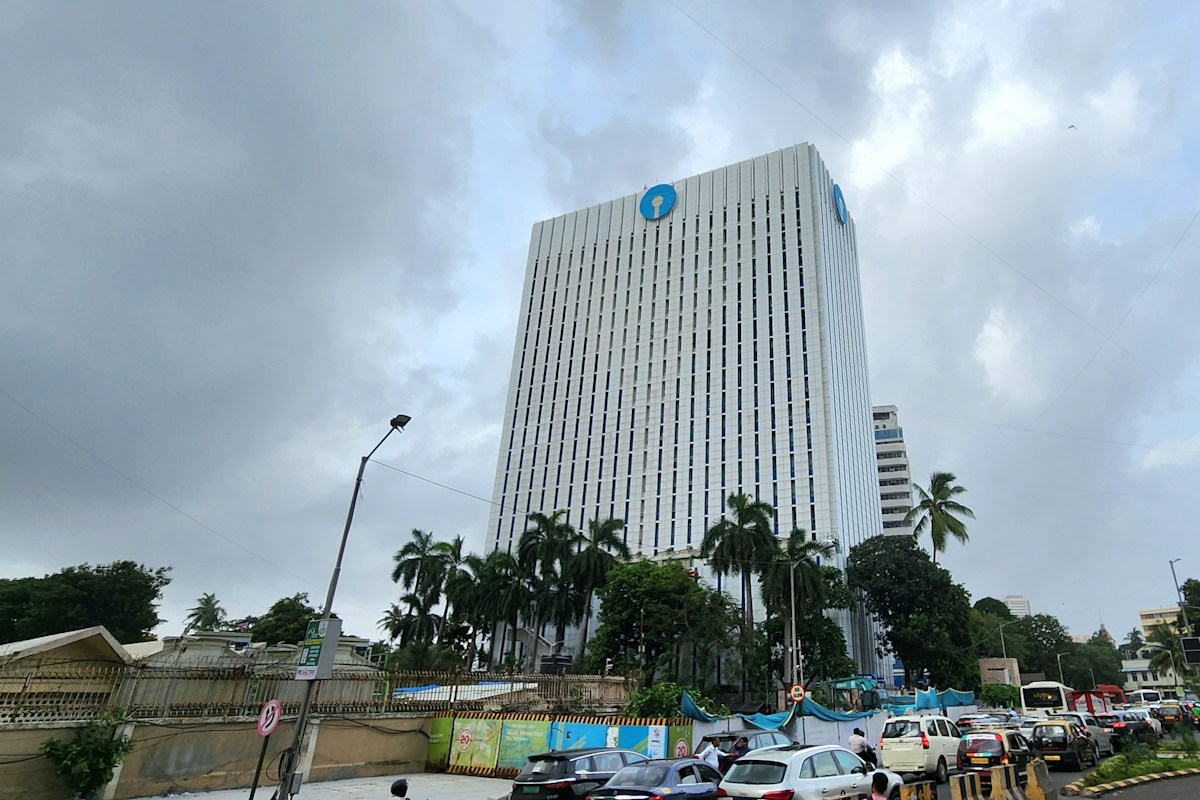
The landscape of the Indian commercial banking sector underwent a monumental structural transformation between 2017 and 2020 as the Ministry of Finance, Government of India, and the Reserve Bank of India (RBI) orchestrated an unprecedented series of mega-mergers among Public Sector Banks (PSBs). Designed to consolidate a fragmented banking framework that previously featured 27 public sector lenders into 12 capitalized, technologically modern, and globally competitive financial institutions, this reform agenda radically altered the institutional architecture of Indian finance. Guided by strategic blueprints outlined in the Narasimham Committee II and P.J. Nayak Committee reports, as well as the central government’s Enhanced Access and Service Excellence (EASE) reform agenda, the consolidation aimed to eliminate operational redundancies, build substantial capital conservation buffers, absorb non-performing assets (NPAs), and construct banking balance sheets capable of underwriting mega-infrastructure and industrial projects across the nation.
While the corporate and regulatory rationales behind these amalgamations were widely analyzed, the operational and technical realities of executing these mergers presented an unprecedented engineering challenge. Across the banking system, more than 300 million retail and corporate depositor accounts, tens of thousands of physical bank branches, and balance sheets commanding dozens of trillions of rupees had to be integrated across heterogeneous technology architectures. Behind the branch signboards and unified logos lay the monumental task of merging disparate Core Banking Solutions (CBS), consolidating account master files, deduplicating Customer Information Files (CIF), and overhauling the national interbank clearing network. This transition constituted the largest payment routing migration in the history of Indian retail banking, directly impacting how domestic electronic fund transfers are resolved every second of the business day.
At the very heart of this interbank electronic clearing network stands the Indian Financial System Code (IFSC). Governed by the Reserve Bank of India under the statutory authority of the Payment and Settlement Systems Act, 2007, the IFSC is an eleven-character alphanumeric identifier that uniquely distinguishes every physical bank branch participating in domestic electronic funds transfer networks. Whether executing a transaction through National Electronic Funds Transfer (NEFT), Real Time Gross Settlement (RTGS), or the Immediate Payment Service (IMPS) administered by the National Payments Corporation of India (NPCI), the IFSC functions as the indispensable digital routing key. When legacy institutions such as Vijaya Bank, Dena Bank, Oriental Bank of Commerce, United Bank of India, Syndicate Bank, Andhra Bank, Corporation Bank, and Allahabad Bank were merged into larger anchor institutions, their historic entity prefixes were permanently retired, requiring millions of customers to adopt entirely new routing codes.
This comprehensive operational guide delivers an authoritative analysis of the impact of bank mergers on IFSC codes for Indian banking customers in 2026. Within this exhaustive guide, you will discover the strategic background of the three merger phases, examine the complete breakdown of acquired banks and their corresponding anchor entities, unpack the algorithmic rules governing prefix conversion and branch re-numbering, explore how banks utilized parallel alias routing during the transition window, and review the final regulatory sunset dates when legacy codes were permanently decommissioned. Furthermore, this guide provides actionable, step-by-step instructions for updating recurring National Automated Clearing House (NACH) mandates, mutual fund Systematic Investment Plans (SIPs), loan Equated Monthly Installments (EMIs), corporate salary accounts, Direct Benefit Transfer (DBT) welfare schemes, Cheque Truncation System (CTS-2010) cheque books, and Income Tax e-Filing pre-validated accounts, accompanied by official verification protocols and statutory consumer compensation rights under Reserve Bank of India regulations.
Background of Mega Bank Mergers in India
The consolidation of India’s public sector banking framework was rooted in decades of economic evaluation and structural reform recommendations. In the wake of the 1991 economic liberalization, high-level policy committees, most notably the Committee on Banking Sector Reforms chaired by M. Narasimham (Narasimham Committee II in 1998), emphasized that India’s banking system suffered from excessive fragmentation, administrative inefficiencies, and inadequate capital depth. The committee recommended a tiered consolidation model featuring three or four large public sector banks capable of global operations, eight to ten national banks providing universal retail and commercial credit, and a network of specialized local or regional institutions. Despite these early insights, structural consolidation remained largely unrealized for nearly two decades due to operational complexities, trade union resistance, and technological disparities among public institutions.
By 2015, the urgency for consolidation became undeniable as Indian commercial banks confronted a massive asset quality crisis. Stressed assets, non-performing corporate credit portfolios, and inadequate loan loss provisioning eroded bank balance sheets, constraining credit growth across manufacturing, infrastructure, and small business sectors. Under the governance review initiated by the Reserve Bank of India and recommendations from the P.J. Nayak Committee in 2014, the central government recognized that recapitalizing dozens of sub-scale public sector banks individually was fiscally inefficient. The institutions required structural consolidation to build higher Common Equity Tier 1 (CET1) capital ratios under Basel III guidelines, eliminate overlapping branch overheads in identical commercial districts, achieve bulk economies of scale in IT software procurement, and modernize risk underwriting practices under unified digital governance.
The consolidation wave unfolded across three distinct, highly coordinated phases. The initial breakthrough occurred on April 1, 2017, when State Bank of India absorbed its five associate institutions, namely State Bank of Bikaner and Jaipur, State Bank of Hyderabad, State Bank of Mysore, State Bank of Patiala, and State Bank of Travancore, alongside the Bharatiya Mahila Bank. This pioneer merger consolidated approximately a quarter of the entire Indian commercial banking system under the single State Bank of India banner, establishing a financial institution ranking among the top fifty commercial banks globally and providing a foundational operational blueprint for large-scale technological migration.
Building upon the success of the State Bank of India consolidation, the central government initiated the second phase on April 1, 2019, executing India’s first tripartite public sector bank merger. In this transaction, Bank of Baroda served as the anchor institution, absorbing Vijaya Bank and Dena Bank. This strategic combination paired a well-performing southern retail institution (Vijaya Bank) and a capital-constrained western commercial bank (Dena Bank) with Bank of Baroda’s robust national and international footprint. Finally, the third and largest phase was announced by the Ministry of Finance in August 2019 and formally implemented on April 1, 2020. This mega-amalgamation unified ten public sector banks into four anchor institutions: Punjab National Bank acquired Oriental Bank of Commerce and United Bank of India; Canara Bank acquired Syndicate Bank; Union Bank of India acquired Andhra Bank and Corporation Bank; and Indian Bank acquired Allahabad Bank. Together, these transactions reduced the total count of public sector banks from 27 in 2017 to exactly 12 by 2020, reshaping the retail payment landscape forever.
Complete Breakdown of Merged Banks and Their New Anchor Banks
To comprehend the practical consequences of these consolidations on retail banking, depositors must examine the specific institutional alignments that created today’s public sector banking giants. Across the six major amalgamations, each anchor bank absorbed the branch networks, customer depositor bases, employee cadres, and technology infrastructure of its acquired entities. The following detailed breakdown examines the six consolidated banking groups, highlighting the legacy institutional codes that were retired and the new anchor prefixes that govern all branch operations today.
Bank of Baroda: Integration of Vijaya Bank and Dena Bank
Bank of Baroda served as the anchor institution in the 2019 tripartite amalgamation, absorbing Vijaya Bank and Dena Bank into an expanded universal banking franchise. Before the merger, Vijaya Bank operated under the four-character IFSC prefix VIJB, commanding deep customer loyalty and an extensive branch footprint across Karnataka, Andhra Pradesh, and southern commercial centers. Dena Bank operated under the IFSC prefix BKDB, with deep operational roots across Gujarat, Maharashtra, and western industrial belts. Following the merger, all physical branch locations of both Vijaya Bank and Dena Bank were migrated into Bank of Baroda’s corporate identity, adopting the standardized BARB prefix. The combined institution created an expansive retail and commercial network exceeding 9,500 branches, solidifying Bank of Baroda’s status as one of India’s premier public sector lenders.
Punjab National Bank: Amalgamation of Oriental Bank of Commerce and United Bank of India
Punjab National Bank expanded into India’s second-largest public sector bank on April 1, 2020, by absorbing Oriental Bank of Commerce (OBC) and United Bank of India (UBI). Prior to amalgamation, Oriental Bank of Commerce utilized the IFSC prefix ORBC, maintaining a dense network of branches across northern states including Punjab, Haryana, Delhi-NCR, and Rajasthan. United Bank of India operated under the prefix UTBI, serving as a historic financial lifeline across West Bengal, Assam, and the northeastern states. With the completion of core banking integration, both ORBC and UTBI prefixes were retired permanently in favor of Punjab National Bank’s institutional prefix PUNB. This mega-merger unified a sprawling network of over 10,000 domestic branches, combining northern commercial banking power with eastern financial reach.
Canara Bank: Absorption of Syndicate Bank
On April 1, 2020, Canara Bank completed the historic absorption of Manipal-headquartered Syndicate Bank, bringing together two of southern India’s most celebrated financial institutions. Syndicate Bank, which had built an exceptional grassroots retail and agricultural depositor base over nearly a century of service, operated under the familiar IFSC prefix SYNB. Following the consolidation, Syndicate Bank’s entire branch network was transitioned to Canara Bank’s primary entity prefix CNRB. The amalgamation created a formidable banking powerhouse with more than 10,000 physical branches, commanding market leadership across Karnataka, Tamil Nadu, Kerala, and Andhra Pradesh while maintaining a comprehensive pan-India retail footprint.
Union Bank of India: Amalgamation of Andhra Bank and Corporation Bank
Union Bank of India emerged as a consolidated national institution on April 1, 2020, following its amalgamation with Andhra Bank and Corporation Bank. Prior to this historic union, Andhra Bank operated under the IFSC prefix ANDB, maintaining an unassailable financial franchise across Andhra Pradesh and Telangana. Corporation Bank operated under the prefix CORP, commanding a prestigious commercial and SME banking reputation built from its historic headquarters in Mangaluru, Karnataka. Under the consolidated institutional framework, both ANDB and CORP prefixes were decommissioned, and all acquired branches were integrated under Union Bank of India’s universal prefix UBIN. The unified entity commands an extensive network of over 9,500 branches and a massive deposit franchise across central, southern, and western India.
Indian Bank: Amalgamation of Allahabad Bank
In another major consolidation implemented on April 1, 2020, Chennai-headquartered Indian Bank absorbed Kolkata-headquartered Allahabad Bank, the oldest joint-stock bank in India established originally in 1865. Allahabad Bank possessed an extensive physical network throughout Uttar Pradesh, Bihar, West Bengal, and northern India, operating under the institutional IFSC prefix ALLA. Indian Bank, historically anchored across southern India, operated under the prefix IDIB. Following the merger, all legacy Allahabad Bank branches were systematically mapped to Indian Bank’s IDIB prefix. This strategic partnership transformed Indian Bank into a truly pan-India financial institution with more than 6,000 physical branches, bridging northern and eastern agrarian belts with southern industrial corridors.
State Bank of India: Amalgamation of Five Associate Banks and Bharatiya Mahila Bank
The largest banking consolidation in modern Indian history took place on April 1, 2017, when State Bank of India merged five of its subsidiary associate banks alongside Bharatiya Mahila Bank into its parent operations. The associate institutions comprised State Bank of Bikaner and Jaipur (IFSC prefix SBBJ), State Bank of Hyderabad (IFSC prefix SBHY), State Bank of Mysore (IFSC prefix SBMY), State Bank of Patiala (IFSC prefix STBP), and State Bank of Travancore (IFSC prefix SBTR), along with Bharatiya Mahila Bank (IFSC prefix BMBL). All six individual entity prefixes were completely dissolved and absorbed into State Bank of India’s universal IFSC prefix SBIN. This historic consolidation established a colossal financial institution operating over 22,000 physical branches and commanding more than twenty-five percent of India’s total domestic commercial banking deposits.
Structural Changes: How Old IFSC Prefixes Were Converted to New Anchor Codes
To understand the mechanics of post-merger routing, banking customers and corporate finance professionals must examine the eleven-character architectural anatomy of the Indian Financial System Code. Established by the Reserve Bank of India under the Payment and Settlement Systems Act, 2007, every valid IFSC consists of three structurally distinct components: the initial four alphabetic characters representing the bank entity code, the fifth character reserved as a central control digit (always the numeric zero ‘0’), and the concluding six alphanumeric characters representing the specific physical branch office. When public sector banks merged, the replacement of the first four letters was straightforward, but the real mathematical complexity resided in re-engineering the concluding six branch characters.
A common misconception among depositors was that anchor banks simply substituted their own four-letter prefix in place of the legacy bank code while leaving the remaining seven characters untouched. In reality, such a simplistic substitution was mathematically impossible due to the severe hazard of branch code collisions. For example, if legacy Syndicate Bank operated a branch with the identifier code 000123 under SYNB0000123, and Canara Bank already possessed an existing heritage branch with the identical branch code 000123 under CNRB0000123, replacing ‘SYNB’ with ‘CNRB’ would produce two identical IFSC codes pointing to completely different physical branch locations in different cities. Such collisions would cause catastrophic fund misdirection across the clearing system, routing money meant for a branch in Mangaluru to an unrelated account in Lucknow.
To prevent routing collisions, each anchor bank engineered a customized algorithmic mapping standard to convert legacy branch codes into unique, collision-free anchor branch identifiers. Canara Bank, for instance, introduced an additive numerical offset for legacy Syndicate Bank branches. In many cases, Canara Bank systematically replaced the ‘SYNB’ prefix with ‘CNRB’ and converted the first two digits of the branch sequence from ’00’ to ’01’ or ’10’, ensuring that former Syndicate Bank codes (such as SYNB0003010) mapped to unique, dedicated Canara Bank codes (such as CNRB0013010). This systematic conversion ensured that no acquired branch collided with Canara Bank’s existing heritage branch directory.
Other anchor institutions deployed distinctive alphanumeric mapping schemes. Bank of Baroda integrated legacy Vijaya Bank and Dena Bank branches by assigning alphanumeric branch identifiers that preserved institutional history while ensuring uniqueness. Many former Vijaya Bank branches received new Bank of Baroda IFSC codes featuring the letters ‘VJ’ within the final six characters (such as BARB0VJBANG), while former Dena Bank branches received codes containing ‘DB’ (such as BARB0DBAHD). Union Bank of India partitioned acquired Andhra Bank and Corporation Bank branches into dedicated numerical blocks, allocating specific ranges such as UBIN08… for Andhra Bank locations and UBIN09… for Corporation Bank facilities. Punjab National Bank similarly assigned reserved numerical series to former Oriental Bank of Commerce and United Bank of India branches. These precise conversion formulas guaranteed that every merged branch in India received an entirely unique, globally validated routing identifier.
Core Banking Solution (CBS) Integration: How Banks Handled Parallel Alias Routing During the Transition Period
The physical announcement of a bank merger marks only the beginning of a complex technological journey. Behind the scenes, the true integration of merged financial institutions depends on unifying their Core Banking Solutions (CBS). Prior to amalgamation, different public sector banks operated on disparate core software platforms and differing software versions. State Bank of India and its associates utilized TCS BaNCS; Punjab National Bank, Canara Bank, and Union Bank of India operated different releases of Infosys Finacle (such as Finacle 7.x and Finacle 10.x); while other institutions maintained bespoke mainframe platforms or legacy banking databases. Harmonizing these heterogeneous systems required vast data extraction, customer information file (CIF) deduplication, ledger restructuring, and standardized account numbering protocols.
Recognizing that an abrupt overnight termination of legacy routing codes would trigger economic chaos, the Reserve Bank of India, in coordination with the National Payments Corporation of India (NPCI), authorized a structured transitional mechanism known as parallel alias routing. Under this operational protocol, anchor banks programmed their core banking middleware and interbank clearing gateways to recognize both legacy IFSC codes and newly assigned anchor IFSC codes simultaneously. This transition window, which extended between twelve and twenty-four months depending on the institution, ensured that incoming payment instructions referencing old codes were not abruptly rejected by central clearing switches.
The technical mechanics of parallel alias routing functioned through automated lookup tables embedded within the RBI Central Payment Systems (CPS) clearing switches and the anchor banks’ central payment gateways. When a remitting customer initiated an NEFT, RTGS, or IMPS transfer using an old legacy code (such as an ALLA or ORBC prefix), the central clearing house verified the code against a master alias directory. The clearing switch recognized the legacy string as an active virtual pointer linked directly to the anchor bank’s clearing participant code. Upon receiving the data packet at its enterprise gateway, the anchor bank’s translation engine automatically mapped the legacy branch code and old customer account number to the newly assigned CBS ledger account, executing the credit without requiring manual intervention by branch officers.
During this parallel routing phase, depositors experienced a seamless dual-channel environment. Customers could transact at physical branch counters, receive domestic remittances, and withdraw cash at ATMs using their legacy passbooks and debit cards. Online banking portals displayed advisory banners alerting users to their updated anchor bank IFSC codes, while transaction advice slips and electronic account statements began printing the newly assigned anchor routing details alongside legacy identifiers. This carefully managed technological buffer allowed corporate payroll departments, individual consumers, and institutional billers sufficient time to update their financial master records without suffering transaction disruptions.
The Sunset of Old IFSC Codes: When and Why Legacy Codes Were Permanently Decommissioned
While parallel alias routing provided an indispensable operational buffer during the height of core banking migration, maintaining legacy codes indefinitely was technically unsustainable, financially expensive, and operationally hazardous. Operating dual routing directories required clearing houses and commercial banks to maintain complex translation tables across every interbank gateway in India. With hundreds of millions of transactions flowing daily through NEFT, RTGS, and IMPS rails, dual-routing lookups introduced unnecessary database processing latency, increased the statistical probability of routing errors, and complicated transaction reconciliation between originating and receiving institutions.
Furthermore, the indefinite operation of obsolete bank entity codes violated statutory transparency principles established under the Payment and Settlement Systems Regulations. From a regulatory perspective, maintaining retired corporate entities on national clearing switches blurred corporate liability lines and created severe operational compliance risks. From an IT infrastructure standpoint, anchor banks could not decommission expensive legacy mainframe servers, obsolete third-party database licenses, and redundant network connections until all interbank traffic was permanently shifted to the unified core banking platform. Consequently, the Reserve Bank of India and anchor institutions established firm, non-negotiable regulatory sunset dates to decommission legacy IFSC codes permanently.
The decommissioning schedules were implemented in phases throughout 2021 as core banking migrations reached completion across each institution. Indian Bank led the transition, permanently deactivating all legacy Allahabad Bank (ALLA) IFSC codes on February 15, 2021. Bank of Baroda completed the sunset of legacy Vijaya Bank (VIJB) and Dena Bank (BKDB) IFSC codes in two structured stages, concluding final deactivations on June 30, 2021. Punjab National Bank decommissioned legacy Oriental Bank of Commerce (ORBC) and United Bank of India (UTBI) codes effective April 1, 2021, with final system cutoffs completed by July 1, 2021. Canara Bank terminated all legacy Syndicate Bank (SYNB) routing codes on June 30, 2021, while Union Bank of India permanently sunset Andhra Bank (ANDB) and Corporation Bank (CORP) prefixes on April 1, 2021.
Once these regulatory sunset dates passed, the Reserve Bank of India officially purged the obsolete codes from its Master National Clearing Directory. The operational consequences of this purge were immediate and absolute: any interbank electronic payment instruction initiated with a decommissioned legacy IFSC code was automatically rejected at the sending bank gateway or returned by the central clearing switch. Remitters who failed to update beneficiary records experienced transaction failures, returned salary credits, and disrupted automated bill payments, underscoring the vital importance of adopting the verified anchor bank codes.
Impact on Electronic Fund Transfers: NEFT, RTGS, and IMPS Routing Protocols Post-Merger
The decommissioning of legacy bank codes altered the operational mechanics of electronic fund transfers across all primary retail and commercial clearing rails in India. Although modern retail consumers often view digital banking as an instantaneous, homogeneous service, the underlying payment rails – National Electronic Funds Transfer (NEFT), Real Time Gross Settlement (RTGS), and Immediate Payment Service (IMPS) – operate under distinct architectural protocols, clearing intervals, and validation rules. Understanding how these payment rails process bank merger updates is essential for preventing payment rejections and financial delays.
National Electronic Funds Transfer (NEFT), administered directly by the Reserve Bank of India, operates on a 24x7x365 continuous basis with settlement executed in forty-eight half-hourly batches. When a remitter submits an NEFT transfer instruction, the originating commercial bank validates the entered IFSC against its local clearing routing database. If the customer enters an obsolete legacy IFSC that has been purged from the national directory, modern banking applications reject the instruction immediately at the frontend entry screen. However, if an outdated code somehow passes internal bank checks, the transaction packet is transmitted to the RBI central clearing switch, where automated verification fails against the active participant list. The RBI switch immediately generates a structured return message (such as N06 or N07 return codes), instructing the sending bank to reverse the funds back to the remitter’s ledger during the subsequent half-hourly reconciliation cycle.
Real Time Gross Settlement (RTGS), designed for high-value corporate and institutional transfers of two lakh rupees and above, functions on a continuous, individual transaction clearing basis without netting. Because RTGS instructions involve substantial liquidity, routing validation is exceptionally stringent. The RTGS gateway performs an instant, real-time query against the RBI Central Payment Systems (CPS) directory before debiting the remitter’s account. If the target IFSC references a decommissioned merger code, the transaction is rejected instantaneously at the gateway level. No funds are debited, no settlement file is generated, and the remitter receives an immediate error notification such as ‘Beneficiary Bank Branch Not Active’ or ‘Invalid RTGS Participant Code.’
Immediate Payment Service (IMPS), managed by the National Payments Corporation of India, facilitates instantaneous retail fund transfers up to five lakh rupees around the clock. IMPS relies on sub-second API handshakes between the originating bank, the NPCI central switch, and the beneficiary bank. When an IMPS transfer is initiated using Account Number and IFSC routing, the NPCI switch instantly verifies whether the IFSC exists in the active Central Directory Server (CDS). Entering an obsolete merger code causes an immediate transaction decline with standardized NPCI error codes, such as ‘M3 – Invalid IFSC’ or ’92 – Routing error towards destination bank.’ Because the payment fails instantly, no funds leave the remitter’s account, preventing long reconciliation cycles.
A critical operational hurdle for retail depositors post-merger involves beneficiary management within mobile banking applications and internet banking portals. Most commercial banking platforms do not permit users to modify the IFSC code of an existing registered payee due to security protocols designed to prevent unauthorized account tampering. If a remitter registered a friend, family member, or business vendor years ago under a legacy code (such as SYNB or VIJB), attempting to transfer funds to that saved payee profile will consistently fail. To resolve this issue, remitters must completely delete the obsolete beneficiary profile from their internet banking portal, create a new payee entry incorporating the verified anchor bank IFSC code, and complete mandatory security authentication. Remitters must also account for standard beneficiary cooling-off periods (typically thirty minutes to four hours depending on the bank) and restricted initial transfer limits during the first 24 hours of payee activation.
Updating Recurring Payment Mandates: Step-by-Step Guide for NACH, ECS, SIP, and Loan EMIs
Among all financial transactions impacted by public sector bank mergers, recurring automated payment mandates represented the greatest operational vulnerability for retail consumers. In modern Indian household finance, millions of families rely on automated debits to execute monthly Systematic Investment Plans (SIPs) in mutual funds, service Equated Monthly Installments (EMIs) for home, auto, and personal loans, pay insurance premiums to life and general insurance providers, and clear monthly credit card statements. These recurring debits operate under the regulatory umbrella of the National Automated Clearing House (NACH), a centralized clearing platform engineered by NPCI to replace the older, decentralized Electronic Clearing Service (ECS).
When anchor banks completed their core banking migrations, NPCI coordinated a centralized electronic mapping exercise to automatically transition existing NACH mandates registered under legacy bank codes to the new anchor bank clearing directories. However, despite massive technical coordination, hundreds of thousands of individual mandates failed to migrate successfully. Common causes of migration failure included alterations in core account number formatting (such as older 10-digit or 14-digit accounts being expanded into standardized 16-digit CBS numbers), customer name mismatches between legacy and anchor databases, or technical discrepancies in the digital mandate reference records. When a recurring mandate fails to resolve against an active branch IFSC, the NACH clearing engine rejects the debit instruction with return reasons such as ‘Account Closed / Transferred’ or ‘Invalid Bank / Branch Code.’
The financial and legal consequences of a failed recurring mandate are severe. When a home loan or auto loan EMI bounces due to an obsolete IFSC, commercial lenders and Non-Banking Financial Companies (NBFCs) automatically levy hefty mandate return charges, typically ranging from Rs 250 to Rs 500 plus applicable Goods and Services Tax (GST). Concurrently, the customer’s own bank may levy an inward bounce penalty. More damagingly, commercial lenders report the unpaid installment as a payment default to credit information companies, including TransUnion CIBIL, Experian, and CRIF High Mark. A single reported default can slash an individual’s CIBIL credit score by forty to seventy points, impairing their borrowing capacity for years. In the case of mutual fund SIPs, three consecutive mandate execution failures prompt Asset Management Companies (AMCs) to automatically terminate the investment mandate, disrupting long-term wealth accumulation.
To protect your financial standing, every depositor who held an account with a merged bank must execute a proactive mandate audit and update protocol. First, compile an exhaustive inventory of all active recurring debits by reviewing twelve months of bank statements, identifying every standing instruction, loan EMI, insurance premium, utility auto-debit, and mutual fund SIP. Second, verify your updated anchor bank IFSC and confirmed core account number through your latest physical passbook or net banking profile. Third, log in to the respective investor or borrower portals (such as CAMS or KFintech for mutual funds, or your lending bank’s customer servicing portal) and navigate to the mandate management section. Fourth, submit a fresh e-Mandate request utilizing NPCI’s digital mandate rails, authenticating the updated mandate instantly via Net Banking credentials, Debit Card details, or Aadhaar OTP. Finally, track the issuance of your new Unique Mandate Reference Number (UMRN) to verify active status before the next billing cycle arrives.
Salary Accounts and Direct Benefit Transfers (DBT): Updating Bank Details on Employer Portals and Government Schemes
Corporate payroll distributions and government welfare disbursements represent two vital monetary lifelines that experienced significant friction following bank consolidations. In the corporate sector, enterprise payroll systems rely on bulk electronic clearing files generated by Enterprise Resource Planning (ERP) software such as SAP, Oracle HCM, greytHR, or Darwinbox. When corporate treasury departments upload monthly salary disbursement batches to their corporate banking portals, the remitting bank’s gateway processes the payment instruction against national routing directories. If an employee’s salary record still contains a legacy pre-merger IFSC, the clearing switch rejects the individual transaction line item, causing salary credits to bounce while colleagues receive their remuneration on schedule.
To prevent salary disbursement delays, corporate employees must formally update their banking credentials within their employer’s Human Resource Management System (HRMS). Employees should obtain an updated physical passbook or download a digital account statement from their anchor bank showing the current anchor IFSC code, full branch address, and standardized CBS account number. Along with a newly issued CTS-2010 cancelled cheque bearing the employee’s printed name and anchor bank logo, these documents should be submitted to the corporate HR or finance desk well in advance of the monthly payroll processing cutoff date. Corporate accounting teams must update their vendor and employee bank master directories to permanently purge legacy IFSC strings.
In the public sector and rural economy, the stakes are equally critical regarding Direct Benefit Transfer (DBT) social welfare distributions. The Government of India disburses hundreds of thousands of crores annually across vital welfare initiatives, including the Pradhan Mantri Kisan Samman Nidhi (PM-KISAN), PAHAL LPG domestic fuel subsidies, Mahatma Gandhi National Rural Employment Guarantee Act (MGNREGA) wage payments, national merit scholarships, and state-sponsored old-age pensions. These social welfare disbursements flow through two distinct clearing architectures: Account-based DBT, which routes funds directly using the beneficiary’s Account Number and IFSC; and Aadhaar-based DBT, which executes disbursements through the Aadhaar Payment Bridge System (APBS) managed by NPCI.
If a government welfare scheme utilizes Account-based DBT, entering an obsolete legacy IFSC code guarantees that the disbursement will fail at the central clearing gateway, trapping the beneficiary’s funds in reconciliation suspense files. Conversely, if the welfare program routes funds via the Aadhaar Payment Bridge System, disbursements are directed to the specific bank account mapped to the beneficiary’s 12-digit Aadhaar number in the centralized NPCI mapper database. During core banking migrations, technical synchronization errors occasionally unlinked or corrupted Aadhaar mapping records. Beneficiaries can verify their active Aadhaar-to-bank seeding status online via the official UIDAI resident portal or NPCI Bharat Aadhaar Seeding Enabler (BASE). If the mapping is inactive or points to an obsolete institution, the customer must visit their local anchor bank branch, submit an Aadhaar seeding consent form, and confirm biometric authentication to restore seamless welfare credits.
Cheque Book Validity and Replacement: Transition to Anchor Bank CTS-2010 Cheques
Physical paper clearing in India operates under the regulatory Cheque Truncation System (CTS-2010) framework established by the Reserve Bank of India under the Payment and Settlement Systems Act, 2007. Designed to replace the cumbersome physical movement of paper cheques between commercial branches, CTS involves capturing high-resolution electronic images and Magnetic Ink Character Recognition (MICR) data at the presenting bank branch and transmitting those digital packets to the drawee bank for clearing settlement. CTS-2010 standards enforce strict physical security features across every cheque leaf, including standardized paper density, anti-copy pantographs, ultraviolet security watermarks, and standardized placement of routing data.
The critical element governing paper cheque clearing is the nine-digit MICR code printed in magnetic ink across the bottom band of every leaf, positioned alongside the six-digit cheque serial number and transaction code. The nine-digit MICR code is partitioned into three distinct segments: the initial three digits represent the city code (matching the first three digits of the postal PIN code), the middle three digits represent the unique bank entity code, and the concluding three digits represent the specific physical branch code. When public sector banks merged, the three-digit bank code within the MICR line was permanently altered to reflect the anchor institution’s clearing entity number. Consequently, cheques bearing legacy bank logos, decommissioned entity names, and obsolete MICR codes became invalid for interbank clearing once transition grace periods expired.
Issuing an obsolete cheque leaf drawn on a decommissioned bank entity exposes the account holder to severe financial and legal liabilities. When an obsolete cheque is presented at a clearing house, the CTS imaging switch cannot validate the MICR routing against active participant ledgers, resulting in an immediate clearing dishonor. The presenting bank issues a Cheque Return Memo citing reasons such as ‘Cheque drawn on obsolete bank/branch’ or ‘Presentment on invalid routing code.’ Under Section 138 of the Negotiable Instruments Act, 1881, dishonoring a negotiable instrument can trigger civil litigation and criminal prosecution, exposing the drawer to potential imprisonment of up to two years, monetary fines up to twice the cheque amount, or both. Furthermore, commercial banks levy substantial cheque return penalties on both drawer and payee, compounding the financial loss.
To eliminate these hazards, depositors must securely destroy and replace all legacy cheque books. Customers should gather all unused cheque leaves bearing legacy logos (such as Syndicate Bank, Vijaya Bank, Dena Bank, Corporation Bank, Andhra Bank, Allahabad Bank, Oriental Bank of Commerce, or United Bank of India), cut across the magnetic MICR strip, and shred the leaves thoroughly. To obtain a replacement cheque book bearing the anchor bank’s updated branding, valid IFSC code, and active CTS-2010 MICR band, customers can place a request via their anchor bank’s mobile application (such as BoB World, PNB ONE, Canara ai1, Union Vyom, IndOASIS, or YONO SBI), log in to internet banking, use an on-site ATM kiosk, or visit their home branch customer service desk.
Income Tax and Financial Account Validation: Updating Bank Accounts on the e-Filing Portal
The annual processing of income tax assessments and statutory refunds represents another critical financial arena where bank merger IFSC updates are essential. The Income Tax Department, Government of India, processes all tax returns, assessment orders, and direct refund distributions through its centralized e-Filing portal (incometax.gov.in). Electronic tax refunds are disbursed directly through the State Bank of India, which operates as the designated Refund Banker for the Central Board of Direct Taxes (CBDT). Under CBDT regulatory guidelines, income tax refunds cannot be credited to an arbitrary bank account; they are transmitted exclusively to bank accounts that have undergone successful electronic pre-validation on the e-Filing portal.
Pre-validation is a rigorous, automated verification process executed between the Income Tax Department’s portal and the core banking database of the taxpayer’s bank. To achieve successful pre-validation, three critical parameters must achieve an exact match: the taxpayer’s Permanent Account Number (PAN), their full legal name as recorded in official tax records, and their active mobile telephone number. In addition, the pre-validation interface requires a valid, active IFSC code to establish the interbank clearing destination. If a taxpayer previously pre-validated an account using a legacy merger code (such as an ALLA or SYNB prefix), the system encounters a routing breakdown during automated interbank handshakes. The e-Filing portal automatically changes the account status from ‘Validated’ to ‘Validation Failed’ or ‘Restricted.’
When an assessment order approves an income tax refund for an assessee whose pre-validated account contains an obsolete IFSC, the State Bank of India Refund Banker clearing switch attempts to dispatch the funds via NEFT or RTGS. Upon encountering the decommissioned IFSC, the clearing switch rejects the payment instruction, and the transaction is flagged with the error notice ‘Refund Failed – Invalid IFSC Code / Bank Account Details Mismatch.’ The refund is returned to the tax authorities, leaving the taxpayer without their funds until manual rectification is completed on the portal.
Resolving an income tax refund failure requires a straightforward, step-by-step procedure on the official e-Filing portal. First, log in to incometax.gov.in using your PAN and secure password. Second, navigate to the user profile menu in the upper right corner and select ‘My Bank Accounts.’ Third, locate the inactive or failed bank entry and click ‘Add Bank Account’ to register your updated anchor bank credentials. Enter your exact anchor bank IFSC code, select the account type (Savings or Current), enter your standardized CBS account number, and ensure your registered mobile number matches your bank records. Fourth, submit the account for pre-validation and enable it for Electronic Verification Code (EVC) and Refund Nomination. The automated validation process typically completes within two to twenty-four hours. Finally, once the account achieves ‘Validated’ status, navigate to the ‘Services’ dropdown menu, select ‘Refund Re-issue,’ and submit a formal re-issue request selecting the newly validated anchor account.
A similar updating requirement applies to the Employees’ Provident Fund Organisation (EPFO) Unified Member Portal. Salaried employees who maintain their provident fund balances with EPFO must verify that their Know Your Customer (KYC) bank details reflect their updated anchor bank IFSC. Attempting to execute an online PF withdrawal, medical advance claim, or pension settlement against a bank account with an obsolete legacy IFSC will result in immediate claim rejection by the regional EPFO clearing office, necessitating fresh employer attestations and prolonged administrative delays.
Troubleshooting Failed Transfers: Reversal Workflows, RBI TAT Guidelines, and Customer Compensation Rights
Despite extensive public awareness campaigns, millions of interbank electronic transactions continue to encounter technical failures due to outdated beneficiary routing details. When a sender initiates an NEFT, RTGS, or IMPS transfer using a decommissioned IFSC code, understanding the mechanical lifecycle of the transaction is vital for maintaining peace of mind and expediting fund recovery. Contrary to widespread consumer panic, money dispatched towards an obsolete or nonexistent IFSC code does not vanish into digital oblivion; it enters a tightly regulated interbank reconciliation and reversal workflow governed by statutory central bank rules.
When an electronic fund transfer packet arrives at the Reserve Bank of India or NPCI central payment clearing switches with an obsolete IFSC, the routing engine queries the active national participant directory. If the destination code cannot be resolved to an active branch ledger, the receiving gateway generates an automated negative acknowledgment (NACK). The payment instruction is immediately terminated, and the funds are held in the remitting bank’s transit clearing reconciliation account. In the case of NEFT, the reversal is batched into the next scheduled half-hourly clearing window. For RTGS transfers, the rejection is executed immediately in real time, while IMPS reversals occur within minutes through automated interbank messaging protocols.
To protect Indian banking consumers from protracted liquidity traps resulting from failed electronic transactions, the Reserve Bank of India established a comprehensive regulatory framework titled ‘Harmonisation of Turn Around Time (TAT) and customer compensation for failed transactions using authorised Payment Systems’ under RBI Circular DPSS.CO.PD No.629/02.01.014/2019-20. Under these binding central bank directives, commercial banks and payment system operators are subject to strict, standardized turnaround times for reversing failed digital transactions across all electronic rails. For failed NEFT, RTGS, and IMPS transfers, the mandated resolution timeline is strictly defined as T + 1 business day, where T represents the date on which the transaction was initiated.
Most crucially, the RBI circular establishes a mandatory, automated financial compensation mechanism for affected customers. If the remitting or beneficiary commercial bank fails to reverse the debited amount to the customer’s account within the prescribed T + 1 business day window, the defaulting institution is legally obligated to pay a statutory compensation of Rs 100 per day of delay directly to the customer. This compensation must be calculated automatically from the date of delay until the funds are successfully restored to the customer’s ledger, and it must be credited without requiring the customer to submit a formal compensation application or dispute form.
If a failed transfer is not reversed within the mandated timeframe, customers should follow a structured three-tier dispute escalation protocol. First, contact the customer service desk of your remitting bank, quoting the unique 22-character Unique Transaction Reference (UTR) number generated at the time of transfer submission. Request a formal dispute tracking ticket. Second, if the grievance remains unaddressed or unresolved after thirty calendar days, escalate the matter to the Principal Nodal Officer (PNO) of the bank. Third, if the institution fails to resolve the issue satisfactorily within thirty days of formal complaint submission, customers possess the statutory right to file a dispute under the Reserve Bank – Integrated Ombudsman Scheme, 2021. Complaints can be lodged online through the RBI’s centralized Complaint Management System (CMS) portal at cms.rbi.org.in, where ombudsman authorities can enforce fund restitution, mandate delay compensation, and award damages for operational deficiency.
Official Methods to Find and Verify Your New Merged Branch IFSC Code
In an era characterized by sophisticated cyber fraud, phishing scams, and fraudulent search engine advertisements, locating and verifying your updated anchor bank IFSC code through authentic, official channels is essential for safeguarding financial assets. Scammers frequently create spoofed search engine business profiles and fake customer care websites embedded with fraudulent phone numbers and malicious payment links. To ensure absolute transaction safety, depositors should rely exclusively on authoritative, verified sources to determine their post-merger routing codes.
The primary and most direct method for locating your updated IFSC is consulting your anchor bank’s official web portal. Each anchor public sector bank deployed dedicated digital branch migration lookup tools designed specifically to assist customers of merged entities. For instance, Bank of Baroda provides an interactive merger lookup module on its official website (bankofbaroda.in), allowing former Vijaya Bank and Dena Bank customers to enter their old branch name, old IFSC, or legacy account number to instantly retrieve the corresponding new BARB code. Similarly, Punjab National Bank (pnbindia.in), Canara Bank (canarabank.com), and Union Bank of India provide centralized amalgamation search portals that generate verified branch codes and MICR details.
The ultimate regulatory authority for electronic clearing codes is the Reserve Bank of India itself. The central bank maintains and periodically updates the Master IFSC and MICR Directory of all NEFT and RTGS-enabled bank branches across the country. Depositors and corporate treasury accountants can access this official clearing directory directly on the RBI website at https://www.rbi.org.in under the ‘Payment and Settlement Systems’ section. Reviewing the central bank’s master spreadsheet provides complete institutional assurance that a branch code is officially recognized, active, and capable of receiving electronic funds.
In addition to web portals, anchor banks provide instant verification via official interactive messaging and telephone channels. Customers can send structured SMS inquiries or initiate conversations with official, verified WhatsApp banking chatbots operated by their anchor institution. For example, customers can send designated keywords along with their legacy branch name or account digits to the bank’s toll-free short code to receive instant SMS confirmation of their new IFSC. Furthermore, physical bank documentation remains an unimpeachable source of truth: visiting your local branch to update your physical passbook will print the new anchor logo, updated branch address, and active IFSC directly onto the document cover.
For users seeking rapid cross-verification across multiple banking institutions, independent financial directories such as ifsc.co offer intuitive, multi-tier search directories. By navigating structured dropdown menus organized by state, district, city, and branch name, depositors can verify complete branch details, active IFSC strings, and corresponding MICR codes in seconds. Regardless of the verification method selected, always execute a preliminary nominal transfer of one rupee when registering a newly updated beneficiary to confirm account routing before transmitting significant financial balances.
To evaluate the profound scale and systemic scope of India’s public sector banking consolidation, it is instructive to compare the operational parameters of the six major bank amalgamations side by side. Each corporate combination represented a distinct strategic initiative designed to achieve geographic synergy, retail deposit depth, technological modernization, and balance sheet resilience. From the pioneer amalgamation of State Bank of India’s five associate banks in 2017 to the multi-institution mega-mergers implemented during the 2020 fiscal year, the retirement of legacy routing prefixes marked the structural birth of India’s modern banking powerhouses.
The architectural execution of these mergers required harmonizing tens of thousands of individual branch codes while ensuring that legacy identity strings were seamlessly phased out without disrupting routine commerce. Anchor institutions were tasked with managing hundreds of millions of customer records, preventing code collisions across overlapping metropolitan branch networks, and coordinating with the Reserve Bank of India and NPCI to ensure flawless clearing operations. The following comprehensive comparison table summarizes the six landmark banking consolidations, delineating the anchor institutions, acquired entities, retired legacy IFSC prefixes, active anchor prefixes, formal effective dates, and consolidated branch network reach.
Consulting this reference table allows commercial accounting teams, retail depositors, and financial intermediaries to identify the exact historical lineage of any merged branch across India. Whether reconciling legacy vendor invoices, updating long-standing standing instructions, or verifying branch transitions across state borders, understanding these canonical institutional mappings ensures complete routing accuracy and transaction finality.
| Anchor Bank | Merged Entities | Old IFSC Prefix | New IFSC Prefix | Merger Effective Date | Customer Base / Branches Integrated |
|---|---|---|---|---|---|
| State Bank of India (SBI) | State Bank of Bikaner and Jaipur, State Bank of Hyderabad, State Bank of Mysore, State Bank of Patiala, State Bank of Travancore, Bharatiya Mahila Bank | SBBJ, SBHY, SBMY, STBP, SBTR, BMBL | SBIN | April 1, 2017 | Over 500 million customer accounts, 22,000+ branches unified across India |
| Bank of Baroda | Vijaya Bank, Dena Bank | VIJB, BKDB | BARB | April 1, 2019 | Over 120 million customer accounts, 9,500+ branches consolidated nationwide |
| Punjab National Bank (PNB) | Oriental Bank of Commerce (OBC), United Bank of India (UBI) | ORBC, UTBI | PUNB | April 1, 2020 | Over 180 million customer accounts, 10,000+ branches creating India’s 2nd largest PSB |
| Canara Bank | Syndicate Bank | SYNB | CNRB | April 1, 2020 | Over 110 million customer accounts, 10,000+ physical branches unified |
| Union Bank of India | Andhra Bank, Corporation Bank | ANDB, CORP | UBIN | April 1, 2020 | Over 120 million customer accounts, 9,500+ branches integrated nationwide |
| Indian Bank | Allahabad Bank | ALLA | IDIB | April 1, 2020 | Over 100 million customer accounts, 6,000+ branches spanning north and south |
Frequently Asked Questions About Bank Merger IFSC Codes
Did my account number change when my bank merged?
In most public sector bank mergers, existing account numbers were retained, but in several institutions, account numbers were modified to align with the anchor bank’s standardized Core Banking Solution (CBS) structure. For instance, customers of Vijaya Bank and Syndicate Bank largely retained their core account numbers, but lead zeros or branch prefix digits were standardized to create uniform 14-digit or 16-digit CBS numbers. Conversely, Allahabad Bank customers experienced account number re-formatting when integrated into Indian Bank’s CBS. Always check your updated anchor bank passbook, download an online e-statement, or log in to mobile banking to verify whether your account number underwent any structural modification alongside your IFSC update.
Can I still use my old bank cheque book after the merger?
No, you cannot use your old bank cheque book. All cheque leaves bearing the logos, entity names, and obsolete MICR codes of merged banks (such as Syndicate Bank, Vijaya Bank, Dena Bank, Corporation Bank, Andhra Bank, Allahabad Bank, Oriental Bank of Commerce, or United Bank of India) were permanently invalidated following the expiration of RBI-mandated transition windows in 2021. Attempting to issue an old cheque leaf will result in immediate clearing dishonor at the CTS clearing house with return memos citing obsolete routing data. Issuing an invalid cheque exposes you to bank bounce charges and potential legal action under Section 138 of the Negotiable Instruments Act, 1881. You must shred old leaves and request a new CTS-2010 compliant cheque book from your anchor bank.
What happens if someone transfers money using my old pre-merger IFSC code?
If someone attempts to transfer funds to your account using an obsolete pre-merger IFSC code, the transaction will fail. Because legacy IFSC codes have been completely purged from the Reserve Bank of India and NPCI national clearing directories, the remitting bank’s payment gateway or the central clearing switch will automatically reject the transfer instruction. In most modern banking applications, the transfer is blocked at the frontend with an error notice indicating an invalid IFSC. If funds were debited, the money enters an automated interbank return cycle and is reversed back to the remitter’s account within T + 1 business day under RBI turnaround time guidelines.
How do I find the new IFSC code for my merged bank branch?
You can find your updated anchor bank IFSC code through multiple authoritative channels. The fastest method is visiting your anchor bank’s official website (such as bankofbaroda.in, pnbindia.in, canarabank.com, or unionbankofindia.co.in) and utilizing their dedicated merger IFSC lookup tool by entering your old branch name or legacy IFSC. You can also consult the official master directory of NEFT-enabled bank branches published on the Reserve Bank of India portal at rbi.org.in, send an inquiry through your bank’s official WhatsApp or SMS banking service, check your latest updated physical passbook, or verify your branch details on ifsc.co.
Do I need to update my IFSC code for mutual fund SIPs and loan EMIs?
Yes, updating your IFSC code for mutual fund SIPs, loan EMIs, insurance premiums, and recurring auto-debits is essential. Although NPCI attempted automated backend migration for standard NACH mandates, many recurring debits failed due to account number re-formatting or signature mismatches. A failed mandate triggers severe consequences, including bank bounce charges of Rs 250 to Rs 500 plus GST, late payment penalties from lenders, disruption of mutual fund investments, and negative reporting to credit bureaus like TransUnion CIBIL. You should log in to your mutual fund portal (via CAMS or KFintech) or lender servicing portal to register a fresh e-Mandate using your updated anchor bank IFSC and CBS account number.
Are old Vijaya Bank and Dena Bank IFSC codes still valid?
No, all legacy Vijaya Bank (VIJB) and Dena Bank (BKDB) IFSC codes are completely invalid and permanently deactivated. Following their amalgamation into Bank of Baroda on April 1, 2019, parallel alias routing was supported for a transitional window until June 30, 2021, when all legacy codes were officially purged from the national clearing switch. Every branch formerly operated by Vijaya Bank or Dena Bank now operates exclusively under Bank of Baroda’s institutional prefix BARB, followed by a unique numeric or alphanumeric branch code (such as BARB0VJ… or BARB0DB…). Any transfer initiated with VIJB or BKDB codes will be rejected immediately.
Did Syndicate Bank IFSC codes change after merging with Canara Bank?
Yes, all Syndicate Bank IFSC codes changed completely following the amalgamation into Canara Bank on April 1, 2020. The historic Syndicate Bank prefix SYNB was permanently decommissioned on June 30, 2021. All former Syndicate Bank branches were integrated into Canara Bank’s directory, adopting the CNRB entity prefix. In many instances, Canara Bank converted branch codes by replacing ‘SYNB000XXXX’ with ‘CNRB001XXXX’ or adding a specific numeric offset to prevent branch code collisions. Depositors must use the verified CNRB code for all electronic transfers.
How does a bank merger affect my UPI ID (VPA) and mobile banking?
When banks merged, legacy mobile banking applications operated by acquired institutions (such as i-Syndicate or Vijaya Bank Mobile Banking) were permanently shut down, requiring customers to migrate to the anchor bank’s flagship application (such as Canara ai1, BoB World, PNB ONE, or Union Vyom). Regarding Unified Payments Interface (UPI), your existing Virtual Payment Address (VPA) created on third-party apps like Google Pay, PhonePe, or Paytm may have experienced connectivity disruptions. To ensure seamless operation, open your UPI application, remove the legacy bank account link, select your new anchor bank from the bank list, and re-link your account using your registered mobile number and debit card credentials to regenerate a valid UPI PIN and handle seamless routing.
Do I need to complete fresh KYC at the anchor bank branch after a merger?
Generally, existing Know Your Customer (KYC) records were automatically migrated into the anchor bank’s core database during the technical integration process, meaning fully compliant customers did not need to submit fresh KYC documentation solely due to the merger. However, if your KYC documentation was originally incomplete, expired under periodic update guidelines (such as high-risk accounts requiring updates every two years), or if data discrepancies arose during CIF deduplication, the anchor bank may prompt you to complete periodic re-KYC. This can typically be executed digitally via Video KYC (V-KYC), net banking portals, or by submitting self-attested copies of your Aadhaar card and PAN card at your local branch.
What should I do if an Income Tax refund fails due to an old merged IFSC code?
If your Income Tax refund fails due to an obsolete merged IFSC code, you must rectify your bank records on the official Income Tax e-Filing portal. Log in to incometax.gov.in using your PAN and password, navigate to ‘My Profile’ and select ‘My Bank Accounts.’ Click ‘Add Bank Account’ to register your account with the updated anchor bank IFSC code, standard CBS account number, and mobile phone number. Submit the account for automated pre-validation and enable it for Refund Nomination. Once pre-validation succeeds (usually within 2 to 24 hours), go to the ‘Services’ menu, select ‘Refund Re-issue,’ and submit a formal refund re-issue request selecting your validated anchor bank account. The State Bank of India Refund Banker will process and credit the pending refund directly to your updated account.
Conclusion: Essential Protocols for Flawless Post-Merger Banking
The consolidation of India’s public sector banks from 27 fragmented institutions into 12 robust financial powerhouses represents a landmark chapter in the nation’s economic evolution. While these amalgamations created well-capitalized banking institutions capable of driving national growth and expanding digital credit delivery, they placed a shared operational responsibility upon retail consumers, corporate treasuries, and commercial businesses. Navigating the retirement of legacy IFSC prefixes, understanding the mechanics of branch re-numbering, and recognizing the finality of regulatory sunset dates are essential competencies for anyone participating in modern Indian digital commerce.
Maintaining flawless payment execution requires disciplined financial hygiene across all banking touchpoints. Depositors must proactively audit their active recurring mandates, ensure that mutual fund SIPs and loan EMIs are registered against verified anchor bank codes, and confirm that corporate payroll master records and government welfare portals reflect updated routing details. Never rely on obsolete cheque leaves or legacy passbooks, and ensure that old cheque books are securely shredded to avoid severe clearing bounce penalties and legal exposure under the Negotiable Instruments Act. When setting up electronic transfers or registering new payees on net banking platforms, always cross-verify the eleven-character IFSC string through authoritative sources, remembering that the fifth character is universally the numeric zero ‘0’ rather than the alphabetic letter ‘O’, and execute a nominal test transfer of one rupee before committing substantial sums.
In the event that an electronic transfer encounters technical delays or routing rejections, Indian banking customers are shielded by robust regulatory protections established by the Reserve Bank of India. Under the central bank’s Harmonisation of Turn Around Time (TAT) framework, failed NEFT, RTGS, and IMPS transfers must be reversed within T + 1 business day, with banks legally mandated to provide automatic compensation of Rs 100 per day for unaddressed delays. If grievances remain unresolved after thirty days, customers can confidently escalate their disputes to the Reserve Bank – Integrated Ombudsman Scheme, 2021, through the centralized Complaint Management System (CMS) portal at cms.rbi.org.in. By combining authoritative IFSC knowledge, verified digital verification tools, and keen awareness of statutory consumer rights, depositors can leverage India’s consolidated banking system with absolute security, confidence, and operational efficiency.
