
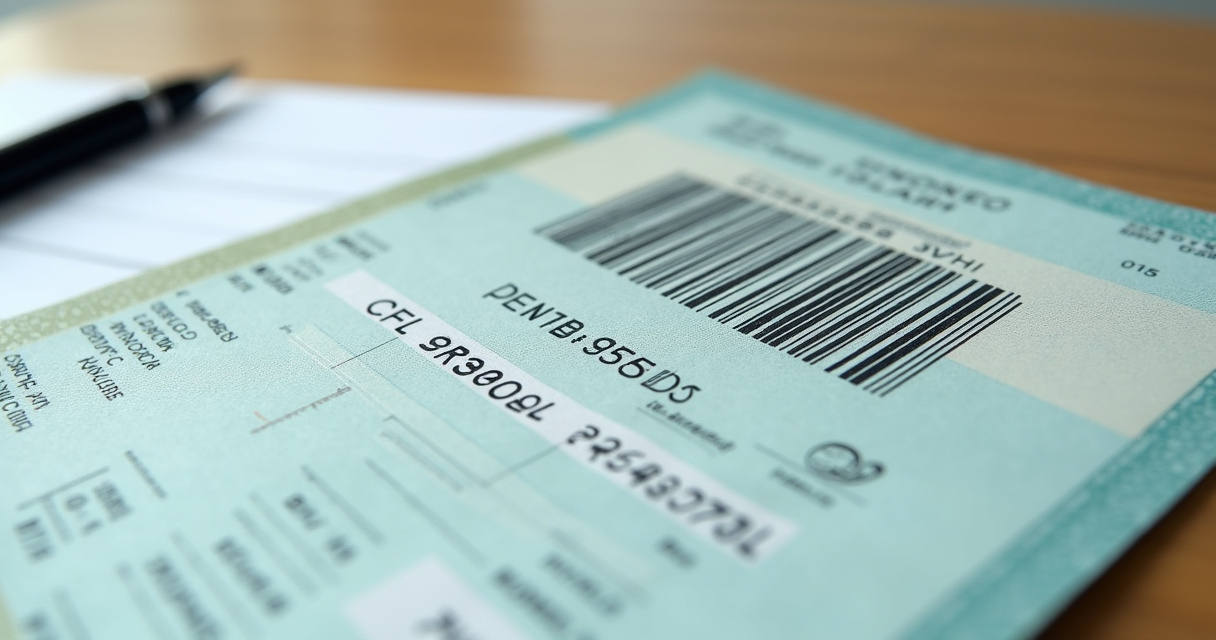
Understanding the financial identifiers printed on banking documents is essential for ensuring accurate fund transfers and clearing processes. A Magnetic Ink Character Recognition (MICR) code is a unique sequence of characters found at the bottom of a cheque leaf. Learning how to read a MICR code on a cancelled cheque leaf to identify bank branches provides clarity on how the interbank clearing system functions. This 9-digit numerical code serves as a digital signature for specific bank locations, allowing automated processing systems to sort and route payments efficiently across various financial institutions.
The Anatomy of a MICR Code
The MICR line is printed using magnetic ink, which allows specialized machines to read the characters even if they are obscured by stamps or handwritten marks. This technology is critical for the high-speed processing of millions of cheques daily. The code consists of three distinct segments, each providing specific information required for clearing houses to process the document.
The first three digits represent the city code. This corresponds to the Postal Index Number (PIN) code area of the bank branch location. The middle three digits identify the bank itself, acting as a unique institutional identifier assigned by the central regulatory authority. The final three digits represent the specific branch of that bank. By breaking down these nine digits, one can pinpoint the exact geographical location and the specific institution associated with the account.
How to Identify Bank Branches Using MICR
To identify a bank branch, the focus must remain on the final three digits of the MICR sequence. While the entire 9-digit code is necessary for the Electronic Clearing Service (ECS), the branch-specific portion acts as the final destination indicator. When a cheque is presented for clearing, the MICR reader scans these numbers to determine where the transaction must be sent for verification and debiting.
If a discrepancy exists between the MICR code and the branch details printed on the cheque, the document may be rejected during the clearing process. Verification is straightforward: the first three digits align with the city’s regional clearing hub, the next three identify the bank network, and the last three digits are mapped to the specific branch code provided by the bank’s official directory. This systematic approach ensures that funds are directed to the correct account holder without manual intervention.
Comparison of MICR and IFSC Codes
While both MICR and IFSC codes are used for bank identification, they serve different operational purposes. The table below outlines the primary differences between these two identifiers.
| Feature | MICR Code | IFSC Code |
|---|---|---|
| Format | 9-digit numeric code | 11-character alphanumeric code |
| Primary Use | Cheque clearing and processing | NEFT, RTGS, and IMPS transfers |
| Technology | Magnetic Ink Character Recognition | Electronic digital verification |
| Scope | Specific to physical cheque processing | Used for electronic fund transfers |
Practical Applications of MICR Decoding
Financial institutions utilize MICR codes to automate the clearing cycle. Without this system, bank staff would need to manually verify every cheque, which would lead to significant delays and potential human error. The magnetic ink allows for high-fidelity reading, meaning that even if a cheque is folded or slightly damaged, the automated scanners can still extract the information accurately.
For account holders, knowing how to read these codes is useful when filling out forms for automated payments or recurring deposits. Ensuring the MICR code on a cancelled cheque leaf matches the bank’s records prevents transaction failures. If a payment is returned due to an incorrect code, the bank may charge a fee, making it important to double-check the digits against the physical leaf before submitting documents for processing.
Frequently Asked Questions
What happens if the MICR code on a cheque is illegible?
If the MICR line is damaged or unreadable, the automated clearing system will reject the cheque. Banks typically require a new cheque leaf to be issued to ensure the magnetic ink can be scanned correctly.
Are MICR codes the same for all branches of a bank?
No, the last three digits of the MICR code are unique to each branch. While the middle three digits (bank code) will be identical for branches of the same bank, the branch identifier will change based on the physical location.
Can I use the MICR code for online fund transfers?
No, online fund transfers such as NEFT or RTGS require an IFSC code. MICR codes are specifically designed for the physical processing of paper-based cheques.
Where is the MICR code located on a cancelled cheque?
The MICR code is located at the bottom of the cheque leaf, typically in the center or to the left, printed in a distinct, stylized font using magnetic ink.
Does a cancelled cheque leaf always have a MICR code?
Most modern cheque leaves issued by regulated banks include a MICR line. If a cheque leaf does not have this code, it may be an older format or a specialized document not intended for standard automated clearing.
Conclusion
Mastering the ability to read a MICR code on a cancelled cheque leaf to identify bank branches is a fundamental skill for navigating modern financial systems. By recognizing the structure of the 9-digit code—city, bank, and branch identifiers—users can ensure their financial documents are processed without unnecessary complications. While digital transfers have become the norm, the physical cheque remains a vital instrument in banking, and the accuracy of the MICR line is the backbone of its reliability. Maintaining awareness of these details helps in preventing errors, ensuring that financial transactions remain efficient and secure. As banking technology continues to evolve, the underlying principles of these identification codes remain a constant, providing a bridge between physical documentation and electronic verification.
Featured Image Credit: Generated/Sourced via Runware.ai.
Disclaimer: This article is AI-generated for informational and educational purposes. While we strive to provide high-quality context and authority, the content should not be used as professional advice. The author/website assumes no liability for external links or factual omissions.
