

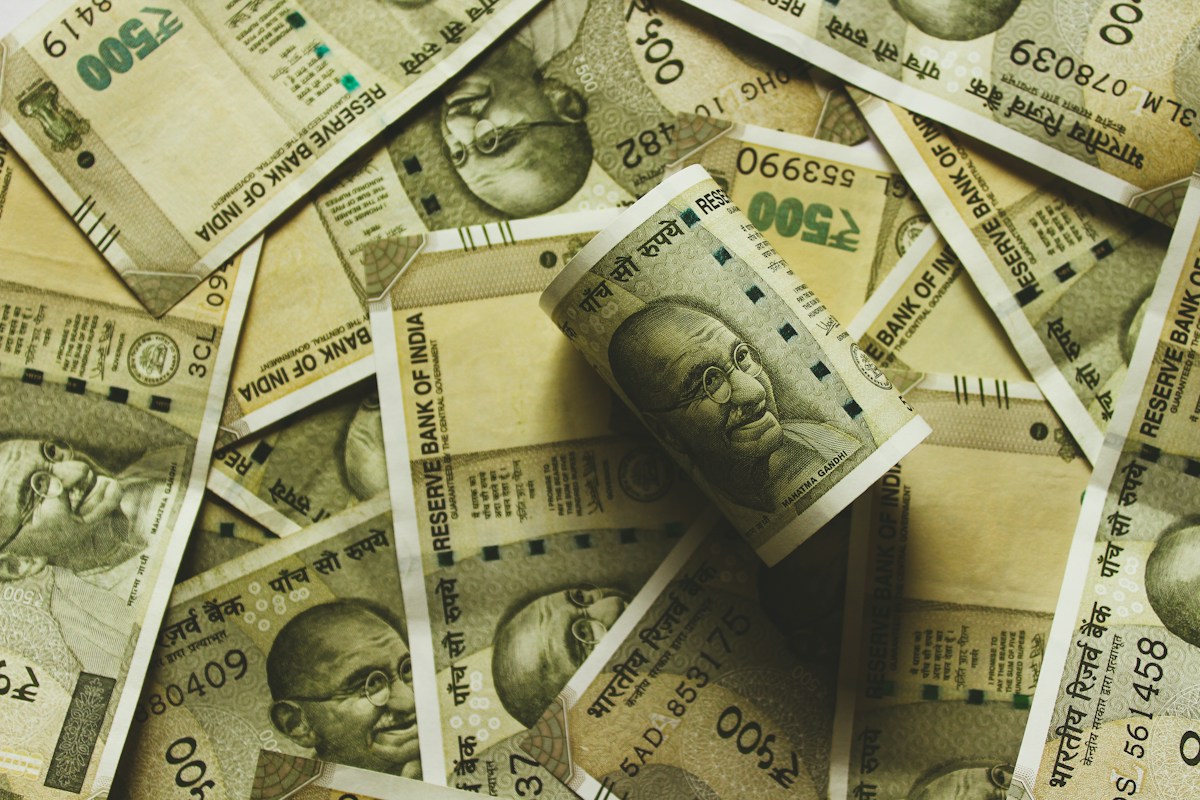
The landscape of retail banking in India has undergone a profound democratization over the past two decades, shifting from an exclusive commercial system defined by restrictive entry barriers to a universal financial architecture accessible to every citizen. For generations of Indian depositors, opening and maintaining a standard commercial savings account was accompanied by an onerous condition: the mandatory maintenance of a minimum balance. In metropolitan and urban branches, scheduled commercial banks routinely enforced Monthly Average Balance (MAB) or Quarterly Average Balance (QAB) thresholds ranging from five thousand to ten thousand rupees, penalizing depositors whose accounts dipped below these artificial limits with recurring non-maintenance charges ranging between two hundred and six hundred rupees plus eighteen percent Goods and Services Tax (GST). For informal workers, gig economy participants, rural households, daily wage earners, and students, these punitive charges turned standard banking accounts into financial hazards where modest balances were systematically eroded by institutional penalty fees. In response to mounting concerns over institutional financial exclusion, the Reserve Bank of India issued its initial policy intervention in November 2005 via circular DBOD.No.Leg.BC.44/09.07.005/2005-06, directing commercial banks to introduce basic No-Frills accounts with nil or negligible minimum balances. While this reform initiated the formal financial inclusion movement, these early No-Frills accounts suffered from significant operational limitations, varied service standards across different lenders, and a widespread social stigma that treated them as inferior, second-class banking products.
A transformative regulatory milestone occurred on August 10, 2012, when the Reserve Bank of India issued circular DBOD.No.Leg.BC.86/09.07.005/2011-12, subsequently codified and expanded under Master Direction DBR.No.Leg.BC.21/09.07.006/2015-16. This landmark regulatory directive officially retired the legacy No-Frills terminology and established the Basic Savings Bank Deposit Account (BSBDA) across all Scheduled Commercial Banks, including public sector lenders, private commercial entities, and foreign banking institutions operating within Indian borders. Under the statutory authority of Section 35A of the Banking Regulation Act, 1949, the central bank mandated that the BSBDA must not be treated as a segregated welfare instrument or a charity facility, but as a core commercial banking product available to any individual who requests it. The RBI directive fundamentally altered the power balance between banks and retail consumers by eliminating mandatory initial deposits, banning ongoing minimum average balance requirements, and establishing an extensive charter of free fundamental banking services that financial institutions are legally prohibited from monetizing.
The underlying economic rationale of zero-balance banking rests on the principle of unhindered, non-discriminatory access to institutional financial rails. In the modern Indian economic framework of 2026, where paper cash transactions are increasingly superseded by digital ledger entries, holding an operational bank account is no longer merely a method for storing currency; it is an indispensable prerequisite for economic citizenship. An active zero-balance account serves as the foundational anchor for Direct Benefit Transfer (DBT) welfare disbursements, enabling state and central government subsidies to reach intended beneficiaries directly without leakage or administrative intermediary deductions. Furthermore, zero-balance banking provides individuals with the digital rails required to establish formal credit histories, adopt Unified Payments Interface (UPI) micro-transactions, purchase affordable micro-insurance products, and accumulate savings without the persistent psychological dread of balance-depleting bank charges. By mandating that account balances can safely drop to zero without triggering negative balance penalties or administrative ledger suspensions, the central bank created a secure repository where hard-earned wealth remains fully preserved.
This comprehensive operational guide delivers an authoritative, deeply researched analysis of zero-balance savings accounts in India for 2026, examining the regulatory principles, operational limits, debit card policies, and institutional differences across the commercial banking system. Within this exhaustive guide, you will examine the exact Reserve Bank of India regulations governing Basic Savings Bank Deposit Accounts, analyze the critical legal and operational distinctions between full-KYC BSBDA Regular accounts and simplified BSBDA Small accounts, and evaluate detailed institutional profiles of zero-balance offerings from the State Bank of India, HDFC Bank, ICICI Bank, Kotak Mahindra Bank, and Punjab National Bank. Additionally, you will discover the nuances of the statutory four-withdrawal monthly rule, audit potential hidden charges such as debit card annual maintenance fees and SMS alert costs, review step-by-step branch procedures for converting expensive regular savings accounts into compliant BSBDAs, assess the digital payment capabilities of zero-balance ledgers across UPI and net banking rails, and evaluate the specific social security benefits of the Pradhan Mantri Jan Dhan Yojana (PMJDY). Whether you are a student setting up your first personal finance portal, a gig worker seeking an unencumbered savings repository, or a corporate depositor optimizing banking costs, this guide equips you with the legal clarity and operational insights necessary to navigate zero-balance banking with complete confidence.
RBI Guidelines on Basic Savings Bank Deposit Accounts (BSBDA) Explained
The regulatory framework governing zero-balance banking in India derives its binding statutory authority from Master Direction DBR.No.Leg.BC.21/09.07.006/2015-16, titled Master Direction – Reserve Bank of India (Financial Inclusion – Access to Banking Services – Basic Savings Bank Deposit Account) Directions, issued by the central banking regulator. Under these directives, every Scheduled Commercial Bank operating in India is legally mandated to provide the Basic Savings Bank Deposit Account (BSBDA) to any individual who applies. The Reserve Bank of India explicitly prohibits commercial lenders from imposing arbitrary eligibility restrictions, such as requiring proof of high minimum monthly income, demanding employment credentials with designated corporate entities, or mandating professional certifications as preconditions for account opening. The BSBDA is universally accessible to all Indian residents, ensuring that banking access is treated as a fundamental public utility rather than an exclusive privilege reserved for high-net-worth depositors.
A cornerstone of the RBI guidelines is the absolute prohibition against requiring an initial deposit or mandating any minimum balance maintenance. Under Paragraph 4 of the Master Direction, banks are strictly forbidden from requiring applicants to deposit any sum of money at the time of opening a BSBDA. An individual can walk into a physical branch or initiate an online onboarding flow and open a fully operational account with a starting balance of zero rupees. Furthermore, the central bank explicitly dictates that there is no requirement to maintain any Monthly Average Balance (MAB), Quarterly Average Balance (QAB), or Average Monthly Balance (AMB). Even if the account balance remains at zero rupees for consecutive months or quarters, the bank cannot levy any non-maintenance penalty, ledger fee, or administrative service charge against the account holder.
The RBI regulations define an extensive schedule of mandatory basic banking services that commercial banks must provide to every BSBDA holder completely free of charge. These statutory free entitlements include: (a) unlimited cash deposits at physical bank branch counters as well as automated Cash Deposit Machines (CDMs) and Cash Recyclers; (b) receipt and credit of funds through all domestic electronic payment channels, including National Electronic Funds Transfer (NEFT), Real Time Gross Settlement (RTGS), Immediate Payment Service (IMPS), and Unified Payments Interface (UPI); (c) deposit and collection of cheques drawn by Central and State Government departments and statutory agencies; (d) issuance of an ATM-cum-debit card (specifically a RuPay Classic Debit Card) without any card issuance fee or recurring annual maintenance charges; (e) a minimum of four free withdrawals per calendar month across physical branch cash counters, own-bank ATMs, and other-bank ATMs; and (f) complimentary passbook issuance and regular electronic account statements. Commercial lenders are legally barred from levying any service charge for providing these core statutory services.
A critical evolutionary enhancement to the BSBDA framework was introduced on June 10, 2019, through Reserve Bank of India circular DBR.No.Dir.BC.47/13.03.00/2018-19. Under the original 2012 guidelines, if an account holder requested any additional facility beyond the basic statutory bundle, such as a cheque book or credit card, commercial banks were required to convert the BSBDA into a regular savings account, immediately subjecting the customer to minimum average balance rules and non-maintenance penalties. The 2019 circular eliminated this rigid restriction, granting banks the operational flexibility to offer value-added services, including personalized cheque books, additional branch transactions, and premium payment tools, either free of cost or on a reasonable, transparent, and non-discriminatory fee basis. Crucially, the circular mandated that offering these additional facilities must never strip the account of its BSBDA classification, nor can banks mandate a minimum balance as a prerequisite for offering these optional features. For complete regulatory documentation and circular archives, depositors can consult the Reserve Bank of India official website.
BSBDA Regular vs BSBDA Small Accounts
Within the operational architecture of zero-balance banking, the Reserve Bank of India created two distinct categories of accounts to accommodate customers with differing levels of identity documentation: the BSBDA Regular account and the BSBDA Small account. This structural categorization is governed by Section 2(1)(d) of the Prevention of Money Laundering (Maintenance of Records) Rules, 2005, and Chapter VI of the RBI Master Direction on Know Your Customer (KYC). While both variants guarantee freedom from monthly average balance requirements and non-maintenance penalties, they diverge sharply in terms of documentation requirements, account operational limits, turnover thresholds, and statutory validity periods. Understanding the specific legal parameters of each tier is essential for account holders to ensure uninterrupted access to their funds.
A BSBDA Regular account is designed for individuals who possess complete Officially Valid Documents (OVDs) to verify their identity and residential address. Under the RBI Master Direction on KYC, Officially Valid Documents are strictly defined as six recognized instruments: Passport, Driving Licence, Voters Identity Card, PAN Card, Aadhaar Card, and Job Card issued by NREGA duly signed by an officer of the State Government. When an applicant submits any of these verified documents, alongside physical biometric authentication or electronic KYC (e-KYC) verification, the commercial bank opens a full-fledged BSBDA Regular account. A regular BSBDA operates without any regulatory ceiling on the maximum balance that can be held in the ledger, carries no caps on the total volume of annual credits or deposits, and remains permanently valid for the account holder’s lifetime, subject to periodic standard KYC updates as prescribed by RBI norms.
In contrast, a BSBDA Small account (commonly designated across bank branches simply as a Small Account) was specifically created as a financial inclusion bridge for economically vulnerable citizens who do not possess any Officially Valid Documents. Under relaxed regulatory norms, an individual can open a Small Account at any bank branch merely by providing a self-attested passport-size photograph and affixing their signature or thumb impression in the physical presence of an authorized bank official. Because this account is established on simplified identity verification without documentary address proof, the central bank imposes four strict statutory operational restrictions to prevent money laundering and fraudulent misuse: (a) the aggregate of all credits in the account shall not exceed one lakh rupees (Rs 1,00,000) in a single financial year; (b) the aggregate of all withdrawals and outward transfers in a calendar month shall not exceed ten thousand rupees (Rs 10,000); (c) the total balance in the ledger at any given point in time shall not exceed fifty thousand rupees (Rs 50,000); and (d) no foreign inward remittances can be credited to the account under any circumstances unless full KYC documentation is provided.
The operational validity of a BSBDA Small account is strictly limited by statute. Under RBI regulations, a Small Account remains active for an initial period of twelve months from the date of opening. If, during this twelve-month window, the account holder produces documented proof showing that they have formally applied for an Officially Valid Document (such as an Aadhaar enrollment acknowledgement slip or voter identity application receipt), the commercial bank is authorized to grant a one-time extension of operational validity for an additional twelve months. If the depositor fails to complete full-KYC verification by presenting an approved OVD before the expiration of this twenty-four-month total period, the bank is legally required to freeze all debit transactions on the account. Furthermore, if at any point a customer attempts a transaction that would cause the ledger balance to exceed Rs 50,000 or annual credits to cross Rs 1,00,000, the bank core banking system automatically places a total credit freeze on the ledger until full KYC verification is successfully completed.
State Bank of India (SBI) Basic Savings Bank Deposit Account
As India’s premier public sector financial institution commanding an unparalleled physical presence of more than 22,000 branches and over 65,000 automated teller machines across the country, the State Bank of India serves as the cornerstone of zero-balance banking. State Bank of India offers its zero-balance product under the formal nomenclature of the Basic Savings Bank Deposit Account (SBI BSBD Account). Open to all Indian resident individuals who complete standard customer verification procedures, the SBI BSBDA delivers universal retail banking capabilities without any requirement to maintain a minimum average balance. Depositors can open the account at any SBI branch across urban, semi-urban, or rural centers, enjoying permanent protection from balance-depleting non-maintenance penalties.
The product specifications of the SBI BSBDA reflect strict adherence to central bank mandates while leveraging SBI’s vast electronic network. Upon account opening, depositors receive a complimentary RuPay Classic Debit Card issued with zero issuance charges and complete, permanent exemption from annual maintenance fees. This provides substantial financial savings, as regular SBI savings account holders must pay between Rs 125 and Rs 300 plus eighteen percent GST each year for debit card maintenance depending on the card tier. SBI provides unlimited free cash deposits at physical branch counters, automated Cash Deposit Machines (CDMs), and Automated Deposit and Withdrawal Machines (ADWMs). Funds maintained in an SBI BSBDA earn standard savings bank interest calculated on daily end-of-day balances and credited quarterly, matching the interest rate paid on regular savings accounts (currently 2.70 percent per annum for balances up to ten crore rupees).
Cash withdrawals in an SBI BSBDA are strictly regulated under the central bank’s four-withdrawal rule. SBI provides account holders with four free cash withdrawals per calendar month across all withdrawal channels combined. This monthly quota encompasses cash withdrawals executed at SBI physical branch counters, SBI group ATMs, other bank ATMs, and Aadhaar Enabled Payment System (AEPS) transactions conducted at Business Correspondent (Customer Service Point) locations. Once an account holder exhausts their four free cash withdrawals in a calendar month, subsequent cash withdrawal transactions at SBI branch counters or ATMs attract a nominal service fee (currently Rs 15 plus GST per transaction), ensuring that basic monthly liquidity remains accessible while managing high-frequency counter congestion.
A common point of operational confusion among retail customers relates to SBI’s historic policy decision in March 2020, when the bank waived Average Monthly Balance (AMB) requirements across all of its regular savings accounts (which previously required Rs 3,000 in metro centers, Rs 2,000 in semi-urban areas, and Rs 1,000 in rural branches). While this corporate policy made regular SBI savings accounts functionally zero-balance in terms of AMB penalties, critical differences remain between an SBI Regular Savings Account and an SBI BSBDA. Regular savings accounts still levy annual debit card maintenance fees, SMS alert charges, and fees for cheque books beyond ten free leaves per financial year. In contrast, the SBI BSBDA guarantees statutory lifetime exemption from debit card maintenance charges and provides legal immunity against potential future balance penalty reinstatements. For official documentation and verified schedule of charges, customers can review the State Bank of India institutional portal.
HDFC Bank Basic Savings Bank Deposit Account
HDFC Bank, India’s largest private commercial bank by market capitalization and asset volume, provides a fully compliant zero-balance product under its Basic Savings Bank Deposit Account (BSBDA) program. Private commercial lenders are widely recognized for catering to affluent retail and corporate depositors, with standard HDFC Bank regular savings accounts requiring substantial Monthly Average Balance (MAB) commitments of Rs 10,000 in metro and urban branches, Rs 5,000 in semi-urban branches, and Rs 2,500 (or a fixed deposit of Rs 10,000) in rural branches. Failing to maintain these demanding balance thresholds in regular accounts triggers steep monthly non-maintenance penalties ranging between Rs 150 and Rs 600 plus applicable GST. In sharp contrast, the HDFC Bank BSBDA eliminates all minimum balance requirements, allowing retail depositors to access HDFC Bank’s sophisticated banking infrastructure without the risk of balance erosion.
The HDFC Bank BSBDA delivers full retail banking capabilities combined with statutory fee exemptions. Account holders are issued a complimentary RuPay Classic Debit Card that carries zero issuance charges and zero annual maintenance fees for lifetime. The card provides a daily domestic cash withdrawal limit of Rs 25,000 at automated teller machines and a daily merchant Point of Sale (POS) transaction limit of Rs 25,000 for retail shopping. Cash deposits are completely free and unlimited across all HDFC Bank physical branch counters and automated Cash Deposit Recyclers. Depositors earn competitive savings bank interest calculated on daily closing balances and credited quarterly, ensuring that idle funds accumulate interest yield in strict compliance with central bank regulations.
In accordance with Reserve Bank of India directives, HDFC Bank provides four free withdrawals per calendar month. HDFC Bank enforces this four-withdrawal quota comprehensively across all outward debit channels. The monthly allowance encompasses cash withdrawals at HDFC Bank ATMs, cash withdrawals at other bank ATMs across India, physical branch counter cash withdrawals, electronic fund transfers (including outward NEFT, RTGS, and IMPS transactions initiated via net banking, mobile banking, or branch counters), merchant POS debit card transactions, and outward Unified Payments Interface (UPI) transfers. If an account holder completes four outward debit transactions during a month, subsequent transactions are either restricted or subject to service charges (typically Rs 25 plus GST per cash withdrawal and Rs 15 plus GST per electronic fund transfer), underscoring the necessity for structured transaction management.
Despite being categorized as a basic inclusion account, the HDFC Bank BSBDA maintains comprehensive digital banking parity with premium retail accounts. Account holders receive unrestricted access to HDFC Bank NetBanking, the HDFC Bank MobileBanking application, monthly electronic account statements delivered via email, utility bill payment integration via Bharat BillPay, and instant UPI handle configuration. Furthermore, customers are provided with a physical passbook free of charge at the time of account opening, and branch service standards remain identical to those provided to regular savings account holders. Individuals seeking an unencumbered relationship with India’s largest private commercial lender can review verified product parameters on the HDFC Bank official portal.
ICICI Bank Basic Savings Bank Deposit Account
ICICI Bank, a leading private sector financial powerhouse in India, operates a comprehensive Basic Savings Bank Deposit Account designed to provide universal institutional banking access across diverse economic segments. Standard regular savings accounts at ICICI Bank mandate strict Monthly Average Balance (MAB) thresholds of Rs 10,000 for metro and urban branches, Rs 5,000 for semi-urban branches, and Rs 2,000 for rural locations, levying hefty monthly non-maintenance penalties calculated as a percentage of the shortfall (up to Rs 500 plus GST per month) when balances decline. The ICICI Bank BSBDA completely exempts depositors from these MAB commitments, enabling account balances to drop to zero rupees without triggering any penalty fees or administrative deductions.
The operational framework of the ICICI Bank BSBDA is optimized for frictionless day-to-day liquidity management and secure wealth accumulation. Account holders receive a complimentary RuPay Debit Card featuring zero issuance fees and lifetime exemption from annual maintenance charges. The card enables domestic cash withdrawals across ICICI Bank’s nationwide ATM network and interbank ATMs, alongside secure POS transactions at commercial merchants. Cash deposits are entirely free and unlimited across all ICICI Bank physical branch locations and automated Cash Recyclers. All incoming funds transfers executed via NEFT, RTGS, IMPS, and UPI are 100 percent free and unlimited, allowing account holders to receive salaries, business proceeds, family remittances, and government subsidies without incurring transaction deductions.
In compliance with Reserve Bank of India standards, ICICI Bank allocates four free withdrawals per calendar month. This monthly quota encompasses physical cash withdrawals at ICICI Bank branch counters, cash withdrawals at own-bank and other-bank ATMs, debit card Point of Sale (POS) purchases, e-commerce transactions, and customer-initiated outward electronic fund transfers (NEFT, RTGS, and IMPS). To support physical record-keeping, ICICI Bank provides a complimentary physical passbook at the time of account opening, and account holders are entitled to free duplicate passbooks when existing leaves are exhausted. Depositors also receive detailed electronic account statements delivered monthly to their registered email addresses free of charge.
Digital banking integration on the ICICI Bank BSBDA provides an exceptional user experience. Account holders can register for ICICI Bank’s acclaimed iMobile Pay mobile application and internet banking platform, enabling real-time balance inquiries, biometric authentication, scan-and-pay merchant settlements, bill payments, and electronic fund transfers around the clock. For cheque processing, ICICI Bank provides an initial personalized cheque book of ten leaves free of charge at account opening under the relaxed 2019 RBI value-added facility guidelines, with additional cheque books available on demand at standard scheduled charges. This makes the ICICI Bank BSBDA an outstanding zero-balance vehicle for students, young professionals, and retirees who desire the technical sophistication of a premier private bank without minimum balance overheads.
Kotak Mahindra Bank 811 Digital Zero Balance Account
Kotak Mahindra Bank transformed retail zero-balance banking in India through the introduction of its Kotak 811 digital banking platform. While conventional BSBDAs historically required physical branch visits, paper application forms, and manual identity verification, Kotak 811 was engineered as an agile, mobile-first digital savings account. Utilizing the national India Stack infrastructure, Kotak 811 allows any Indian resident equipped with a valid Aadhaar number and Permanent Account Number (PAN) to open a fully functional zero-balance savings account in under five minutes through the Kotak Mobile Banking app or web portal, completely eliminating the need for physical branch visits.
The defining value proposition of the Kotak 811 Zero Balance account is its permanent, lifetime exemption from minimum balance maintenance rules. Unlike traditional commercial accounts that penalize depositors when average balances drop, Kotak 811 enforces absolute zero non-maintenance balance charges for life, permitting the account balance to remain at zero rupees indefinitely. Upon completing online registration, depositors instantly receive a free Virtual Debit Card (VDC) generated within the Kotak Mobile Banking application. This virtual card carries zero issuance charges and zero annual maintenance fees, providing immediate capability for e-commerce transactions, online bill payments, subscription services, and digital merchant checkouts across India.
For depositors who require physical cash withdrawals at automated teller machines, Kotak Mahindra Bank provides two flexible operational alternatives. First, account holders can execute cardless cash withdrawals at any Kotak Mahindra Bank ATM directly through the mobile application using an Instant Cash Order. Alternatively, customers can order a physical Kotak 811 Debit Card through the mobile app. It is essential to recognize that while the virtual debit card is permanently free, the physical debit card carries an annual maintenance fee (typically Rs 299 plus GST per annum). Depositors seeking an entirely free, zero-cost banking experience can rely exclusively on the virtual card and cardless ATM withdrawals, avoiding all recurring card fees.
The onboarding workflow of Kotak 811 includes an important regulatory distinction regarding customer verification status. If a depositor opens the account using Aadhaar OTP verification alone without completing video KYC, the account operates under RBI BSBDA Small account rules as a Kotak 811 Lite account, subject to an aggregate monthly spending cap of Rs 10,000 and an annual credit ceiling of Rs 1,00,000. However, by completing a quick Video KYC (V-KYC) call within the mobile app, where an authorized bank representative verifies original PAN credentials and records a live photograph, the account transitions instantly into a full-KYC Kotak 811 account. Full-KYC status removes all balance caps, turnover restrictions, and deposit ceilings, unlocking unrestricted UPI transfers, high-value NEFT/RTGS payments, fixed deposits, mutual funds, and digital credit lines. Prospective depositors can review complete account specifications on the Kotak Mahindra Bank official portal.
Public Sector Zero Balance Offerings: Punjab National Bank and Bank of Baroda
Beyond the State Bank of India, India’s public sector banking system provides formidable zero-balance banking infrastructure through institutions such as Punjab National Bank (PNB) and Bank of Baroda (BoB). Following the historic public sector mega-mergers implemented between 2019 and 2020, in which Punjab National Bank amalgamated Oriental Bank of Commerce and United Bank of India, and Bank of Baroda integrated Vijaya Bank and Dena Bank, these two public sector institutions command vast branch and ATM networks spanning northern, western, southern, and eastern India. Their zero-balance BSBDA products play an indispensable role in providing dignified financial services to agricultural communities, rural artisans, micro-enterprises, and government pension beneficiaries.
Punjab National Bank delivers its zero-balance offering under the official framework of the PNB Basic Savings Bank Deposit Account. Open to all Indian residents across urban, semi-urban, and rural branches, the account requires zero initial deposit and mandates zero minimum balance maintenance. Account holders receive a complimentary RuPay Classic Debit Card with zero annual maintenance fees, ensuring completely unencumbered access to electronic payment channels. PNB provides unlimited free cash deposits at physical branch counters and automated Cash Deposit Machines. Account holders are entitled to four free cash withdrawals per calendar month across PNB ATMs, other bank ATMs, and branch counters, after which nominal scheduled service fees apply.
Bank of Baroda provides its zero-balance solution through the Baroda Basic Savings Account. Available across all domestic branch locations, this account guarantees complete exemption from minimum balance maintenance penalties. Bank of Baroda equips depositors with a complimentary RuPay Classic Debit Card featuring zero annual maintenance charges, four free withdrawals per calendar month across branch and ATM channels, and free passbook facilities. Furthermore, Bank of Baroda has distinguished itself through its extensive network of Business Correspondents (Bank Mitras) equipped with biometric micro-ATMs. In rural and remote areas where brick-and-mortar branches are distant, Bank Mitras enable zero-balance depositors to execute cash deposits, withdrawals, and balance inquiries right at their village doorsteps.
Both Punjab National Bank and Bank of Baroda maintain comprehensive alignment with central government welfare programs and Direct Benefit Transfer (DBT) mechanisms. These public sector zero-balance accounts are natively integrated with the National Automated Clearing House (NACH) and Public Financial Management System (PFMS), making them ideal repositories for receiving agricultural subsidies under PM-KISAN, educational scholarships, rural employment wages, and old-age pensions. With dedicated regional language support at branch counters and mobile banking applications (PNB ONE and Baroda m-Connect Plus), PNB and Bank of Baroda provide an accessible, secure, and dignified banking foundation for millions of Indian citizens.
Withdrawal Limits and Transaction Restrictions in Zero Balance Accounts
The defining operational parameter of a Basic Savings Bank Deposit Account is the regulatory four-withdrawal rule established by the Reserve Bank of India. While regular commercial savings accounts offer separate withdrawal quotas for own-bank ATMs, other-bank ATMs, and branch cash transactions, a BSBDA operates under a unified monthly debit limit. Under RBI Master Direction DBR.No.Leg.BC.21/09.07.006/2015-16, commercial banks are legally mandated to provide a minimum of four free withdrawals per calendar month. To manage their financial transactions without incurring unexpected fees, account holders must understand precisely which transactions count against this monthly four-withdrawal ceiling.
In standard banking practice, the term withdrawal encompasses virtually every customer-initiated debit transaction that moves funds out of the account. This includes: (a) physical cash withdrawals at the home branch or non-home branches; (b) cash withdrawals at own-bank automated teller machines; (c) cash withdrawals at other-bank ATMs across India; (d) merchant Point of Sale (POS) debit card swipe transactions at retail stores; (e) e-commerce purchase payments executed online using the debit card; (f) customer-initiated electronic fund transfers, such as outward NEFT, outward RTGS, and outward IMPS; (g) outward Unified Payments Interface (UPI) transfers, including peer-to-peer (P2P) payments to friends and peer-to-merchant (P2M) QR code scans; and (h) automated recurring debits, such as NACH mandates, Systematic Investment Plans (SIPs), and loan Equated Monthly Installments (EMIs).
In sharp contrast to debits, inward credits and deposits are completely exempt from transaction caps. Under RBI directives, commercial banks must permit unlimited free cash deposits at physical branch counters and automated Cash Deposit Machines. Similarly, all incoming electronic funds transfers, including incoming NEFT, RTGS, IMPS, UPI credits, salary payments, dividend distributions, and direct government DBT subsidies, are 100 percent free and unlimited. Inward transactions do not consume any portion of the four-withdrawal monthly quota, meaning an account holder can receive dozens of inward credits in a single month without triggering any limits, fees, or administrative penalties.
A crucial regulatory reform governs what occurs when an account holder reaches or exceeds the four-withdrawal threshold in a single calendar month. In earlier years, certain commercial banks automatically converted zero-balance accounts into regular savings accounts upon the execution of a fifth withdrawal, subsequently penalizing the customer for failing to maintain a monthly average balance of Rs 5,000 or Rs 10,000. In June 2019, the Reserve Bank of India explicitly outlawed this practice through circular DBR.No.Dir.BC.47/13.03.00/2018-19. Under current RBI regulations, banks are strictly prohibited from converting a BSBDA into a regular account without the customer’s prior, informed, and written consent. Today, when a customer attempts a fifth withdrawal, banks either decline the transaction with an error notification or process the withdrawal while levying a transparent, pre-disclosed fee (typically Rs 15 to Rs 25 plus GST per transaction), ensuring that zero-balance status remains intact.
Debit Card Charges, ATM Rules, and Potential Hidden Fees
While the Basic Savings Bank Deposit Account is structurally designed as a zero-cost financial instrument, account holders must remain vigilant regarding incidental fees, debit card variants, and service thresholds. The Reserve Bank of India strictly mandates that banks must issue a basic ATM-cum-debit card, specifically a RuPay Classic card, free of charge, with absolute exemption from annual maintenance charges (AMC) for the entire lifetime of the BSBDA. For depositors holding a basic RuPay Classic card, there are zero recurring fees, providing genuine zero-cost banking year after year.
A frequent financial trap arises when depositors accept upgraded or premium debit card variants during the account opening process. Bank marketing representatives, particularly at private commercial banks, frequently encourage applicants to select premium card products, such as Visa Platinum, Mastercard World, or RuPay Select cards, touting benefits like higher daily withdrawal limits, airport lounge access, and merchant discounts. However, regulatory fee waivers apply strictly to the basic RuPay Classic card. If an account holder opts for an upgraded debit card, the bank is legally entitled to levy standard annual maintenance fees ranging from Rs 200 to Rs 750 plus eighteen percent GST each year. To maintain an entirely fee-free account, depositors must explicitly decline premium card upgrades and insist upon the standard RuPay Classic card.
ATM withdrawal rules in zero-balance accounts differ substantially from regular savings account frameworks. Under RBI general ATM interchange guidelines, regular savings account holders receive five free transactions per month at their own bank ATMs and three free transactions at other bank ATMs in six metro centers (Mumbai, New Delhi, Chennai, Kolkata, Bengaluru, and Hyderabad), or five free transactions in non-metro centers. However, in a BSBDA, these interchange quotas do not stack on top of the four-withdrawal rule. Instead, every ATM withdrawal, whether at an own-bank ATM or a competitor bank ATM, counts directly toward the total monthly quota of four free withdrawals. If an account holder executes two UPI transfers and two POS transactions earlier in the month, their very first ATM cash withdrawal becomes the fifth debit and attracts service fees.
Additional potential incidental fees include SMS alert charges, branch cash transaction caps, and cheque book fees. Under RBI guidelines, mandatory transaction alerts (such as debits initiated via ATMs or internet banking) should be provided, but certain commercial banks charge nominal SMS alert fees (typically Rs 15 to Rs 25 per quarter) unless exempted under financial inclusion schedules. Regarding cheque books, banks are permitted under the 2019 RBI circular to provide cheque facilities, but may charge modest fees (typically Rs 2 to Rs 5 per leaf plus GST) beyond an initial complimentary allocation of ten or twenty-five leaves. Depositors should review their bank published BSBDA Schedule of Charges annually to ensure that no unauthorized recurring deductions occur.
Converting an Existing Regular Savings Account to a Zero Balance BSBDA
Many Indian banking customers maintain legacy regular savings accounts that have become financial burdens due to steep Monthly Average Balance (MAB) requirements. When personal circumstances change, such as transitioning between jobs, entering retirement, or pursuing higher education, maintaining balances of Rs 5,000 or Rs 10,000 becomes impractical, leading to punitive non-maintenance deductions that steadily erode hard-earned savings. Fortunately, under Reserve Bank of India Master Direction DBR.No.Leg.BC.21/09.07.006/2015-16, every retail banking customer has the statutory right to convert their existing regular savings account into a zero-balance BSBDA at the same commercial bank without changing their core account number.
Before initiating the conversion process, depositors must understand the fundamental regulatory principle established in Paragraph 5 of the RBI BSBDA Master Direction: the Single Savings Account rule. The central bank mandates that an individual cannot hold any other retail savings bank account in the same commercial bank where they operate a BSBDA. If a customer opens a new BSBDA or converts an existing account, any secondary regular savings account maintained at that same institution must be formally closed within thirty calendar days. However, customers are legally permitted to maintain fixed deposits, recurring deposits, public provident fund (PPF) accounts, and loan ledgers in the same bank, and may hold savings accounts at entirely different banking institutions.
Executing the account conversion requires a structured, step-by-step approach at the bank home branch: (a) Step 1: Clear pending dues and negative balances. Ensure that the existing savings account has a clear ledger. Under RBI rules, banks are explicitly barred from allowing an account balance to turn negative due to non-maintenance penalties; any negative balance reflecting on the statement must be zeroed out upon conversion request. (b) Step 2: Audit linked payment mandates. Review all recurring National Automated Clearing House (NACH) mandates, loan EMIs, insurance debits, and mutual fund Systematic Investment Plans (SIPs) linked to the account. Because a BSBDA enforces a four-withdrawal monthly limit, assess whether recurring debits might cause you to exceed the monthly quota. (c) Step 3: Submit written conversion documentation. Visit the home branch and obtain the official Application for Conversion of Regular Savings Account to Basic Savings Bank Deposit Account (BSBDA). Complete the application, attach self-attested copies of Officially Valid Documents (Aadhaar Card and PAN Card), and submit two recent passport-size photographs. (d) Step 4: Surrender premium banking instruments. Return any premium debit cards (Visa Platinum, Mastercard Titanium) and surrender unused cheque books if required by the bank operational policy. Explicitly request the issuance of a free RuPay Classic Debit Card. (e) Step 5: Obtain stamped acknowledgement. Ensure that the branch operations officer provides a signed and stamped copy of the conversion application with an official inward tracking reference number.
The conversion process typically takes between seven and fourteen business days to reflect in the bank Core Banking Solution (CBS). Once updated, depositors should verify via internet banking or mobile banking that the account product code reflects BSBDA or Basic Savings Bank Deposit Account and that no minimum balance requirements or AMC fees are displayed. If branch staff resist the conversion request, which occasionally occurs due to branch-level revenue targets, customers have clear legal recourse. Cite RBI Master Direction DBR.No.Leg.BC.21/09.07.006/2015-16 to the Branch Manager, escalate the matter in writing to the bank Principal Nodal Officer, and if unresolved within thirty days, lodge a formal grievance on the RBI Centralized Management System (CMS) portal at cms.rbi.org.in for adjudication by the RBI Banking Ombudsman.
Digital Payment and Net Banking Capabilities on Zero Balance Accounts
A persistent misconception regarding zero-balance savings accounts is that they are technologically restricted products disconnected from modern digital payments. In reality, under the Reserve Bank of India universal banking mandate, full-KYC BSBDAs possess complete technological parity with premium commercial savings accounts. Account holders enjoy full access to India cutting-edge digital payments architecture, including the Unified Payments Interface (UPI), Immediate Payment Service (IMPS), National Electronic Funds Transfer (NEFT), Real Time Gross Settlement (RTGS), and comprehensive mobile banking applications.
Integrating a BSBDA with UPI payment applications represents one of the most convenient methods for managing daily financial transactions. Depositors can seamlessly link their zero-balance account to leading UPI platforms such as Google Pay, PhonePe, Paytm, BHIM, Amazon Pay, and Cred. Account holders can onboard onto UPI using either of two authentication pathways: (a) entering the last six digits and expiry date of their free RuPay Classic Debit Card, followed by OTP verification; or (b) utilizing the National Payments Corporation of India (NPCI) Aadhaar OTP onboarding flow, which enables instant UPI registration without requiring a physical debit card, provided the mobile number registered with the bank matches the Aadhaar database.
While UPI functionality is fully enabled on zero-balance accounts, depositors must manage their transactions strategically to avoid triggering withdrawal limits. Under NPCI guidelines, standard UPI transactions carry a daily limit of Rs 1,00,000 (with elevated limits up to Rs 5,00,000 for approved categories such as healthcare and educational institutions). However, because commercial banks categorize outward UPI transfers as electronic debit withdrawals, executing frequent micro-payments (such as scanning small merchant QR codes daily) will rapidly consume the monthly quota of four free withdrawals. To preserve free withdrawal allowances for essential cash or high-value transfers, smart depositors utilize secondary prepaid payment instruments or digital wallet balances for daily micro-transactions, reserving direct BSBDA debits for planned transactions.
Beyond UPI, zero-balance account holders possess complete access to mobile and net banking suites, including YONO SBI, HDFC MobileBanking, ICICI iMobile Pay, Kotak Mobile Banking, and PNB ONE. Through these applications, users can monitor real-time ledger balances, download digital account statements, book fixed deposits, and execute outward electronic fund transfers via NEFT and IMPS around the clock. When executing interbank NEFT, RTGS, or IMPS transactions, depositors must ensure accurate branch routing by verifying eleven-character Indian Financial System Codes on ifsc.co, ensuring that funds settle seamlessly into beneficiary accounts without routing delays or manual intervention.
Pradhan Mantri Jan Dhan Yojana (PMJDY) vs Standard BSBDA
The relationship between Pradhan Mantri Jan Dhan Yojana (PMJDY) and the Basic Savings Bank Deposit Account is one of the most frequently misunderstood concepts in Indian retail finance. Launched on August 28, 2014, by the Government of India under the National Mission for Financial Inclusion, PMJDY was designed to provide universal banking access to every unbanked household in India. From a regulatory perspective, every PMJDY account is fundamentally a BSBDA, governed by the same RBI guidelines guaranteeing zero minimum balance requirements, free basic services, and four monthly withdrawals. However, PMJDY incorporates specialized government-backed welfare benefits and insurance protections that are not available in a standard commercial BSBDA.
The most significant divergence between the two accounts lies in the complimentary insurance coverage attached to the PMJDY RuPay Debit Card. Account holders who open a PMJDY account receive a specialized Jan Dhan RuPay Card that provides built-in Accidental Insurance coverage of Rs 2,00,000 for cards issued after August 28, 2018 (and Rs 1,00,000 for cards issued prior to that date), alongside a historic life insurance cover of Rs 30,000 for eligible early enrollees. To keep this accidental insurance active, cardholders must satisfy a mandatory operational rule: they must have performed at least one successful financial or non-financial transaction (such as an ATM cash withdrawal, balance inquiry, POS swipe, or e-commerce purchase) using the RuPay card within ninety calendar days prior to the date of the accident. Standard BSBDAs do not carry this complimentary Rs 2 lakh government accident insurance.
A second critical distinction is the Overdraft (OD) facility available exclusively to PMJDY account holders. Under the Jan Dhan scheme, eligible depositors can access an overdraft credit facility of up to Rs 10,000 without requiring any collateral or security deposit. For overdraft amounts up to Rs 2,000, banks impose no special operational conditions. For amounts between Rs 2,000 and Rs 10,000, the account must have been operated satisfactorily for a minimum period of six months with regular turnover and zero default history. Under government guidelines, preference for the overdraft facility is accorded to the earning female member of the household, supporting women financial autonomy. In contrast, standard commercial BSBDAs strictly forbid overdraft facilities, maintaining a strict deposit-only ledger.
Finally, PMJDY accounts are natively optimized for the seamless execution of Direct Benefit Transfer (DBT) welfare payments. When opening a PMJDY account, the depositor Aadhaar number is seeded directly into the National Payments Corporation of India (NPCI) Aadhaar Payment Bridge (APB) mapper. This ensures uninterrupted receipt of central and state welfare subsidies, including PM-KISAN agricultural support (Rs 6,000 annually), PAHAL LPG subsidies, Mahatma Gandhi National Rural Employment Guarantee Scheme (MGNREGS) wages, and welfare stipends. While a standard BSBDA can also be seeded for DBT payments through manual bank submission, PMJDY provides automated integration alongside friction-free enrollment in social security micro-insurance programs, including Pradhan Mantri Suraksha Bima Yojana (PMSBY), Pradhan Mantri Jeevan Jyoti Bima Yojana (PMJJBY), and Atal Pension Yojana (APY). For complete scheme details, depositors can consult the Pradhan Mantri Jan Dhan Yojana official portal.
Selecting the ideal zero-balance savings account requires a careful evaluation of institutional capabilities, transaction preferences, and banking habits. While the Reserve Bank of India guarantees a uniform baseline of consumer rights across all Basic Savings Bank Deposit Accounts, commercial banks differentiate themselves through their digital onboarding speeds, physical branch density, debit card ecosystems, and customer servicing channels. Public sector lenders like State Bank of India and Punjab National Bank provide unmatched physical accessibility in rural and semi-urban regions, whereas private institutions such as HDFC Bank, ICICI Bank, and Kotak Mahindra Bank excel in sophisticated mobile banking interfaces, contactless payments, and streamlined digital customer onboarding.
When comparing zero-balance offerings across institutions, depositors must pay close attention to three critical parameters: debit card maintenance charges, digital account opening options, and transaction restriction handling. Standard BSBDAs mandate a completely free RuPay Classic Debit Card, but digital-first products like Kotak 811 provide a lifetime free virtual card while charging an annual maintenance fee for an optional physical plastic card. Furthermore, depositors should examine how each institution treats the four-withdrawal monthly quota, whether additional transactions are declined outright or permitted on a nominal fee basis, and whether the bank provides a physical passbook free of cost.
The following comprehensive comparison matrix analyzes five leading zero-balance savings accounts in India for 2026: State Bank of India BSBDA, HDFC Bank BSBDA, ICICI Bank BSBDA, Kotak Mahindra Bank 811, and Punjab National Bank BSBDA. This side-by-side analysis examines minimum balance rules, free withdrawal quotas, debit card provisions, annual maintenance fees, cheque book policies, and digital video-KYC account opening availability, enabling you to select the financial product that perfectly matches your liquidity requirements.
| Bank and Account Name | Minimum Balance Requirement | Free Monthly Withdrawals | Debit Card Type Provided | Debit Card Annual Fee | Cheque Book Facility | Digital Account Opening Option |
|---|---|---|---|---|---|---|
| State Bank of India (SBI BSBDA) | Zero rupees (Nil ongoing MAB/AMB) | 4 free cash withdrawals per month (Branch, SBI ATMs, other bank ATMs, AEPS) | RuPay Classic Debit Card | Zero rupees (Lifetime free AMC) | Not available under basic bundle; available on request at scheduled fees | Available via YONO SBI app with Video KYC |
| HDFC Bank (HDFC BSBDA) | Zero rupees (Nil ongoing MAB) | 4 free withdrawals per month (All ATM, branch cash, POS, and digital debits combined) | RuPay Classic Debit Card | Zero rupees (Lifetime free AMC) | Complimentary 25 leaves per year; additional leaves at standard charges | Available via HDFC Bank online portal with Video KYC |
| ICICI Bank (ICICI BSBDA) | Zero rupees (Nil ongoing MAB) | 4 free withdrawals per month (ATM, branch counter, POS, and digital transfers) | RuPay Debit Card | Zero rupees (Lifetime free AMC) | Complimentary 10 leaves at account opening; additional at Rs 2 to 5 per leaf | Available via ICICI Bank website with Video KYC |
| Kotak Mahindra Bank (Kotak 811) | Zero rupees (Lifetime zero balance guarantee) | Unlimited online digital debits; physical ATM withdrawals per standard limits | Virtual Visa/RuPay Debit Card (Physical card optional) | Zero rupees for Virtual Card; Rs 299 + GST per year for optional Physical Card | Available on request via mobile app at standard scheduled charges | Fully digital instant opening via Kotak 811 app with Video KYC |
| Punjab National Bank (PNB BSBDA) | Zero rupees (Nil ongoing MAB) | 4 free cash withdrawals per month across PNB ATMs, other bank ATMs, and branches | RuPay Classic Debit Card | Zero rupees (Lifetime free AMC) | Available on request; nominal per-leaf charges apply beyond basic limit | Available via PNB ONE mobile app with Video KYC |
Frequently Asked Questions About Zero Balance Savings Accounts
What is the difference between a zero balance account and a regular savings account?
The primary difference lies in the balance maintenance requirement and associated penalty fee structures. A regular savings account requires the depositor to maintain a specified Monthly Average Balance (MAB) or Quarterly Average Balance (QAB), typically ranging from Rs 1,000 in rural branches to Rs 10,000 in metro locations, penalizing shortfalls with recurring non-maintenance charges. In contrast, a zero balance account, governed under the RBI Basic Savings Bank Deposit Account (BSBDA) guidelines, mandates zero minimum balance and zero non-maintenance penalties, allowing the balance to drop to zero without fee deductions. While regular accounts provide higher free withdrawal limits and premium debit cards (subject to annual maintenance fees), BSBDAs provide a basic RuPay Classic card free of cost and enforce a statutory quota of four free withdrawals per month.
Can I hold a regular savings account and a zero balance BSBDA in the same bank?
No, you cannot hold both accounts simultaneously within the same commercial bank. Under Paragraph 5 of Reserve Bank of India Master Direction DBR.No.Leg.BC.21/09.07.006/2015-16, an individual is legally prohibited from maintaining any other retail savings bank account in the same institution where they operate a BSBDA. If you hold an existing regular savings account and open a new BSBDA at the same bank, you are legally obligated to close the regular savings account within thirty calendar days from the date of opening the BSBDA. However, you are fully permitted to maintain fixed deposits, recurring deposits, public provident fund (PPF) ledgers, and loan accounts at that bank, and you can hold regular savings accounts at entirely different banking institutions.
Is there any penalty if my balance drops to zero in a BSBDA?
No, there is absolutely zero penalty if your ledger balance drops to zero rupees in a Basic Savings Bank Deposit Account. Under Reserve Bank of India directives, commercial banks are strictly prohibited from levying any non-maintenance charge, ledger fee, or administrative service penalty on a BSBDA. Furthermore, RBI regulations explicitly forbid banks from turning an account balance into a negative ledger due to the application of service fees or non-maintenance charges. Your account balance can safely remain at zero rupees for weeks or months without incurring any debt, deduction, or penalty accumulation.
How many free ATM withdrawals are allowed per month in a zero balance account?
Under Reserve Bank of India guidelines, banks must provide a minimum of four free withdrawals per calendar month in a BSBDA. In zero-balance accounts, this four-withdrawal quota is calculated across all withdrawal channels combined, including own-bank ATMs, other-bank ATMs, and physical branch cash counters. In many commercial banks, customer-initiated digital debits (such as outward UPI transfers, NEFT, RTGS, and POS debit card purchases) also count against this monthly four-withdrawal ceiling. Once you complete four withdrawals across these combined channels within a month, subsequent ATM withdrawals will either be declined or incur a nominal fee, typically Rs 15 to Rs 25 plus applicable GST per transaction.
Does a zero balance savings account offer interest on deposits?
Yes, zero balance savings accounts offer interest on deposits at rates identical to those paid on regular commercial savings accounts. In accordance with Reserve Bank of India directives, commercial banks must calculate savings interest on a daily end-of-day product basis, reflecting the exact closing balance maintained in the ledger each day. Interest earnings are credited to the customer account on a quarterly basis (or monthly basis at select private banks). Current savings interest rates across major Indian banks typically range from 2.70 percent to 3.50 percent per annum on balances up to one lakh rupees, with select private lenders offering higher tiered rates on larger balances.
Is video KYC available for opening a zero balance account online?
Yes, Video Customer Identification Process (V-CIP), commonly known as Video KYC, is widely available for opening zero balance savings accounts online across leading Indian banks. Enabled under RBI Master Direction on KYC amendments, applicants can open a digital zero balance account, such as Kotak 811 or SBI digital savings account, using Aadhaar OTP authentication and PAN validation from their smartphone or computer. During the brief video call, an authorized bank officer verifies original PAN credentials, captures a geo-tagged live facial image, and records customer signatures. Completing Video KYC grants the account full-KYC status instantly, eliminating the turnover caps and balance restrictions associated with basic Small accounts.
Can I receive international inward remittances in a zero balance savings account?
Yes, you can receive international inward remittances in a zero balance savings account, provided the account is a full-KYC BSBDA Regular account. Full-KYC BSBDAs are fully compliant with Foreign Exchange Management Act (FEMA) regulations and can receive electronic funds sent from abroad via SWIFT, foreign outward remittances, or approved money transfer service schemes. However, if your account is a BSBDA Small account (opened without full Officially Valid Documents), the Reserve Bank of India strictly prohibits the receipt of foreign inward remittances until you submit complete KYC documents and upgrade the account to regular status.
What happens if I exceed 4 withdrawals in a month from a BSBDA?
When you exceed four withdrawals in a calendar month from a BSBDA, the bank response depends on its published operational schedule of charges. Under RBI circular DBR.No.Dir.BC.47/13.03.00/2018-19, banks are strictly prohibited from unilaterally converting your BSBDA into a regular savings account without your explicit, written consent. Instead, banks handle a fifth transaction in one of two ways: either the core banking system declines the transaction with an error indicating that your monthly withdrawal limit has been reached, or the bank processes the withdrawal while levying a pre-disclosed nominal service charge, typically ranging between Rs 15 and Rs 25 plus eighteen percent GST per transaction.
Do zero balance accounts support UPI apps like Google Pay and PhonePe?
Yes, zero balance accounts fully support all Unified Payments Interface (UPI) applications, including Google Pay, PhonePe, Paytm, BHIM, Amazon Pay, and Cred. Account holders can onboard onto UPI either by entering the card number and expiry date of their free RuPay Classic Debit Card or by utilizing the NPCI Aadhaar OTP authentication mechanism, which allows digital UPI registration without requiring a physical debit card. However, account holders must remember that outward UPI transactions are classified as electronic debit withdrawals by many banks and will consume a portion of the monthly four-withdrawal quota.
How can I upgrade a BSBDA Small account to a regular full-KYC zero balance account?
You can upgrade a BSBDA Small account to a full-KYC zero balance account by submitting standard Officially Valid Documents (OVDs) to your bank. Visit your home branch or initiate an online Video KYC session, presenting any of the six recognized OVDs: Aadhaar Card, Passport, Voters Identity Card, Driving Licence, PAN Card, or NREGA Job Card, along with recent passport photographs. Once the bank verifies your identity and address through biometric authentication or physical document validation, the core banking system removes the fifty-thousand-rupee balance ceiling, the one-lakh-rupee annual turnover cap, and the ten-thousand-rupee monthly withdrawal restriction, upgrading your ledger to an unrestricted BSBDA Regular account.
Conclusion
The Basic Savings Bank Deposit Account represents one of the most successful regulatory innovations in the history of Indian retail banking, fundamentally restructuring the relationship between commercial financial institutions and retail consumers. By establishing a legally enforceable framework that combines zero minimum balance requirements, zero non-maintenance penalties, and mandatory free basic services, the Reserve Bank of India has successfully removed the traditional financial barriers that historically excluded millions of citizens from organized finance. In the modern banking ecosystem of 2026, selecting the right zero-balance account depends primarily on your individual transaction habits and channel preferences. If you prioritize extensive physical branch and ATM accessibility across rural or semi-urban regions, public sector leaders like the State Bank of India and Punjab National Bank provide unmatched geographical reach. Conversely, if you desire a seamless digital lifestyle centered on instant smartphone onboarding, virtual debit cards, and sophisticated mobile interfaces, digital-first products like Kotak 811 and private sector BSBDAs from HDFC Bank and ICICI Bank deliver exceptional operational value.
Throughout your banking journey, it is essential to understand and exercise your statutory consumer protections codified under the Reserve Bank of India Charter of Customer Rights. This regulatory charter enshrines five foundational customer rights: the Right to Fair Treatment, prohibiting discriminatory practices based on account balances or social background; the Right to Transparency, Fair, and Honest Dealing, ensuring that all fees, limits, and service terms are explicitly disclosed prior to transaction execution; the Right to Suitability, preventing banks from cross-selling inappropriate high-cost products; the Right to Privacy, safeguarding your personal financial data; and the Right to Grievance Redress and Compensation, holding banks accountable for service deficiencies. Commercial banks are legally obligated to respect these rights, and branch personnel cannot arbitrarily refuse to open a BSBDA, coerce customers into regular savings accounts, or levy unauthorized charges against zero-balance ledgers.
If you encounter administrative resistance at a bank branch, such as staff refusing to process a BSBDA application, unlawfully demanding initial cash deposits, or failing to convert an existing regular account to zero-balance status, you possess clear, structured dispute resolution pathways. Your first step should be submitting a formal written complaint to the Branch Manager, obtaining a stamped physical acknowledgement slip. If the branch fails to resolve the grievance satisfactorily within seven business days, escalate the complaint to the bank designated Principal Nodal Officer or Internal Ombudsman. In the event that the commercial bank fails to resolve your grievance within thirty calendar days, or provides an unsatisfactory resolution, you have the statutory right to lodge an escalation under the Reserve Bank – Integrated Ombudsman Scheme, 2021. Complaints can be filed seamlessly online via the RBI Centralized Receipt and Processing Centre (CRPC) on the Complaint Management System portal at cms.rbi.org.in or by calling the national toll-free helpline at 14448. By understanding your legal rights and leveraging the protective framework of the BSBDA, you can manage your personal finances with complete security, dignity, and independence.
