

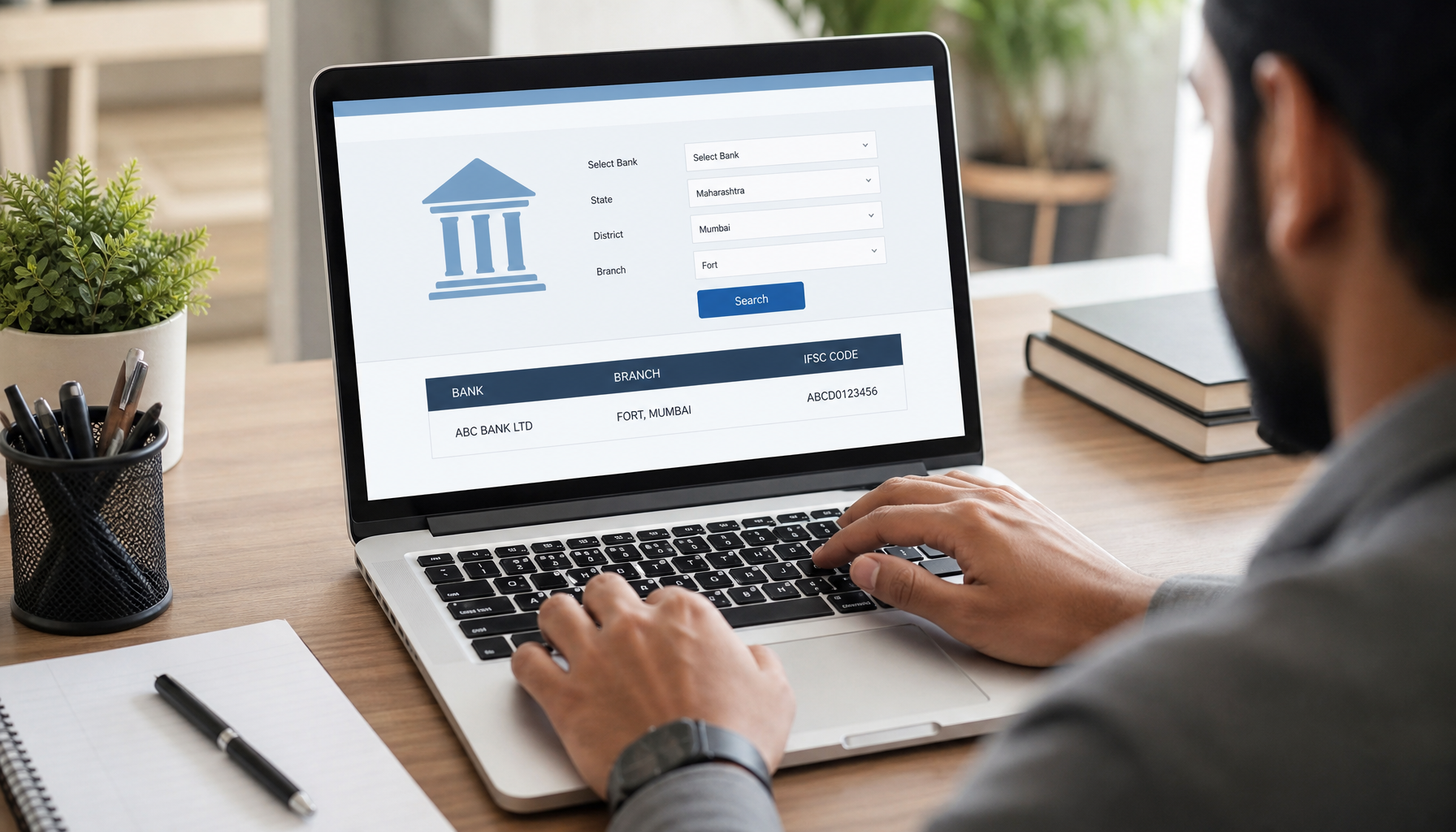
Modern banking operations rely on sophisticated alphanumeric routing codes to ensure that funds and negotiable payment instruments navigate through national and global clearinghouses without friction or misdirection. Whether you are transferring money domestically via electronic payment rails, presenting a physical cheque for clearing, or receiving an international remittance from abroad, distinct identification systems govern each transaction. The three most vital routing identifiers encountered in Indian banking are the Indian Financial System Code (IFSC), the Magnetic Ink Character Recognition (MICR) code, and the Society for Worldwide Interbank Financial Telecommunication (SWIFT) code.
Although these codes are frequently mentioned in account opening kits, cheque books, and internet banking portals, significant confusion persists regarding their individual architectures, regulatory jurisdictions, and operational use cases. Entering an incorrect code during an interbank electronic transfer can result in delayed settlements, transaction reversals, or unintended debit routing. Understanding the structural differences among these three standards is essential for retail depositors, corporate treasury officers, and financial professionals alike.
This comprehensive technical guide dissects the exact character-level structure, issuance authorities, clearing ecosystems, and functional differences among MICR, IFSC, and SWIFT codes under the regulatory oversight of the Reserve Bank of India (RBI) and international standards organizations.
IFSC Code Architecture: The National Electronic Transfer Backbone
The Indian Financial System Code (IFSC) is an 11-character alphanumeric code established by the Reserve Bank of India to uniquely identify every commercial bank branch participating in domestic electronic funds transfer networks. Introduced alongside the modernization of Indian payment systems, the IFSC serves as the primary routing coordinate for National Electronic Funds Transfer (NEFT), Real Time Gross Settlement (RTGS), and Immediate Payment Service (IMPS) transactions.
The structural layout of an IFSC is strictly standardized across all scheduled commercial banks, cooperative banks, regional rural banks, and payments banks in India:
- First 4 Characters (Alphabetic): Represents the institutional bank code assigned by RBI. For example,
SBINdenotes State Bank of India,HDFCdenotes HDFC Bank,ICICdenotes ICICI Bank, andPUNBdenotes Punjab National Bank. - Fifth Character (Numeric Control): Reserved strictly as
0(zero) for future expansion and control purposes. It prevents algorithmic misinterpretation between alphabetic bank codes and branch identifiers. - Last 6 Characters (Alphanumeric): Represents the specific branch location code. These can be numeric (such as
000240for HDFC Connaught Place, New Delhi) or alphanumeric in certain non-scheduled or merged cooperative entities.
Whenever an electronic transfer instruction is initiated across Indian net banking or mobile banking channels, the central settlement engine of the RBI or NPCI parses the first four characters to route the transaction to the destination bank’s core banking server, and uses the trailing six characters to credit the exact branch ledger holding the beneficiary customer’s account.
MICR Code Architecture: The Physical Cheque Clearing Engine
The Magnetic Ink Character Recognition (MICR) code is a 9-digit numeric code printed along the bottom baseline of paper cheques using specialized magnetic ink or toner containing iron oxide particles. Originating in the late 1950s and adopted widely by the Reserve Bank of India in the 1980s, MICR technology was engineered to enable high-speed mechanical reading and sorting of physical cheques, dramatically cutting clearing turnaround times from weeks to hours.
The 9-digit MICR code is partitioned into three distinct three-digit numerical segments:
- First 3 Digits (City Code): Aligns precisely with the first three digits of the postal PIN code of the branch city. For instance,
110represents New Delhi,400represents Mumbai,560represents Bengaluru, and700represents Kolkata. - Middle 3 Digits (Bank Code): Represents the unique 3-digit numeric bank identifier assigned by the RBI. For example,
002corresponds to State Bank of India,240represents HDFC Bank, and229designates ICICI Bank. - Last 3 Digits (Branch Code): Uniquely identifies the physical operating bank branch within that specific city. For example,
001typically designates the main branch of that bank in the metropolitan center.
Under the RBI Cheque Truncation System (CTS-2010), high-resolution scanners capture both digital images and magnetic MICR data from the cheque band. The MICR band incorporates the cheque number, 9-digit MICR code, account number, and transaction code (e.g., 29 for current accounts, 10 for savings accounts, 11 for demand drafts), allowing automated interbank settlement without physically transporting paper cheques across clearing zones.
SWIFT Code Architecture: The Cross-Border Financial Messaging Standard
When financial transactions traverse national borders, domestic routing codes like IFSC and MICR are not recognized by foreign banking clearinghouses. Instead, international remittances, cross-border trade letters of credit, and foreign currency wire transfers rely on the Society for Worldwide Interbank Financial Telecommunication (SWIFT) network. A SWIFT code, formally standardized as a Business Identifier Code (BIC) under ISO 9362, is an 8 or 11-character alphanumeric code that uniquely identifies financial institutions globally.
The SWIFT / BIC code architecture consists of four distinct operational segments:
- First 4 Characters (Bank Code): Four letters identifying the institution worldwide. For example,
SBINfor State Bank of India,HDFCfor HDFC Bank,PUNBfor Punjab National Bank. - Next 2 Characters (Country Code): Two letters denoting the country ISO 3166-1 alpha-2 code. For Indian institutions, this is consistently
IN(e.g.,SBININ). - Next 2 Characters (Location Code): Two alphanumeric characters indicating the primary operational hub or corporate headquarters city. For example,
BBdenotes Mumbai for State Bank of India (producingSBININBB). - Last 3 Characters (Branch Code – Optional): Three alphanumeric characters identifying a specific dealing branch or treasury division. If omitted or designated as
XXX, it refers to the bank’s primary head office foreign exchange treasury.
Unlike IFSC and NEFT, SWIFT does not directly settle money; rather, it transmits cryptographically secured, standardized financial messages (such as MT103 for single customer transfers or ISO 20022 MX messages) that authorize correspondent banking institutions to debit and credit their respective Nostro and Vostro accounts.
Core Differences: Settlement Speed, Clearing Networks, and Geographic Scope
The primary operational difference between these three systems lies in their designated clearing rails and geographic domains. The IFSC is strictly domestic, restricted entirely to institutions licensed by the Reserve Bank of India operating within Indian territory. Its electronic settlement velocity ranges from near-instantaneous (under IMPS and UPI) to thirty minutes (under half-hourly NEFT batches) to real-time (under RTGS gross settlement).
The MICR code is tethered to negotiable paper instruments governed by the Negotiable Instruments Act, 1881. Even within the modernized Cheque Truncation System, cheque clearing operates under structured presentation and clearing cycles, typically requiring T+1 business days for realization, subject to bank holidays and weekend clearing schedules.
The SWIFT system is international in scope, connecting over 11,000 financial institutions across more than 200 countries and territories. Cross-border transfers routed via SWIFT typically require one to three business days, influenced by intermediary correspondent bank processing times, time zone discrepancies, currency conversion protocols, and Anti-Money Laundering (AML) / Know Your Customer (KYC) sanction screening procedures.
Comparative Framework: MICR vs IFSC vs SWIFT
To provide clear reference clarity for both domestic and international banking operations, the table below compares the technical specifications, governing bodies, and primary use cases of each routing standard.
| Feature / Parameter | IFSC Code | MICR Code | SWIFT (BIC) Code |
|---|---|---|---|
| Code Length | 11 Characters (Alphanumeric) | 9 Digits (Numeric Only) | 8 or 11 Characters (Alphanumeric) |
| Primary Function | Domestic Electronic Fund Transfers | Physical Cheque Clearing (CTS) | International Remittance Messaging |
| Payment Rails | NEFT, RTGS, IMPS | Cheque Truncation System (CTS-2010) | SWIFT Cross-Border Correspondent Rails |
| Geographic Coverage | India Only | India (and select domestic markets) | Global (Over 200 Countries) |
| Governing Authority | Reserve Bank of India (RBI) | Reserve Bank of India (RBI) / NPCI | SWIFT / ISO (ISO 9362 Standard) |
| Location on Document | Cheque top / Passbook / Net Banking | Cheque bottom band (magnetic ink) | Bank Forex Desk / International Portal |
| Settlement Speed | Instant to 30 mins (24x7x365) | T+1 Clearing Cycle | 1 to 3 International Working Days |
Reviewing the comparison parameters highlights how each code occupies a distinct operational silo. Using an IFSC code for international wire instructions is invalid, just as attempting to initiate an online NEFT transfer using a 9-digit MICR code will be rejected by bank validation engines.
Frequently Asked Questions About MICR, IFSC, and SWIFT Codes
Can I transfer money internationally using only an IFSC code?
No. IFSC codes are domestic identifiers recognized exclusively within the Indian banking ecosystem governed by the Reserve Bank of India. International foreign currency remittances initiated from outside India require the beneficiary bank’s SWIFT / BIC code in conjunction with the customer’s international bank account number or standard Indian account number.
Where can I find the 9-digit MICR code on my bank cheque?
The MICR code is printed at the bottom center of every physical cheque leaf within the MICR band. It is positioned between quotation-style delimiting symbols, immediately adjacent to the 6-digit cheque serial number on the left and the account transaction code on the right.
Does every bank branch have its own unique SWIFT code?
No. Unlike IFSC codes where virtually every individual physical branch possesses a distinct 11-character code, many commercial banks maintain a centralized SWIFT code for their primary foreign exchange treasury branch (often located in Mumbai or New Delhi). Remittances arriving at the central treasury are subsequently routed internally to the recipient’s branch.
What happens if I write the wrong IFSC code during an online transfer?
If the entered IFSC code does not exist within the RBI master database, the transaction is rejected instantly at the portal level. However, if you enter a valid IFSC code belonging to an unintended branch or bank, the transaction may still proceed if the destination bank relies solely on automated account number matching. In the event of an erroneous transfer, immediate notification to your branch manager is required under RBI customer protection guidelines.
Is a MICR code required for setting up electronic mutual fund SIPs?
Historically, Electronic Clearing Service (ECS) mandates required the 9-digit MICR code for bank verification. In modern digital banking, however, National Automated Clearing House (NACH) e-mandates and Systematic Investment Plan (SIP) authorizations primarily utilize your bank account number and IFSC code or net banking / debit card authentication.
Why is the 5th character of every IFSC code always zero?
The Reserve Bank of India deliberately designated the fifth character of the IFSC as the numeric numeral zero (0) to act as a permanent control divider. This architectural design provides future expansion capacity and guarantees unambiguous parsing between the alphabetic 4-letter bank identifier and the branch code.
Do IFSC and MICR codes change after bank mergers?
Yes. Following public sector bank consolidations (such as the mergers of Oriental Bank of Commerce into PNB, or Allahabad Bank into Indian Bank), legacy IFSC and MICR codes were systematically decommissioned by the RBI and replaced with unified codes aligned under the anchor bank’s naming conventions.
How can I verify if an IFSC or MICR code is active and valid?
Active IFSC and MICR codes can be verified directly through the Reserve Bank of India’s official public IFSC database portal at rbi.org.in, your bank’s official internet banking portal, or comprehensive reference directories like IFSC.co.
Conclusion: Ensuring Frictionless Payment Routing in Digital Banking
The triad of IFSC, MICR, and SWIFT codes constitutes the technical framework of contemporary financial clearing operations. Each code was engineered to solve a precise logistical challenge: MICR automates optical and magnetic cheque sorting, IFSC enables instantaneous domestic electronic settlements across NEFT, RTGS, and IMPS rails, and SWIFT bridges sovereign currencies across international correspondent networks.
By understanding the distinct architecture and specialized purpose of each identifier, retail account holders and commercial enterprises can execute transactions with total confidence, eliminating clearing errors and ensuring that financial resources reach their intended destinations securely and on schedule.
