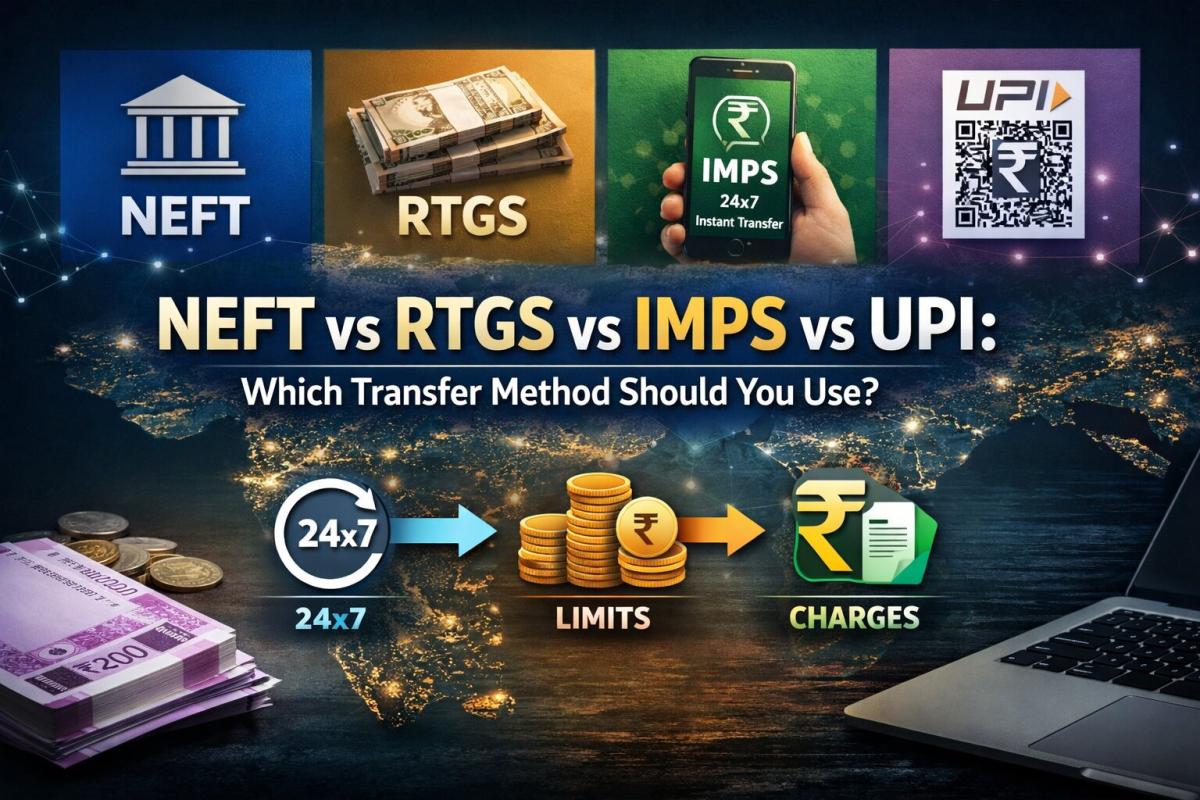
NEFT vs RTGS vs IMPS vs UPI: Which Transfer Method Should You Use?
NEFT, RTGS, IMPS, or UPI — which transfer method should you use? Compare limits, timing, charges and best use cases. Full guide with 2025 RBI & NPCI figures.
Priya Nair
Senior Compliance Editor at IFSC.co
16 min read
Table of Contents
- Four Systems, One Goal — Sending Money Between Bank Accounts
- The Master Comparison Table — Limits, Timing, Charges, Best Use
- NEFT — National Electronic Funds Transfer
- RTGS — Real-Time Gross Settlement
- IMPS — Immediate Payment Service
- UPI — Unified Payments Interface
- Which Method Should You Use? — A Practical Decision Guide
- 4 Common Mistakes People Make with Bank Transfers
- Frequently Asked Questions
KEY TAKEAWAYS
- NEFT and RTGS are RBI-managed systems; IMPS and UPI are managed by NPCI. All four transfer money between Indian bank accounts — but each is built for a different situation.
- RTGS is for high-value transfers only — minimum ₹2 lakh. For anything below ₹2 lakh, use NEFT, IMPS, or UPI.
- UPI is free and instant for personal transfers up to ₹1 lakh per day. It is the fastest option for everyday payments.
- NEFT and RTGS are free when initiated online. IMPS may carry a small fee (₹2.50–₹25) depending on your bank.
- NEFT settles in batches every 30 minutes — not instant. RTGS, IMPS, and UPI all settle in real time.
- Every bank-to-bank transfer (NEFT, RTGS, IMPS) requires the recipient's IFSC code. UPI only needs a UPI ID or mobile number.
Four Systems, One Goal — Sending Money Between Bank Accounts
India has four mainstream methods for transferring money between bank accounts: NEFT, RTGS, IMPS, and UPI. Most people have used at least two of them — but very few know precisely when each one is the right choice, what limits apply, and what a wrong choice costs you. Sending ₹3 lakh via UPI when you should have used RTGS, or attempting an RTGS transfer of ₹50,000 and watching it fail because it is below the minimum — these are real, avoidable mistakes.
The four systems are not interchangeable. They were each built for different transaction sizes, different speeds, and different situations. This guide gives you the exact data — limits, timing, charges, and best use cases — verified against RBI and NPCI guidelines for FY 2025-26.
|
Full Forms — Quick Reference NEFT → National Electronic Funds Transfer (operated by RBI) RTGS → Real-Time Gross Settlement (operated by RBI) IMPS → Immediate Payment Service (operated by NPCI) UPI → Unified Payments Interface (operated by NPCI) |
The Master Comparison Table — Limits, Timing, Charges, Best Use
This table is the fastest way to make the right decision. All figures are based on RBI and NPCI guidelines as of FY 2025-26. Individual banks may apply lower sub-limits — verify with your bank for high-value transfers.
|
Feature |
NEFT |
RTGS |
IMPS |
UPI |
|
Operated by |
RBI |
RBI |
NPCI |
NPCI |
|
Minimum amount |
₹1 (no min.) |
₹2,00,000 |
₹1 (no min.) |
₹1 (no min.) |
|
Maximum per transaction |
No RBI cap (bank limits apply) |
No RBI cap (bank limits apply) |
₹5,00,000 (NPCI); bank sub-limits may be lower |
₹1,00,000 P2P; ₹5,00,000 select categories* |
|
Settlement speed |
Batch — every 30 min |
Real-time (within 30 min) |
Instant (real-time) |
Instant (real-time) |
|
Availability |
24×7 (incl. holidays) |
24×7 (since Dec 2020) |
24×7 (incl. holidays) |
24×7 (incl. holidays) |
|
Online charges (net/mobile banking) |
Free (RBI waiver) |
Free (RBI waiver) |
₹2.50–₹25 + GST (bank-set) |
Free for P2P |
|
Branch charges |
₹2–₹25 + GST |
₹25–₹50 + GST |
₹2.50–₹25 + GST |
N/A (app-based only) |
|
What you need to send |
A/c no. + IFSC + name |
A/c no. + IFSC + name |
A/c no. + IFSC or MMID + mobile |
UPI ID or mobile no. (no IFSC needed) |
|
Transaction reversal time (if failed) |
Within 2 hours or next batch |
Immediate / same day |
Immediate (auto-reversed) |
Immediate (auto-reversed) |
|
Best use case |
Scheduled, non-urgent transfers of any size below ₹2L |
Large transfers ₹2L+ that need same-day guaranteed settlement |
Instant transfers when UPI is not available or account-based transfer is needed |
Everyday payments, splitting bills, rent, small purchases up to ₹1L |
*UPI ₹5L categories (effective September 15, 2025): capital markets, insurance premiums, IPO applications, hospital payments, school/college fees, travel, credit card repayments, jewellery, and government payments. Standard P2P limit remains ₹1 lakh per transaction and ₹1 lakh per day.
NEFT — National Electronic Funds Transfer
NEFT was launched by RBI in 2005 and remains the most widely used bank-to-bank transfer method for non-urgent transactions. Unlike what the name might suggest, NEFT is not instant — it settles in batches that run every 30 minutes throughout the day, including weekends and public holidays (since December 2019). This means a transfer initiated at 10:08 AM will settle in the 10:30 AM batch, not immediately.
The most important thing to understand about NEFT is that it has no minimum or maximum amount set by RBI. You can transfer ₹1 or ₹1 crore — the system does not restrict you. However, individual banks impose their own daily limits through internet banking and mobile apps. Check your bank's net banking interface for your specific daily cap.
NEFT Charges (FY 2025-26)
RBI waived all processing charges on NEFT transactions in January 2020. Banks are expected to pass this benefit to customers for online-initiated transfers. In practice, NEFT via internet banking or mobile banking is free at virtually all major banks. Branch-initiated NEFT still carries nominal charges: ₹2–₹5 for transactions up to ₹10,000; ₹5–₹15 for ₹10,001–₹1 lakh; ₹15–₹25 for amounts above ₹1 lakh, plus 18% GST. These charges are bank-specific.
When NEFT is the Right Choice
- Paying rent — scheduled, non-urgent, any amount
- Vendor or supplier payments — when same-day settlement is not critical
- Loan EMI transfers — to a different bank account
- Transfers above ₹1 lakh — where UPI's per-transaction limit is a constraint
- Any transfer where the recipient does not use UPI and real-time speed is not required
|
NEFT is NOT instant — plan for the 30-minute batch window If you initiate a NEFT transfer at 10:28 AM, it will go into the 10:30 AM batch — and settle within minutes of that. But if you initiate at 10:31 AM, the next batch runs at 11:00 AM. For time-sensitive transfers, use RTGS (if ≥ ₹2 lakh) or IMPS instead. |
RTGS — Real-Time Gross Settlement
RTGS is RBI's high-value transfer system, and it works differently from every other method: each transaction is settled individually, in real time, on a gross basis — meaning it is not netted against other transactions. The money moves from the sender's bank to the recipient's bank within 30 minutes of initiation, and both banks maintain direct settlement records with RBI.
The minimum transaction amount is ₹2,00,000. There is no upper limit set by RBI, but individual banks typically cap online RTGS at ₹10–₹20 lakh per day through mobile or internet banking. Corporate accounts often have significantly higher limits. RTGS became available 24×7 (including Sundays and public holidays) from December 14, 2020 — a major upgrade from its earlier banking-hours restriction.
RTGS Charges (FY 2025-26)
RBI waived RTGS processing charges from July 2019. Online RTGS — initiated through net banking or mobile banking — is free for savings account holders at most banks. Branch-initiated RTGS may attract fees: ₹25–₹50 + GST for amounts between ₹2 lakh and ₹5 lakh; banks set their own rates for higher amounts within RBI's prescribed ceiling. Always initiate online to avoid branch charges.
When RTGS is the Right Choice
- Property purchases — transfer of ₹10–₹50 lakh or more with guaranteed same-day settlement
- Business payments — paying suppliers, contractors, or distributors for large orders
- Margin payments — stock market margin calls or commodity market payments
- Any transfer ≥ ₹2 lakh where speed, certainty, and an individual transaction record are important
|
RTGS will reject transfers below ₹2 lakh — do not attempt If your transfer amount is ₹1,95,000 — even ₹1,999 short of the minimum — RTGS will reject it outright. The system enforces the ₹2 lakh minimum with no exceptions. Use NEFT or IMPS for amounts below this threshold. Important: RTGS is a gross settlement system — each transaction is final and individually recorded. There is no batch netting. This is why it is preferred for high-value transfers where transaction-level traceability matters. |
IMPS — Immediate Payment Service
IMPS, launched by NPCI in 2010, was India's first truly instant, round-the-clock bank transfer system. It is the infrastructure layer that UPI is built on top of. Unlike NEFT, IMPS settles each transaction in real time — the recipient's account is credited within seconds of initiation. Unlike RTGS, there is no minimum amount requirement — you can send ₹1 or ₹5 lakh.
The NPCI-set per-transaction limit for IMPS is ₹5,00,000. Individual banks set their own sub-limits, which are frequently lower — many banks cap IMPS at ₹2–₹5 lakh per transaction. Check your bank's mobile or internet banking interface for your specific limit.
IMPS Charges (FY 2025-26)
Unlike NEFT and RTGS, IMPS is not free. Banks are permitted to charge for IMPS transfers, and most do. Typical charges: ₹2.50 for transfers up to ₹1,000; ₹5 for ₹1,001–₹1 lakh; ₹15 for ₹1,00,001–₹2 lakh; ₹25 for ₹2,00,001–₹5 lakh, all plus 18% GST. Some banks — notably SBI for savings account holders — have waived IMPS charges. Charges vary significantly; verify with your bank.
When IMPS is the Right Choice
- Instant account-to-account transfer when the recipient does not have a UPI ID
- Transfers between ₹1 lakh and ₹5 lakh when you need instant settlement (UPI P2P limit is ₹1 lakh)
- Emergency transfers from a desktop browser where a UPI app is not accessible
- Programmatic or API-triggered payments in business banking contexts
UPI — Unified Payments Interface
UPI, launched by NPCI in 2016, is the most widely used payment system in India — and the largest real-time payment system in the world. In August 2025, UPI processed 20 billion transactions worth ₹25 trillion in a single month. It works by running on top of IMPS infrastructure, which means transfers are instant and 24×7. The key difference: UPI removes the need to know the recipient's bank account number and IFSC code — all you need is their UPI ID (like name@upi), mobile number, or a QR code.
The standard UPI limit is ₹1 lakh per transaction and ₹1 lakh per day for P2P (person-to-person) transfers. However, effective September 15, 2025, NPCI raised per-transaction limits to ₹5 lakh for specific verified merchant categories — including capital markets, insurance, hospitals, educational institutions, travel, and IPO applications. The daily cap for these categories ranges from ₹5 lakh to ₹10 lakh depending on the category.
UPI Charges (FY 2025-26)
Person-to-person bank account transfers via UPI are completely free — no charges for the sender or the recipient. There are no transaction fees for paying most merchants either. The only charge that applies is a merchant interchange fee for wallet-based UPI transactions (using Paytm Wallet, PhonePe Wallet, etc.) above ₹2,000 — this is charged to the merchant, not the customer. Standard bank-to-bank UPI transfers remain free.
When UPI is the Right Choice
- Everyday payments — groceries, restaurants, auto/cab, utilities, subscriptions
- Splitting bills — instantly settle shared expenses with friends or family
- Rent payments up to ₹1 lakh — many landlords now accept UPI, no IFSC needed
- Paying for insurance, IPOs, hospital bills, and college fees — up to ₹5 lakh with enhanced NPCI limits
- Any transfer where simplicity matters — UPI ID or phone number is all you need
|
UPI runs on IMPS infrastructure — why this matters UPI is not a separate network — it is a protocol layer built on top of IMPS. This is why both are real-time and 24×7. The difference is in the interface: IMPS requires an account number and IFSC code (or MMID). UPI replaces all of that with a simple ID. For transfers where the recipient shares their UPI ID, always use UPI — it is simpler and free. Use IMPS only when you need account-to-account transfer without a UPI ID. |
Which Method Should You Use? — A Practical Decision Guide
The right transfer method depends on three variables: how much you are sending, how quickly it needs to arrive, and whether you need a formal bank transaction record. Here is the decision guide by scenario:
|
Your situation |
Use this |
Why |
|
Paying rent / EMI to a different bank, not urgent |
NEFT |
Free, no minimum, 30-min batch is fine for scheduled payments |
|
Transferring ₹2 lakh or more, needs to land today |
RTGS |
Real-time, guaranteed settlement, free online, proper transaction record |
|
Sending ₹1–₹5 lakh instantly, recipient has no UPI ID |
IMPS |
Instant, works with account no. + IFSC, no minimum, small fee applies |
|
Everyday payments, groceries, splitting bills, below ₹1L |
UPI |
Free, instant, no IFSC needed, 20 transactions per day |
|
Paying hospital/college/insurance, up to ₹5 lakh |
UPI |
Enhanced ₹5L limit available for these categories since September 2025 |
|
Need a formal payment record for a large business transfer |
RTGS |
Each RTGS transaction is individually settled and recorded by RBI — strongest audit trail |
|
Recipient is in another country (international transfer) |
None — use SWIFT / Forex |
NEFT, RTGS, IMPS, and UPI are domestic systems only. For international transfers, use your bank's SWIFT remittance service |
|
Need the IFSC Code for NEFT, RTGS, or IMPS? Every bank-to-bank transfer via NEFT, RTGS, or IMPS requires the recipient's IFSC code — an 11-character code that identifies their specific bank branch. Our free IFSC Code Finder covers all RBI-registered banks and branches across India. Enter the bank name, state, and branch to get the exact code in seconds. ▶ Find IFSC Code →https://ifsc.co/ifsc |
4 Common Mistakes People Make with Bank Transfers
|
1 |
Trying RTGS for amounts below ₹2 lakh The most common RTGS error: initiating a transfer for ₹1.5 lakh or ₹1.8 lakh and having it rejected. The ₹2 lakh minimum is hard — the system will not process a rupee less. Use NEFT or IMPS for any amount below ₹2 lakh. |
|
2 |
Using UPI for a transfer that needs a formal bank record UPI transactions settle in real time, but they are not always accepted as formal proof of payment in property transactions, legal settlements, or high-value contracts. For these situations, RTGS provides an individual RBI-level transaction record that courts and institutions recognise. When in doubt about documentary requirements, use RTGS or NEFT. |
|
3 |
Assuming NEFT is instant because it is '24×7' '24×7 availability' means you can initiate a NEFT transfer at any time — not that it settles instantly. Settlement still happens in 30-minute batches. A transfer initiated at 2:45 AM will settle in the 3:00 AM batch — which is fine for non-urgent transfers, but not for emergencies. For urgent transfers at any hour, use IMPS or UPI. |
|
4 |
Entering the wrong IFSC code for NEFT, RTGS, or IMPS An incorrect IFSC code sends the transaction to the wrong branch — or causes an outright rejection. IFSC codes change when banks merge (as happened with several cooperative banks and the Vijaya Bank / Dena Bank / Bank of Baroda merger). Always verify the IFSC code before initiating a large transfer. Reversed transactions can take 2–5 business days. |
Frequently Asked Questions
Q: What is the minimum amount for RTGS transfer?
₹2,00,000 (₹2 lakh). This is an RBI-mandated hard minimum — RTGS will reject any transfer below this amount. There is no RBI-set maximum for RTGS, but individual banks set their own upper limits for online transactions, typically ₹10–₹20 lakh per day for individual accounts.
Q: Is NEFT available 24×7?
Yes. NEFT operates 24 hours a day, 7 days a week including Sundays and public holidays, since December 2019. However, it is not instant — transactions settle in 30-minute batches throughout the day and night.
Q: What is the IMPS transfer limit per day?
NPCI sets the per-transaction IMPS limit at ₹5,00,000. Individual banks may apply lower sub-limits — ranging from ₹2 lakh to ₹5 lakh depending on the bank and account type. Your daily IMPS limit is the sum of all transactions through the day up to your bank's set cap.
Q: Does NEFT have any charges in 2025?
No, for online-initiated NEFT (via internet banking or mobile banking). RBI waived processing charges in January 2020, and banks are required to pass this on to customers for digital channel transfers. Branch-initiated NEFT may still attract nominal charges of ₹2–₹25 plus GST, depending on the amount and the bank.
Q: Can I transfer money via UPI without knowing IFSC code?
Yes. That is UPI's biggest advantage over NEFT, RTGS, and IMPS. UPI only requires the recipient's UPI ID (like mobile@upi or phonenumber@bank) or mobile number. No IFSC code, no account number entry required. NEFT, RTGS, and IMPS all require the recipient's account number and IFSC code.
Q: Which is faster — IMPS or UPI?
Both are real-time. UPI is built on IMPS infrastructure, so their settlement speed is identical — typically within a few seconds. The difference is in usability: UPI is simpler (just a UPI ID) and free; IMPS requires account number + IFSC and may carry a small fee.
Q: Can NEFT or RTGS be used for international transfers?
No. NEFT, RTGS, IMPS, and UPI are all domestic systems operating within India's banking network only. For international money transfers, use your bank's SWIFT remittance service or a regulated forex transfer platform.
Q: What happens if I enter the wrong account number for a NEFT transfer?
If the account number does not exist at the destination bank, the transfer is typically reversed to your account within 2 hours or the next settlement batch. If the account number exists but belongs to a different person, recovery is much harder and may require a formal bank complaint or legal process. Always double-check the account number and IFSC code — especially for new payees.
The Bottom Line
For everyday transfers below ₹1 lakh — UPI is the obvious choice. It is free, instant, works 24×7, and requires no banking details beyond a UPI ID. For amounts between ₹1 lakh and ₹2 lakh — NEFT or IMPS depending on whether you need instant settlement. For amounts above ₹2 lakh that need to arrive today, guaranteed — RTGS. For non-urgent transfers of any size — NEFT, free online, available at all hours.
The one thing all four systems have in common: bank-to-bank transfers via NEFT, RTGS, and IMPS require a verified IFSC code. Getting this wrong delays or reverses your transfer. Before initiating any large transfer to a new payee, verify the IFSC code and account number before you hit confirm — not after.
→ Find IFSC codes for any bank or branch — Find your bank IFSC code
→ Read more Banking & Transfers guides — https://ifsc.co/blogs/banking-transfers
→ New vs Old Tax Regime comparison — /blog/new-tax-regime-vs-old-tax-regime/
|
When to visit your bank branch instead For RTGS or NEFT transfers above ₹10–₹20 lakh (where online limits may be reached), or when dealing with a new payee for a very high-value property or business transaction, visiting the branch and initiating in person gives you an additional layer of verification and a physical receipt. The charges are nominal — typically ₹25–₹50 for RTGS — and the peace of mind for a ₹50 lakh transfer is worth it. |
|
Disclaimer: This article is for informational purposes only. Transfer limits, charges, and availability are based on RBI and NPCI guidelines as of FY 2025-26. Individual banks may apply different sub-limits. Verify current figures with your bank before initiating high-value transactions. |
Related Blogs
Published on May 06, 2026
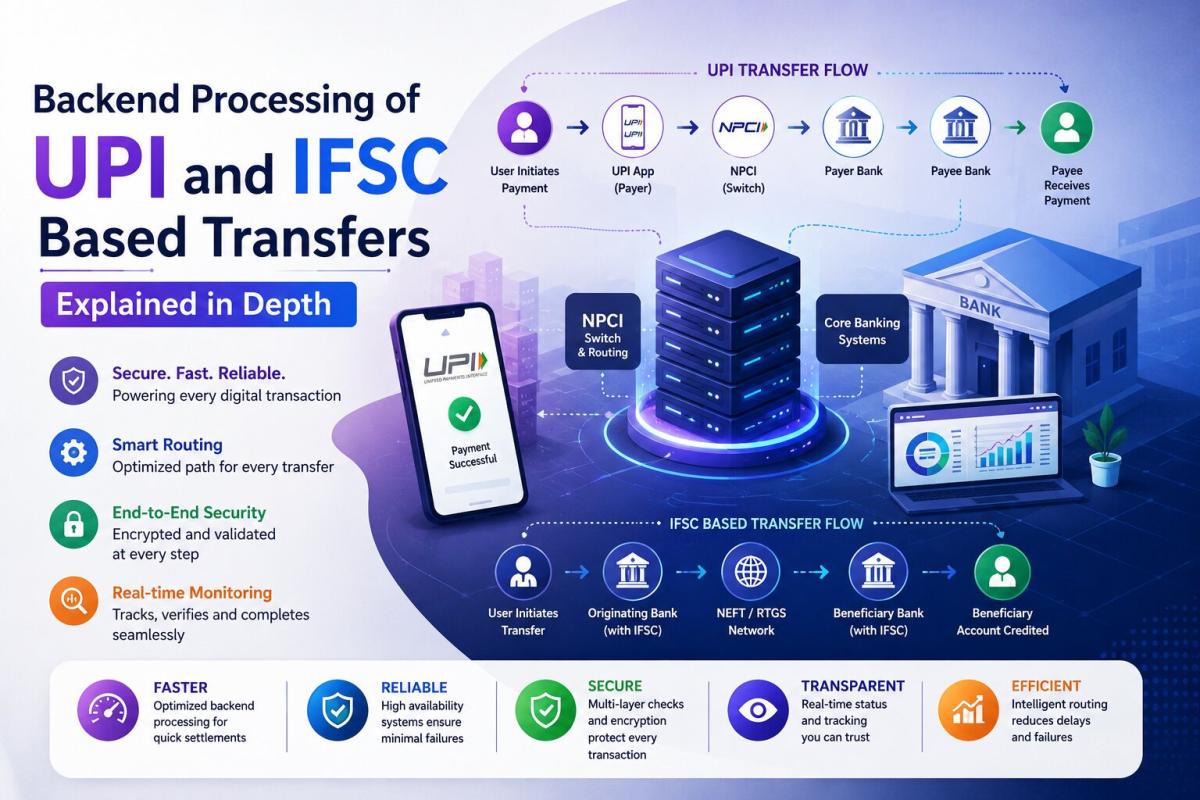
Backend Processing of UPI and IFSC Based Transfers Explained in Depth
Explore the backend processing of UPI and IFSC-based transfers, comparing real-time APIs, batch settlement systems, and how NPCI and RBI power secure digital payments in India.
Arjun Sharma
Content Lead – Banking & Payments
Published on May 06, 2026
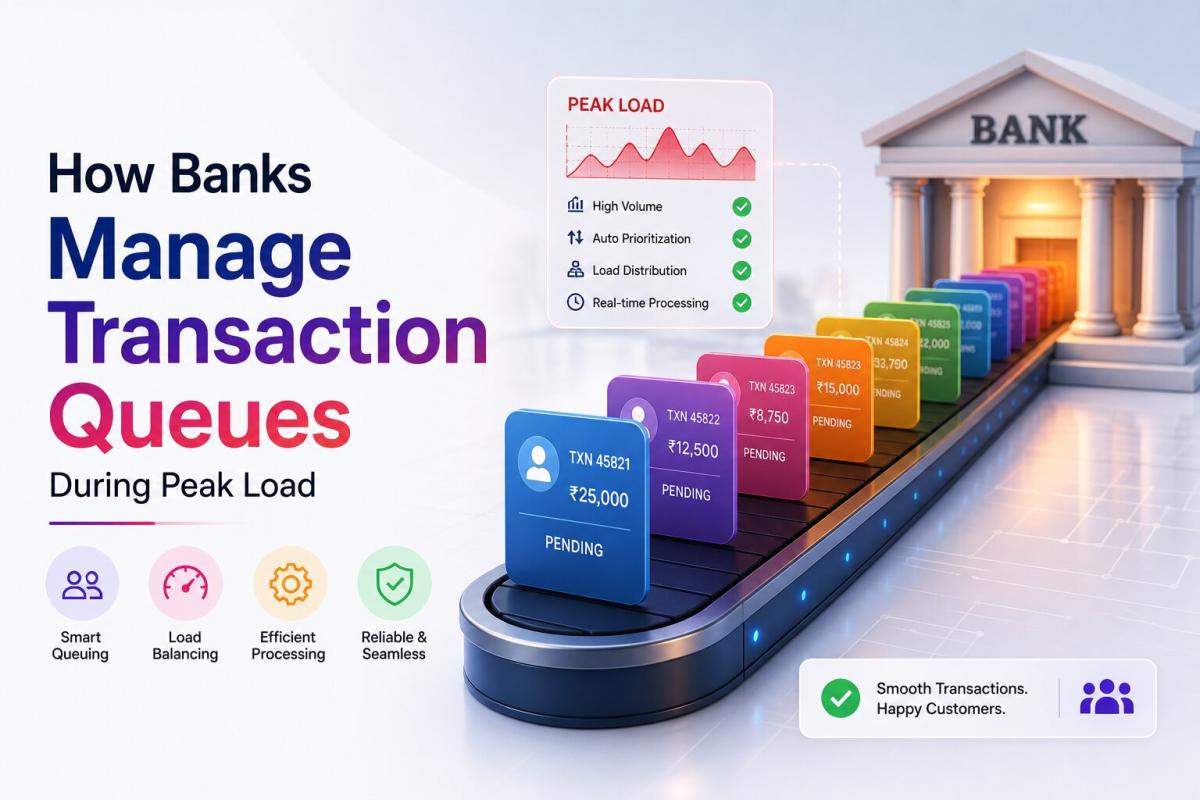
How Banks Manage Transaction Queues During Peak Load
Learn how banks manage transaction queues during peak load using distributed systems, priority queues, load balancing, and real-time processing to ensure fast and reliable payments. Author
Arjun Sharma
Content Lead – Banking & Payments
Published on May 06, 2026
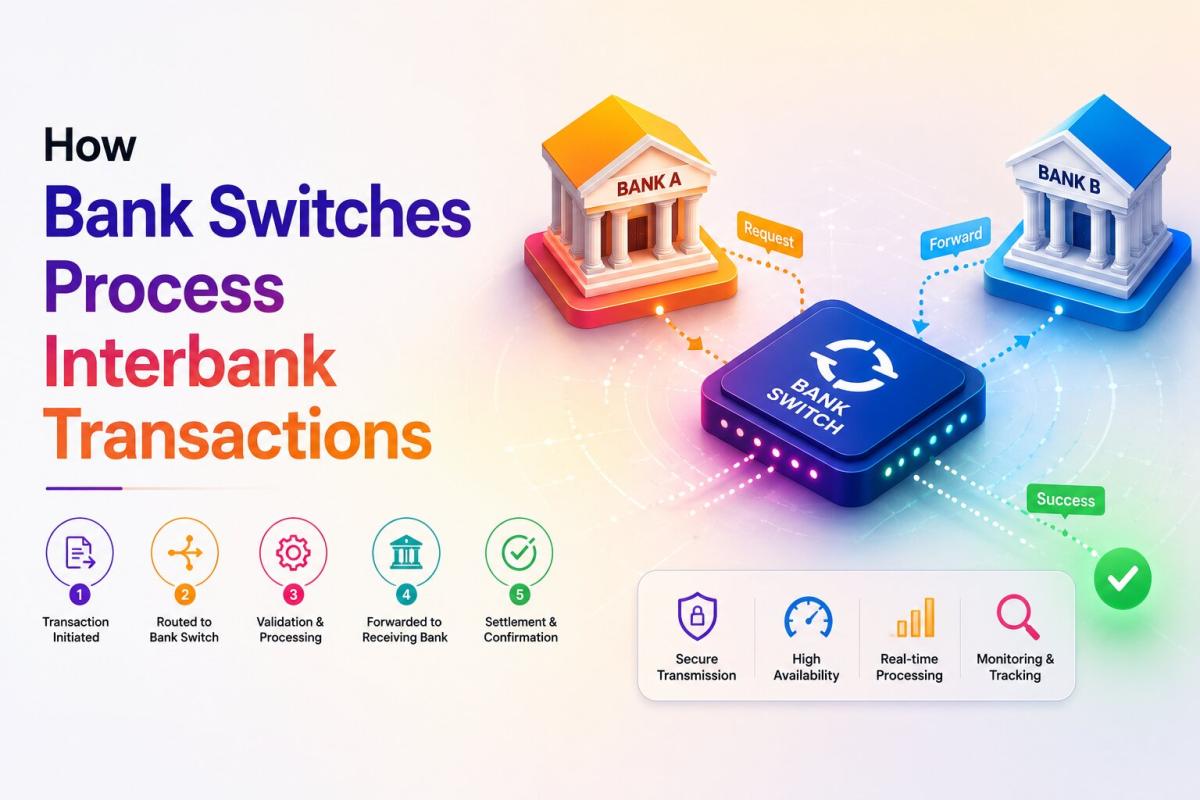
How Bank Switches Process Interbank Transactions
Learn how bank switches process interbank transactions by routing, authorizing, and securing payments between banks in real time using advanced switching systems and payment networks.
Arjun Sharma
Content Lead – Banking & Payments
Published on May 06, 2026
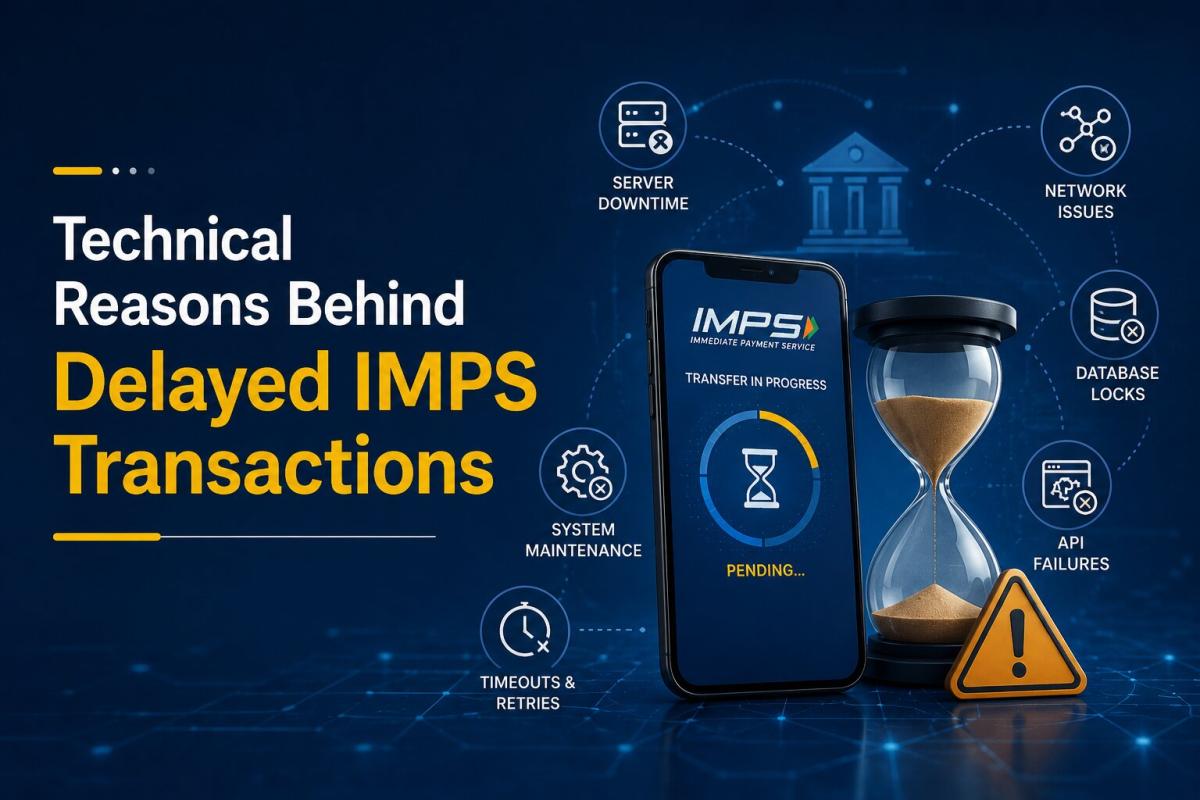
Technical Reasons Behind Delayed IMPS Transactions
Explore the technical reasons behind delayed IMPS transactions, including network latency, server downtime, bank processing delays, API failures, and high transaction volumes.
Arjun Sharma
Content Lead – Banking & Payments
Published on Apr 28, 2026
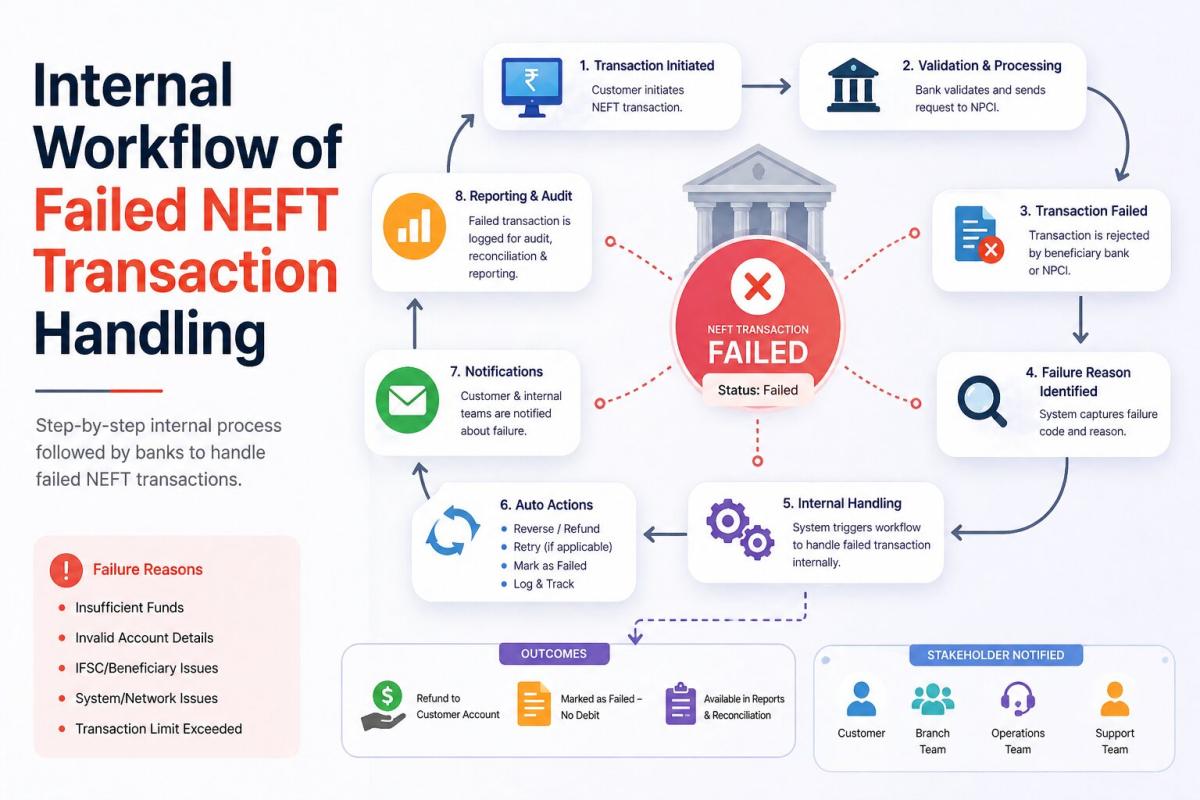
Internal Workflow of Failed NEFT Transaction Handling
Understand the internal workflow of failed NEFT transactions, including validation errors, settlement failures, automated reversals, and reconciliation processes in banking systems.
Arjun Sharma
Content Lead – Banking & Payments
calculate Financial Calculators
EMI Calculator
FD Calculator
GST Calculator
Lumpsum Calculator
Mutual Fund Returns Calculator
PPF Calculator
RD Calculator
SIP Calculator
SWP Calculator
article Latest Blog Posts
ELSS vs PPF vs NPS: Which Tax-Saving Investment Gives the Best Returns?
Compare ELSS vs PPF vs NPS to find the best tax-saving investment. Understand returns, lock-in periods, and features to choose what suits your goals.
SIP & Investing • 11 MINS READ
How to Start SIP with ₹500 Per Month: Beginner's Guide to Mutual Funds
Learn how to start a SIP with ₹500 per month in mutual funds. Simple beginner’s guide to investing, building wealth, and growing money with small steps.
SIP & Investing • 13 MINS READ
Senior Citizen FD Rates 2026: Which Banks Offer the Highest Interest?
Compare senior citizen FD rates in 2026 and find which banks offer the highest interest. Learn about returns, tenures, and tips to choose the best FD.
FD, PPF & Savings • 12 MINS READ
Sukanya Samriddhi Yojana (SSY): Interest Rate, Rules & Calculator Guide 2026
Learn about Sukanya Samriddhi Yojana (SSY) including eligibility criteria, required documentation, step by step application process, tax benefits explanation and comparison b/w SSY, PPF and FD
FD, PPF & Savings • 11 MINS READ
2 reasons why online banking is important in today’s COVID-19 situation
Discover why online banking became essential during COVID-19. Learn how digital banking ensured safety, convenience, and uninterrupted financial services.
Digital Banking • 4 MINS READ