Advantages and Risks of Net Banking
Learn the advantages and risks of net banking, including convenience, speed, and security concerns. Understand how to use online banking safely.
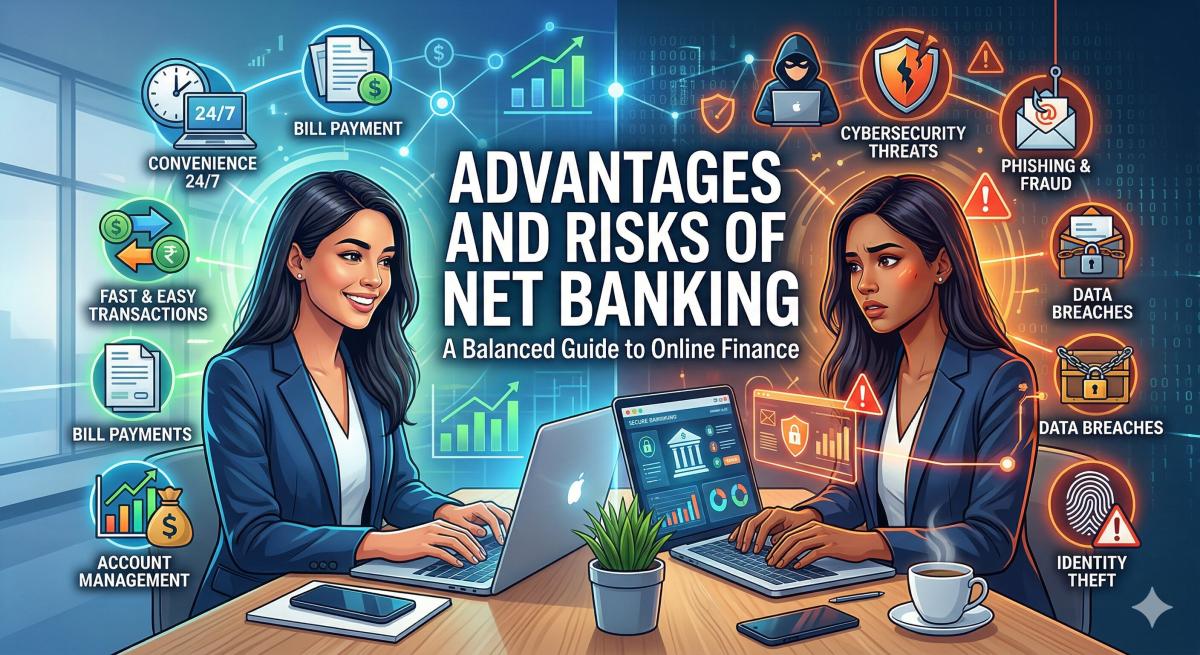
Table of Contents
Net banking is defined as a facility offered by banks which allow its customers to conduct banking transactions over the internet. This facility greatly reduces the physical presence at the bank, and that’s the reason it’s also called ‘Anytime and Anywhere Banking’. Net banking is also known as online banking, e-banking, internet banking, etc. With the advent of internet banking, gone are the days when a person had to take a trip to his bank even to check his account balance.
The concept of internet banking began in 1983 in the UK, when the Bank of Scotland started provided internet banking to its customers, known as ‘Home link’. This service used telephone lines and TV for the internet and formed the base of what would become internet banking today. Today, online banking has become the need of the day, and hence it would be prudent to understand the various advantages and disadvantages of it. Here we present some advantages:
Advantages of Net Banking
Convenience
Net banking is called as ‘banking on your finger-tips’. Any type of banking service, whether it is as easy as checking your balance, to applying for a personal loan, or a complex transaction like transferring a large sum of money - all can be done at the convenience of your home. The popularity of internet banking is such that it is predicted (By The Financial Brand) that by 2022, 88% of consumer-banking interactions will be done by smartphones in the comfort of their homes. All the services offered by banks are carried out 24/7, 365 days a year, so all exigencies are taken care of.
Speed and efficiency
The growth of mobile banking has also made banking efficient and fast. For any customer, physical presence at a bank even for the simplest transactions can mean time spent in travel, standing in queues, communicate with the banking official, etc. With the smartphone, ‘bank-on-the-go’ is the new option, where banking is not only frictionless, paperless, and efficient. For any customer, the hassle-free execution of transactions in important than the physical infrastructure of the bank.
Apart from the above two advantages, online banking also has the following two advantages:
- Online banking allows you to pay all your bills on time, without any hassles.
- Online banking reduces fees as you do not have to share the cost of the upkeep of the physical infrastructure of the bank
Disadvantages of Net banking
Security and Protection
The biggest threat to any transaction done over the internet is the danger of identity and sensitive data theft. Online banking is not averse to it, and hence banks around the world invest a lot of funds in ensuring they are up-to-date with all security protocols and features. According to recent statistics, 92% of ATM’s are vulnerable to internet hacks, and the cost of cyber-attacks has reached $18.3 million per year for each company. Cybercriminals are always on the look-out for loopholes in the network infrastructure and use these to swindle people of their hard-earned money.
Technological Interruptions
Technological interruptions are one of the reasons that frustrate people while technology. In short, the online experience is good only if the internet connection is good. Using internet banking requires time to learn, adapt, and use, which may include a period when technological glitches may affect the process. Goldfarb and Prince in their study conducted in 2008 stated that many customers often fail to use online banking successfully due to continuous internet service disruptions, leading to many failed transactions. Technological interruptions can severely hamper online transactions, with many people losing their money.
Apart from the above major disadvantages, the below disadvantages are also prevalent in online banking:
- It is not possible to maintain a relationship with the bankers as we no longer have to visit the bank physically. Without access to a personal banker, many people will find it difficult to get advice related to their banking needs, as navigating through customer care numbers can be difficult.
- While online banking transactions are useful, it may be cumbersome for performing complex transactions. Many online transactions require document uploads and hence many people end up visiting the branch to solve their queries and perform complex operations.
Online banking, especially mobile banking, is gaining traction with India being the world leader in mobile banking usage (according to GlobalData). Many people are using online banking for their monetary transactions, and the disadvantages need not scare us away. The disadvantages we have mentioned allow us to be more careful and use additional layers of security, to ensure that we do not fall prey to cybercriminals.
According to ConsumerAffairs, online and mobile banking is becoming one of the best customer retention tools, and thus banks are doing their best to give a secure platform for their loyal customers.
Related Blogs
Published on May 06, 2026
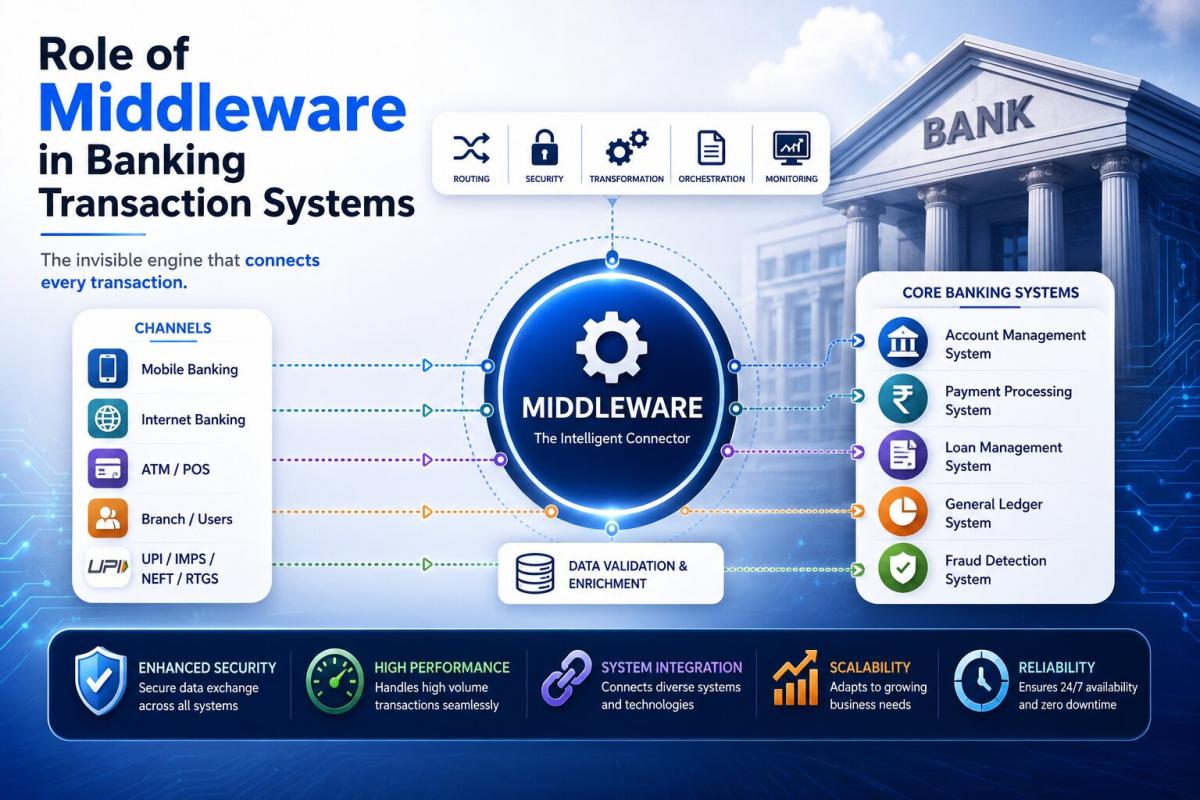
Role of Middleware in Banking Transaction Systems
Discover the role of middleware in banking transaction systems, enabling real-time processing, secure integration, and seamless communication between banking platforms.
Arjun Sharma
Content Lead – Banking & Payments
Published on Apr 28, 2026
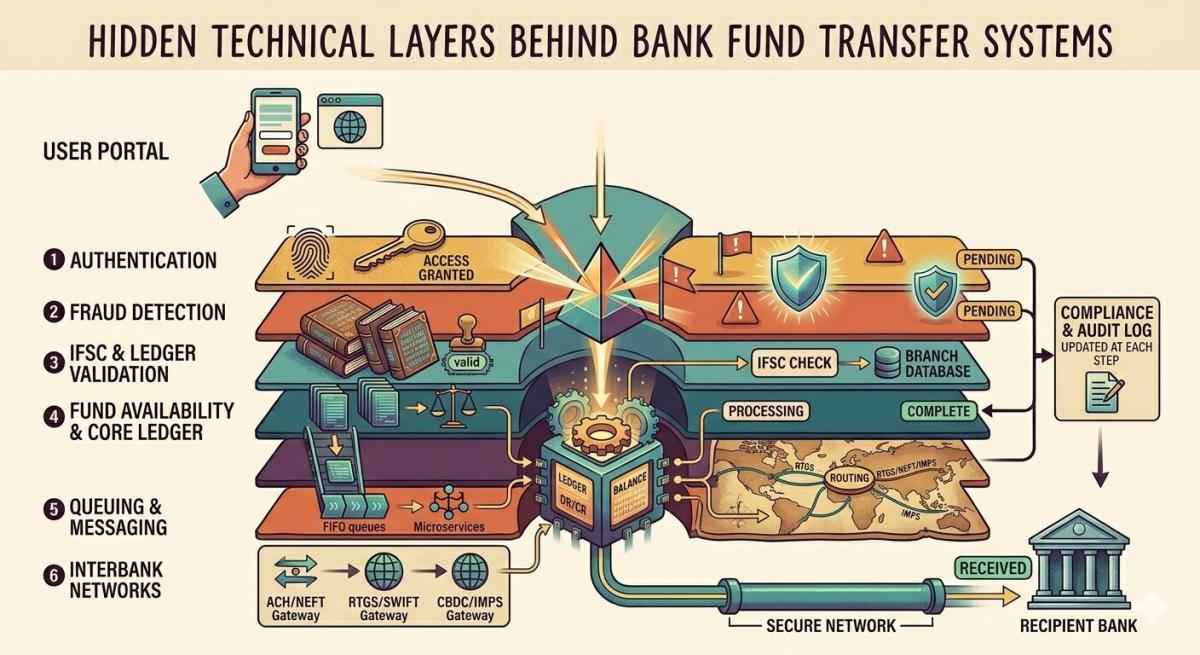
Hidden Technical Layers Behind Bank Fund Transfer Systems
Explore the hidden technical layers behind bank fund transfer systems, including SWIFT messaging, clearing, settlement, APIs, and security frameworks that power modern digital payments.
Arjun Sharma
Content Lead – Banking & Payments
Published on Apr 28, 2026
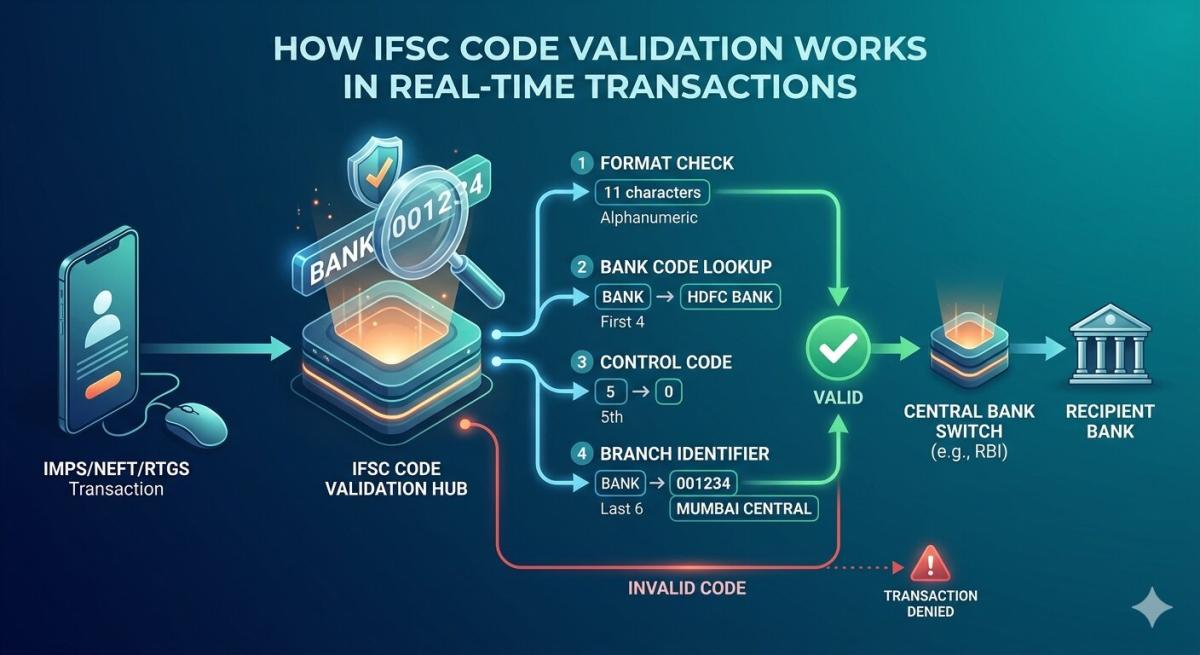
How IFSC Code Validation Works in Real-Time Transactions
Learn how IFSC code validation works in real time across NEFT, RTGS, and IMPS transactions. Discover its role in ensuring accurate, secure, and efficient fund transfers in digital banking.
Arjun Sharma
Content Lead – Banking & Payments
Published on Apr 28, 2026
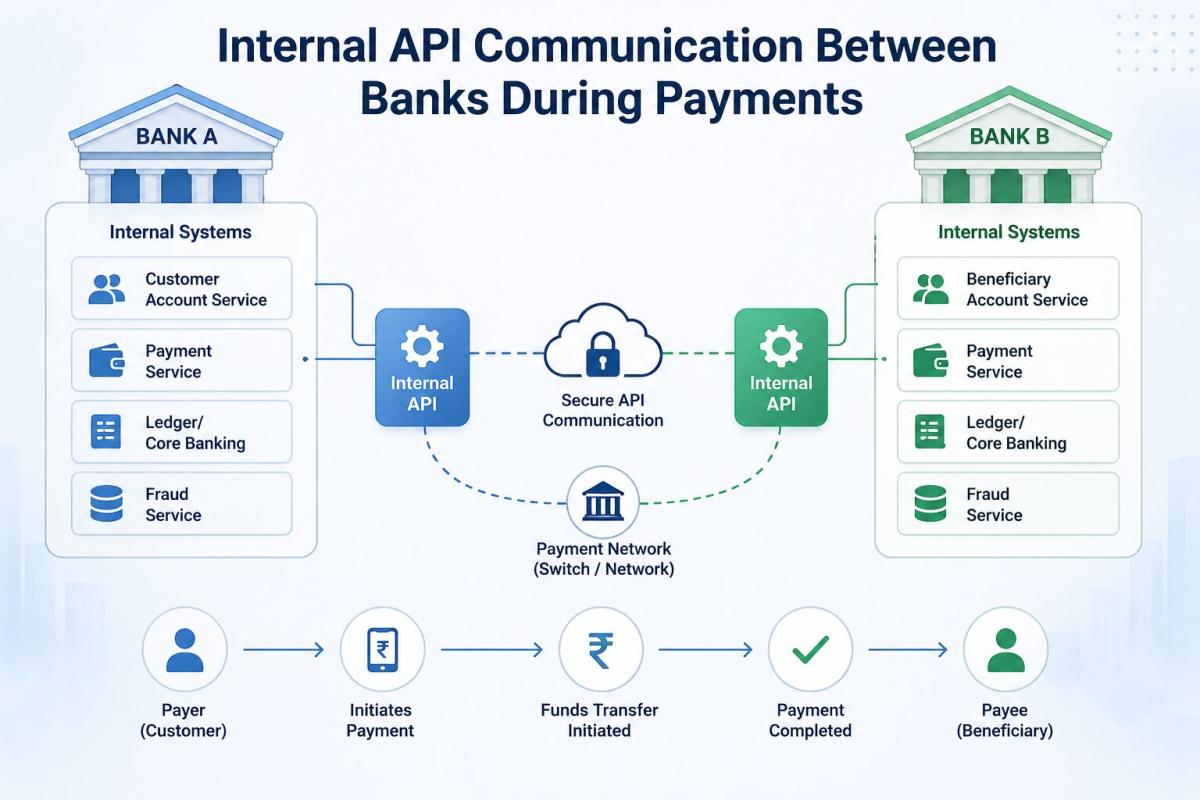
Internal API Communication Between Banks During Payments
Understand how internal API communication between banks powers digital payments, enabling real-time transaction processing, secure data exchange, and seamless fund transfers.
Arjun Sharma
Content Lead – Banking & Payments
Published on Apr 28, 2026
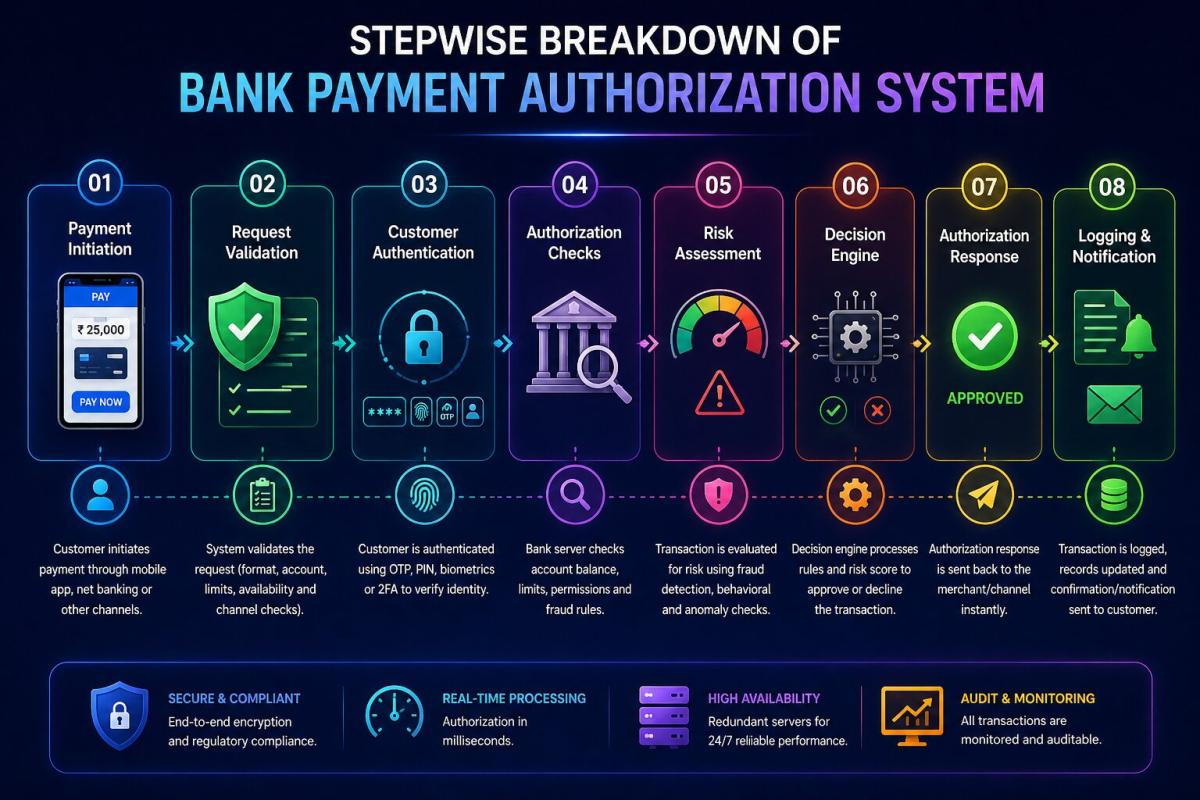
Stepwise Breakdown of Bank Payment Authorization System
Understand the step-by-step bank payment authorization process, including encryption, routing, verification, and approval mechanisms that ensure secure digital transactions.
Arjun Sharma
Content Lead – Banking & Payments
calculate Financial Calculators
EMI Calculator
FD Calculator
GST Calculator
Lumpsum Calculator
Mutual Fund Returns Calculator
PPF Calculator
RD Calculator
SIP Calculator
SWP Calculator
article Latest Blog Posts
ELSS vs PPF vs NPS: Which Tax-Saving Investment Gives the Best Returns?
Compare ELSS vs PPF vs NPS to find the best tax-saving investment. Understand returns, lock-in periods, and features to choose what suits your goals.
SIP & Investing • 11 MINS READ
How to Start SIP with ₹500 Per Month: Beginner's Guide to Mutual Funds
Learn how to start a SIP with ₹500 per month in mutual funds. Simple beginner’s guide to investing, building wealth, and growing money with small steps.
SIP & Investing • 13 MINS READ
Senior Citizen FD Rates 2026: Which Banks Offer the Highest Interest?
Compare senior citizen FD rates in 2026 and find which banks offer the highest interest. Learn about returns, tenures, and tips to choose the best FD.
FD, PPF & Savings • 12 MINS READ
Sukanya Samriddhi Yojana (SSY): Interest Rate, Rules & Calculator Guide 2026
Learn about Sukanya Samriddhi Yojana (SSY) including eligibility criteria, required documentation, step by step application process, tax benefits explanation and comparison b/w SSY, PPF and FD
FD, PPF & Savings • 11 MINS READ
2 reasons why online banking is important in today’s COVID-19 situation
Discover why online banking became essential during COVID-19. Learn how digital banking ensured safety, convenience, and uninterrupted financial services.
Digital Banking • 4 MINS READ