How Banks Manage Transaction Queues During Peak Load
Learn how banks manage transaction queues during peak load using distributed systems, priority queues, load balancing, and real-time processing to ensure fast and reliable payments. Author
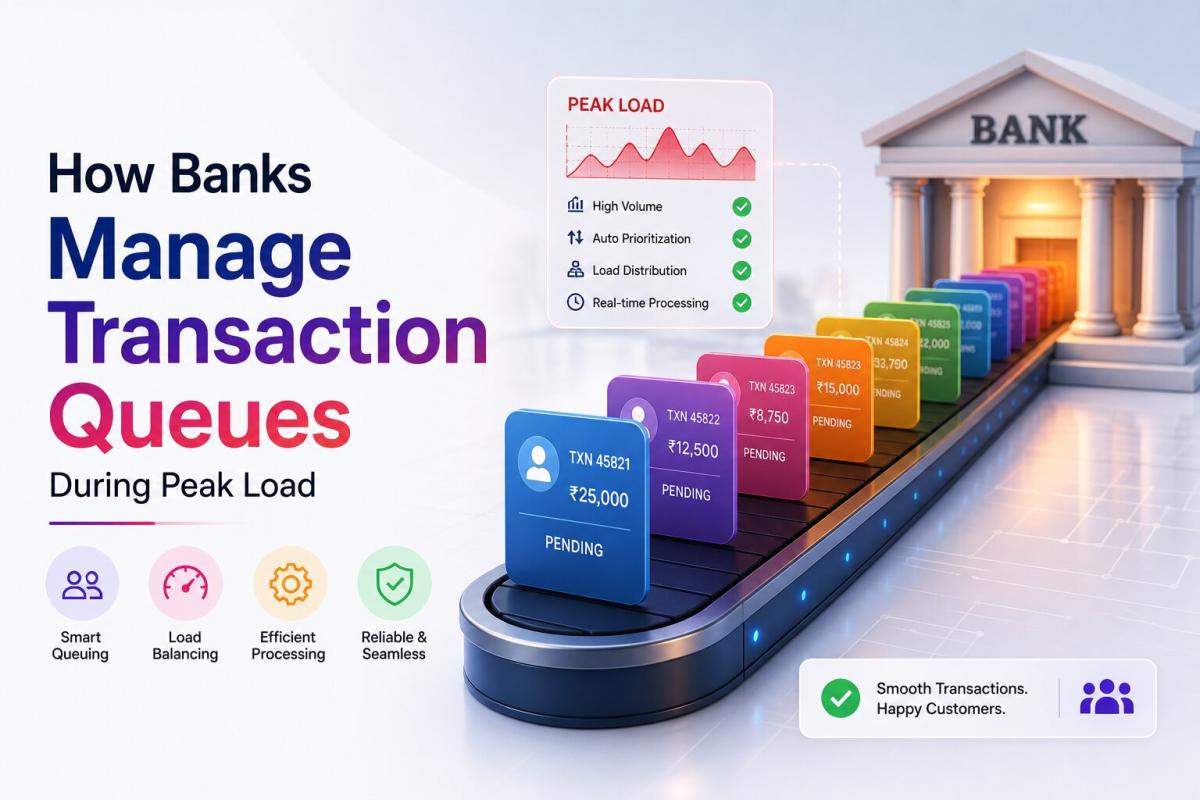
Table of Contents
- Understanding Transaction Queues in Banking Systems
- Why Peak Load Happens in Banking Systems
- Core Technologies Behind Transaction Queue Management
- Types of Transaction Queues Used by Banks
- How Banks Prevent Queue Overload
- Real World Example of Peak Load Handling
- Monitoring and Optimization of Transaction Queues
- Comparison of Queue Management Strategies
- Security Considerations in Queue Management
- Challenges Banks Face During Peak Load
- Future Trends in Transaction Queue Management
- Frequently Asked Questions
- Conclusion
Understanding Transaction Queues in Banking Systems

Banking systems today handle millions of transactions every second, especially during peak hours such as salary days, festive seasons, or major sale events. Behind every successful payment, transfer, or withdrawal lies a sophisticated queuing system designed to manage enormous pressure without breaking down. Understanding how banks manage transaction queues during peak load reveals the hidden engineering that keeps financial systems stable, reliable, and fast.
A transaction queue is essentially a structured pipeline where incoming financial requests wait their turn to be processed. During low traffic, transactions move almost instantly. However, during peak load, queues become critical for maintaining order and preventing system overload.
Banks rely on principles similar to distributed computing and message queuing systems, as explained in resources like IBM’s overview of message queues, where requests are temporarily stored and processed in sequence or priority order. This ensures that even if millions of users initiate transactions at once, the system does not crash or lose data.
Transaction queues are not just simple waiting lines. They are intelligent systems that categorize, prioritize, and route requests dynamically based on multiple conditions such as transaction type, urgency, and system capacity.
Why Peak Load Happens in Banking Systems
Peak load situations are predictable in many cases. Events like end of month salary credits, tax deadlines, or major online shopping sales create sudden spikes in transaction volume. According to insights from Reserve Bank of India payment system reports, digital transactions in India have seen exponential growth, increasing the complexity of handling peak loads.
Some common triggers include:
- Salary processing days
- Festival shopping periods
- Stock market activity spikes
- Government subsidy disbursements
- Flash sales on e commerce platforms
During these times, banks must process transactions quickly while ensuring accuracy and security, which makes queue management essential.
Core Technologies Behind Transaction Queue Management
Modern banking systems use a combination of advanced technologies to manage queues efficiently. These technologies are built on proven frameworks used in large scale distributed systems.
Message Queuing Systems
Banks use enterprise messaging systems similar to those described by Apache Kafka documentation, where transactions are treated as messages in a queue. These systems allow asynchronous processing, meaning transactions do not need to be completed instantly to be accepted.
Load Balancers
Load balancing distributes incoming requests across multiple servers. According to Amazon Web Services load balancing guide, this prevents any single server from becoming a bottleneck and ensures smoother processing during high traffic.
Distributed Databases
Banks rely on distributed databases to handle massive data volumes. Systems inspired by concepts in Google Spanner research allow transactions to be processed across multiple locations without losing consistency.
Parallel Processing
Instead of processing transactions one by one, banks use parallel processing to handle multiple transactions simultaneously. This significantly reduces queue length and waiting time.
Types of Transaction Queues Used by Banks
Not all transactions are treated equally. Banks design different types of queues to manage various transaction priorities.
Real Time Priority Queue
High priority transactions such as immediate payment services are processed first. These are critical transactions where delays are unacceptable.
Batch Processing Queue
Transactions like bulk salary payments are grouped and processed in batches. This reduces system load and improves efficiency.
Retry Queue
Failed transactions are placed in retry queues where the system attempts to process them again after resolving temporary issues.
Deferred Queue
Low priority transactions are delayed during peak load to ensure that critical operations are not affected.
How Banks Prevent Queue Overload
Queue overload can lead to delays, failures, or even system crashes. Banks use several strategies to prevent this.
Dynamic Scaling
Banks scale their infrastructure automatically based on demand. Cloud based systems, as explained by Microsoft Azure scalability concepts, allow banks to add more computing resources instantly during peak times.
Rate Limiting
Rate limiting controls how many transactions a user or system can initiate within a specific time frame. This prevents abuse and reduces sudden spikes.
Back Pressure Mechanisms
Back pressure slows down incoming requests when the system is overwhelmed. This ensures stability rather than allowing uncontrolled overload.
Intelligent Routing
Transactions are routed to different processing units based on type and urgency, ensuring balanced workload distribution.
Real World Example of Peak Load Handling
During major online sale events, payment systems experience extreme transaction volumes. Banks coordinate with payment gateways and networks to ensure smooth processing.
For example, systems aligned with National Payments Corporation of India infrastructure handle massive UPI transaction spikes daily. These systems use queue prioritization, distributed processing, and real time monitoring to maintain performance even under heavy load.
Monitoring and Optimization of Transaction Queues
Continuous monitoring is essential for maintaining queue performance. Banks use advanced monitoring tools to track metrics such as queue length, processing time, and failure rates.
Key Metrics Monitored
- Transaction latency
- Queue depth
- Success and failure rates
- System resource utilization
According to Google Cloud monitoring practices, real time analytics help detect bottlenecks early and allow systems to adjust dynamically.
Comparison of Queue Management Strategies
Key Queue Management Techniques in Banking Systems
|
Strategy |
Purpose |
Advantage |
Limitation |
|
FIFO Queue |
Process in arrival order |
Simple and fair |
Not suitable for priorities |
|
Priority Queue |
Handle urgent transactions first |
Faster critical processing |
Complex implementation |
|
Batch Processing |
Group transactions |
Efficient for bulk operations |
Delay in processing |
|
Parallel Processing |
Multiple transactions at once |
High speed processing |
Requires strong infrastructure |
|
Retry Mechanism |
Reprocess failed transactions |
Improves reliability |
May increase queue length |
Security Considerations in Queue Management
Security remains a top priority even during peak load. Banks cannot compromise on fraud detection or data protection.
Systems integrate security protocols such as those described by PCI Security Standards Council, ensuring that every transaction in the queue is encrypted and validated.
Fraud detection algorithms run alongside queue processing, identifying suspicious transactions without slowing down the system significantly.
Challenges Banks Face During Peak Load
Despite advanced systems, several challenges persist.
- Sudden unpredictable spikes
- Network latency issues
- Dependency on third party systems
- Hardware limitations
- Cybersecurity threats
Banks continuously upgrade their infrastructure to overcome these challenges and improve resilience.
Future Trends in Transaction Queue Management
The future of banking queue management is moving towards smarter and more adaptive systems.
Artificial Intelligence Integration
AI based systems can predict transaction spikes and adjust resources proactively.
Real Time Data Streaming
Streaming technologies enable instant processing and reduce dependency on traditional queues.
Edge Computing
Processing transactions closer to the user reduces latency and improves performance.
Blockchain Based Systems
Decentralized systems may reduce the need for centralized queue management in certain use cases.
Frequently Asked Questions
What happens when too many transactions are queued at once
Banks use load balancing and dynamic scaling to handle large volumes, ensuring that transactions are processed without system failure.
Do queued transactions mean a delay in money transfer
Not necessarily. Most queues are processed within milliseconds, but during peak load, slight delays can occur.
How do banks prioritize transactions
Banks assign priority levels based on transaction type, urgency, and regulatory requirements.
Can transactions fail due to queue overload
Yes, but systems are designed with retry mechanisms to reprocess failed transactions automatically.
Are queued transactions secure
Yes, all transactions in queues are encrypted and monitored for fraud.
Why do some transactions take longer during peak hours
Higher traffic increases queue length, which may slightly increase processing time.
Do all banks use the same queue system
No, each bank designs its own system based on infrastructure, scale, and technology.
Conclusion
Transaction queue management is one of the most critical yet invisible components of modern banking. It ensures that millions of financial operations can occur simultaneously without chaos or failure. By combining advanced technologies like distributed systems, load balancing, and intelligent prioritization, banks maintain efficiency even during extreme peak loads.
As digital transactions continue to grow rapidly, queue management systems will evolve further, becoming more predictive, adaptive, and resilient. Understanding these systems highlights the complexity behind simple actions like sending money or making a payment. It also emphasizes the importance of continuous innovation in keeping financial systems stable in an increasingly digital world.
Related Blogs
Published on May 06, 2026
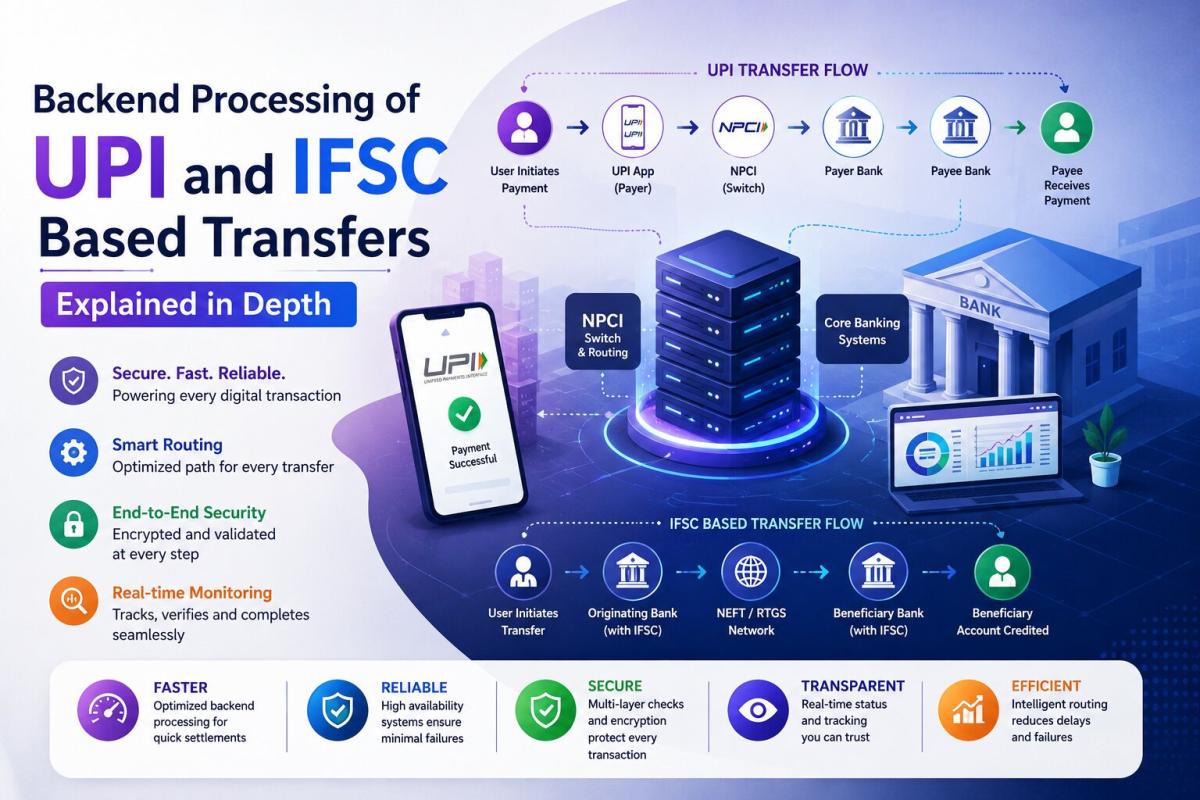
Backend Processing of UPI and IFSC Based Transfers Explained in Depth
Explore the backend processing of UPI and IFSC-based transfers, comparing real-time APIs, batch settlement systems, and how NPCI and RBI power secure digital payments in India.
Arjun Sharma
Content Lead – Banking & Payments
Published on May 06, 2026
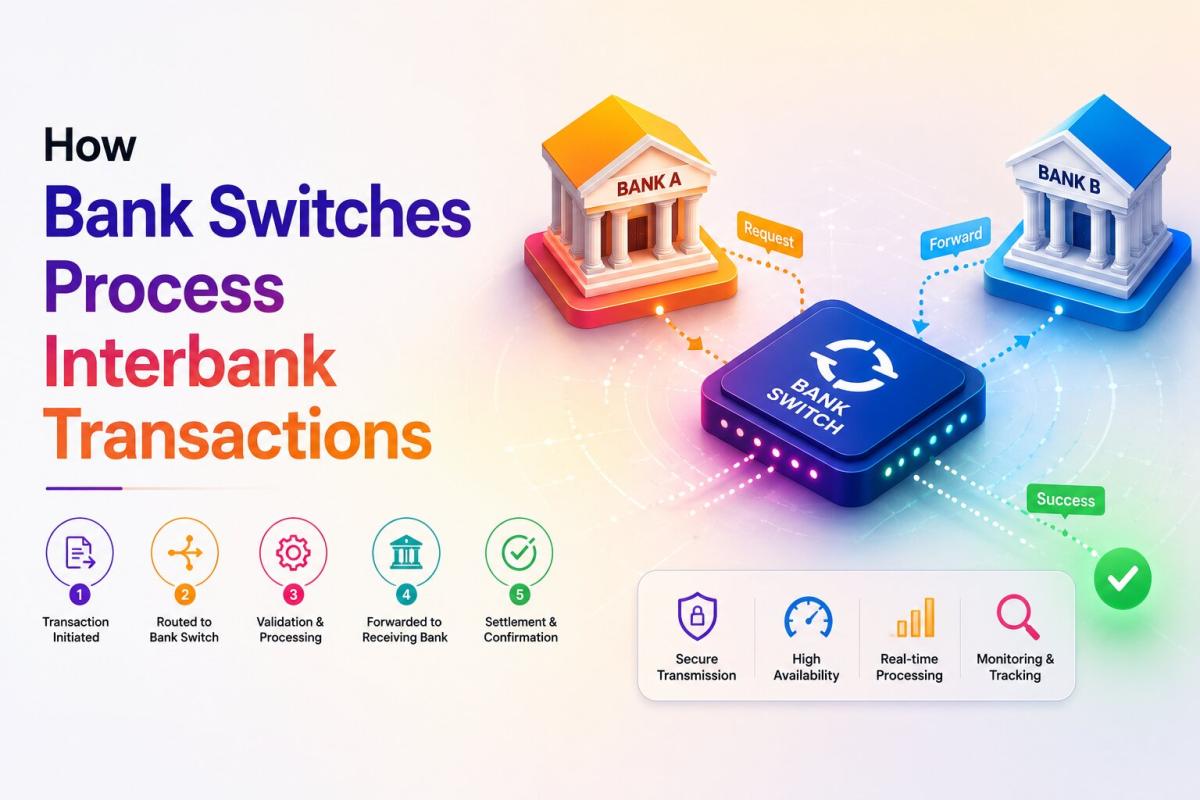
How Bank Switches Process Interbank Transactions
Learn how bank switches process interbank transactions by routing, authorizing, and securing payments between banks in real time using advanced switching systems and payment networks.
Arjun Sharma
Content Lead – Banking & Payments
Published on May 06, 2026
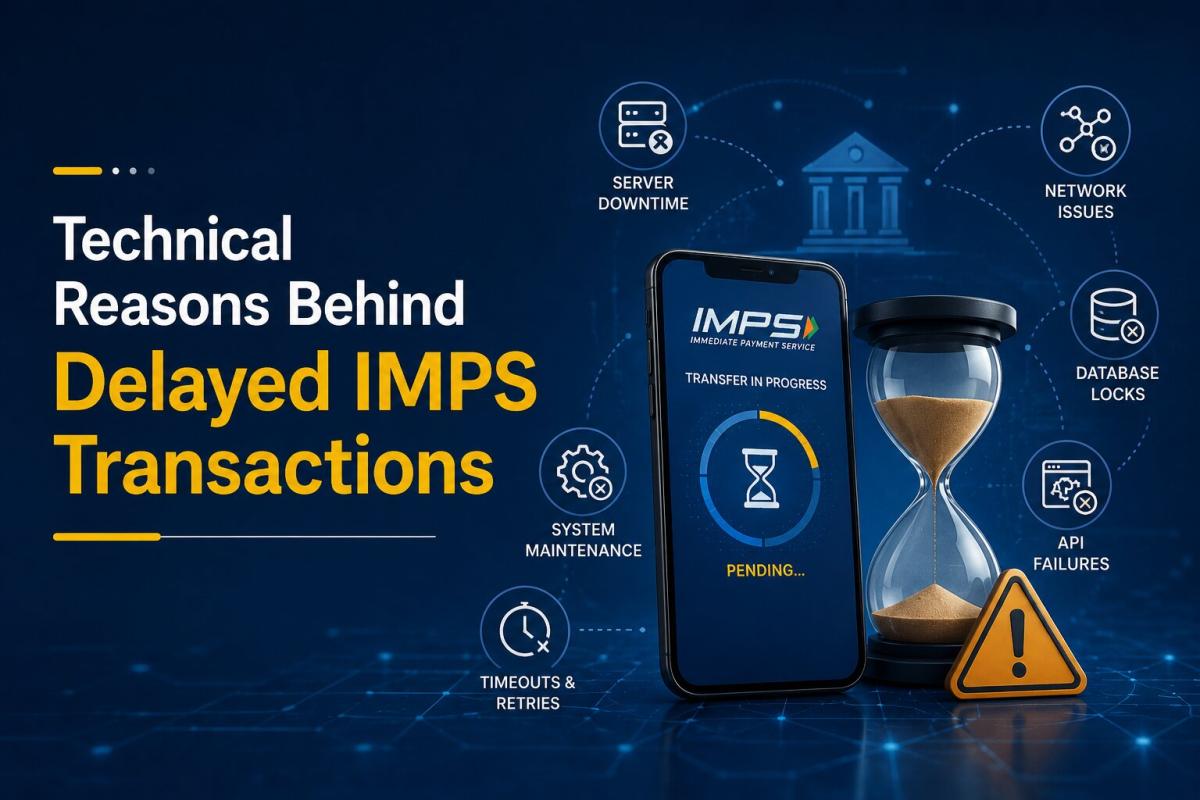
Technical Reasons Behind Delayed IMPS Transactions
Explore the technical reasons behind delayed IMPS transactions, including network latency, server downtime, bank processing delays, API failures, and high transaction volumes.
Arjun Sharma
Content Lead – Banking & Payments
Published on Apr 28, 2026
How Banks Sync Data Between Branches Instantly
Learn how banks sync data instantly across branches using core banking systems, real-time processing, high-speed networks, and secure database technologies.
Arjun Sharma
Content Lead – Banking & Payments
Published on Apr 28, 2026
Internal Workflow of Failed NEFT Transaction Handling
Understand the internal workflow of failed NEFT transactions, including validation errors, settlement failures, automated reversals, and reconciliation processes in banking systems.
Arjun Sharma
Content Lead – Banking & Payments
calculate Financial Calculators
EMI Calculator
FD Calculator
GST Calculator
Lumpsum Calculator
Mutual Fund Returns Calculator
PPF Calculator
RD Calculator
SIP Calculator
SWP Calculator
article Latest Blog Posts
ELSS vs PPF vs NPS: Which Tax-Saving Investment Gives the Best Returns?
Compare ELSS vs PPF vs NPS to find the best tax-saving investment. Understand returns, lock-in periods, and features to choose what suits your goals.
SIP & Investing • 11 MINS READ
How to Start SIP with ₹500 Per Month: Beginner's Guide to Mutual Funds
Learn how to start a SIP with ₹500 per month in mutual funds. Simple beginner’s guide to investing, building wealth, and growing money with small steps.
SIP & Investing • 13 MINS READ
Senior Citizen FD Rates 2026: Which Banks Offer the Highest Interest?
Compare senior citizen FD rates in 2026 and find which banks offer the highest interest. Learn about returns, tenures, and tips to choose the best FD.
FD, PPF & Savings • 12 MINS READ
Sukanya Samriddhi Yojana (SSY): Interest Rate, Rules & Calculator Guide 2026
Learn about Sukanya Samriddhi Yojana (SSY) including eligibility criteria, required documentation, step by step application process, tax benefits explanation and comparison b/w SSY, PPF and FD
FD, PPF & Savings • 11 MINS READ
2 reasons why online banking is important in today’s COVID-19 situation
Discover why online banking became essential during COVID-19. Learn how digital banking ensured safety, convenience, and uninterrupted financial services.
Digital Banking • 4 MINS READ