How Banks Sync Data Between Branches Instantly
Learn how banks sync data instantly across branches using core banking systems, real-time processing, high-speed networks, and secure database technologies.
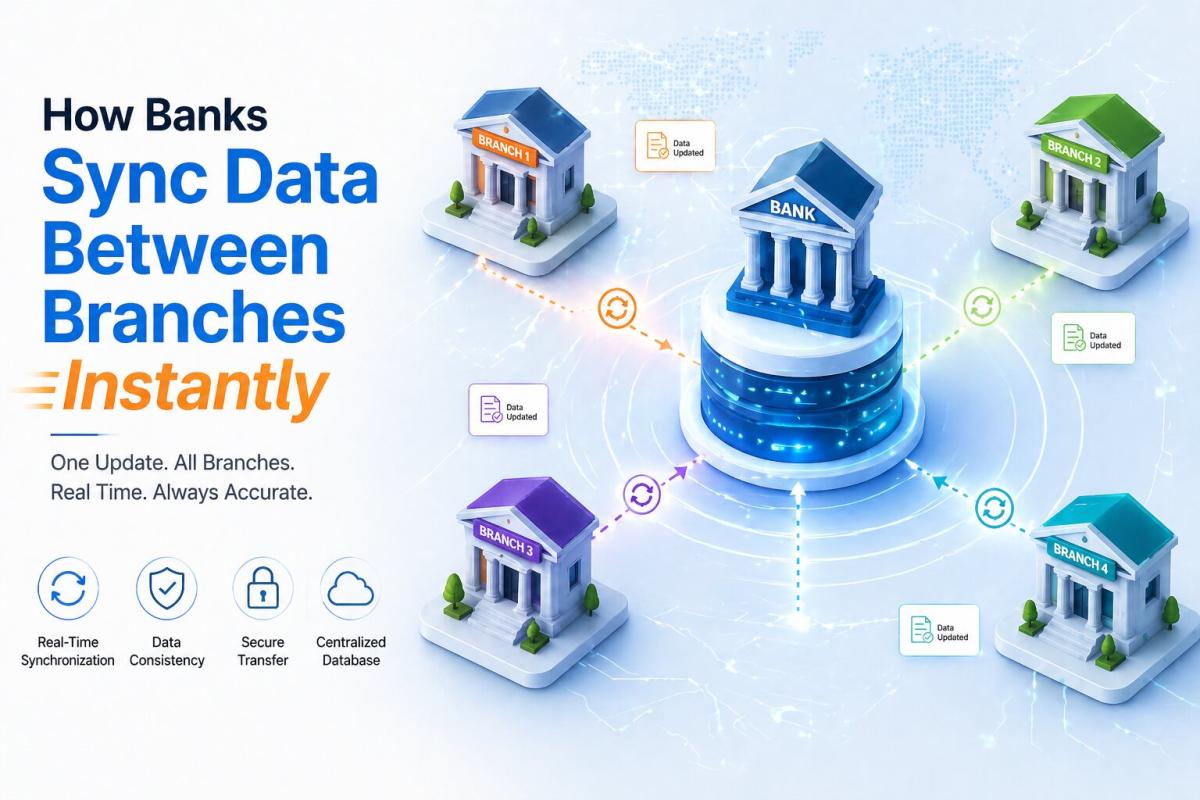
Table of Contents
- Introduction: The Invisible Speed Behind Every Transaction
- The Shift From Branch Based Banking to Core Banking Systems
- Real Time Data Synchronization Explained
- Role of High Speed Networking in Banking Synchronization
- Database Technologies Powering Instant Updates
- Transaction Processing Systems and Their Role
- Data Replication and Backup Mechanisms
- Security Measures in Data Synchronization
- Comparison Table: Traditional vs Modern Banking Synchronization
- Role of APIs and Middleware in Synchronization
- Challenges in Instant Data Synchronization
- Future Trends in Banking Synchronization
- Frequently Asked Questions
- Conclusion: The Power Behind Instant Banking
Introduction: The Invisible Speed Behind Every Transaction

Modern banking feels almost magical. A deposit made in one branch reflects instantly in another city, ATM withdrawals update balances in seconds, and online payments settle without delay. Behind this seamless experience lies a complex ecosystem of technologies, protocols, and systems working together in real time. Banks no longer operate as isolated branches but as unified digital networks powered by centralized systems and high speed communication channels.
Understanding how banks synchronize data instantly reveals the backbone of modern finance and highlights why reliability, security, and speed are critical in financial systems. Resources such as the Bank for International Settlements and Federal Reserve publications explain how real time financial infrastructure has evolved into a global necessity.
The Shift From Branch Based Banking to Core Banking Systems

In earlier decades, each bank branch maintained its own records. Transactions performed in one location were updated locally and shared with other branches through batch processing at the end of the day. This meant delays, inconsistencies, and frequent reconciliation challenges.
The transformation began with the introduction of Core Banking Systems. These systems centralized all customer data into a single database accessible by every branch in real time. Instead of updating multiple databases, transactions now update one central system instantly. Industry insights from IBM Banking Technology and Oracle Financial Services highlight how core banking platforms eliminated data silos and enabled instant synchronization.
Key Features of Core Banking Systems
- Centralized customer database
- Real time transaction processing
- Multi branch access
- Automated reconciliation
- High availability infrastructure
This shift is the foundation of instant data synchronization across branches.
Real Time Data Synchronization Explained

Real time synchronization means that when a transaction occurs, the data is updated immediately across all systems without delay. This is achieved using advanced database technologies and communication protocols.
How It Works in Simple Terms
When a customer performs a transaction such as a deposit:
- The request is sent to the central banking server
- The server validates the transaction
- The database updates instantly
- The updated balance is reflected across all channels
Technologies like database replication and distributed systems ensure that even backup servers reflect the same data. Research from Microsoft Azure Architecture and Amazon Web Services explains how real time data replication ensures consistency across geographically distributed systems.
Role of High Speed Networking in Banking Synchronization

Instant synchronization is impossible without robust communication networks. Banks rely on secure and high speed connectivity to link branches, ATMs, mobile apps, and servers.
Technologies Used
- Fiber optic networks for ultra fast data transmission
- Virtual Private Networks for secure communication
- Dedicated leased lines between branches
- Encrypted internet protocols for remote access
Organizations such as Cisco and Juniper Networks provide infrastructure solutions that enable secure and low latency communication between banking systems.
Database Technologies Powering Instant Updates

Banks use advanced database systems designed for speed, consistency, and reliability.
Common Approaches
- Relational databases for structured financial data
- Distributed databases for scalability
- In memory databases for ultra fast processing
- Database clustering for high availability
These systems follow strict consistency models to ensure that every transaction is accurate and synchronized. According to research from Google Cloud Spanner and PostgreSQL documentation, distributed databases maintain consistency even across multiple regions.
Transaction Processing Systems and Their Role

Banks rely on Online Transaction Processing systems to handle thousands of transactions per second.
Key Characteristics
- Immediate processing
- High concurrency handling
- Error detection and rollback mechanisms
- Consistent data integrity
These systems ensure that every transaction is completed fully or not at all, preventing inconsistencies. Insights from SAP Financial Systems and Oracle Database Transaction Processing explain how OLTP systems maintain reliability under heavy load.
Data Replication and Backup Mechanisms

To ensure zero downtime and continuous availability, banks replicate data across multiple servers and locations.
Types of Replication
- Synchronous replication where data updates instantly across servers
- Asynchronous replication for backup systems
- Multi region replication for disaster recovery
This ensures that even if one server fails, another can take over without data loss. The National Institute of Standards and Technology provides detailed frameworks on secure data replication and redundancy.
Security Measures in Data Synchronization
Security is critical when syncing financial data. Banks implement multiple layers of protection to safeguard transactions.
Security Techniques
- End to end encryption
- Multi factor authentication
- Intrusion detection systems
- Secure APIs for communication
Reports from the International Monetary Fund and cybersecurity standards bodies emphasize the importance of protecting real time financial data from threats.
Comparison Table: Traditional vs Modern Banking Synchronization
Evolution of Data Synchronization in Banking
|
Feature |
Traditional Banking |
Modern Banking |
|
Data Storage |
Local branch records |
Centralized databases |
|
Update Speed |
Batch processing |
Real time updates |
|
Accessibility |
Limited to branch |
Accessible anywhere |
|
Error Handling |
Manual reconciliation |
Automated systems |
|
Scalability |
Low |
High |
|
Security |
Basic |
Advanced encryption |
|
Reliability |
Moderate |
High availability systems |
This comparison highlights how technological advancements have transformed banking into a real time ecosystem.
Role of APIs and Middleware in Synchronization

Modern banking systems rely heavily on APIs and middleware to connect different services and applications.
Why They Matter
- Enable communication between systems
- Allow integration with mobile apps and payment platforms
- Ensure standardized data exchange
- Support scalability and flexibility
Open banking frameworks supported by organizations like the World Bank and European Central Bank demonstrate how APIs are reshaping financial ecosystems.
Challenges in Instant Data Synchronization
Even with advanced systems, banks face several challenges:
Common Issues
- Network latency in remote regions
- System overload during peak transactions
- Data consistency across distributed systems
- Cybersecurity threats
Banks continuously invest in infrastructure upgrades and monitoring tools to overcome these challenges and maintain seamless operations.
Future Trends in Banking Synchronization

The future of banking synchronization is evolving rapidly with emerging technologies.
Key Trends
- Blockchain for decentralized synchronization
- Artificial intelligence for predictive transaction monitoring
- Cloud computing for scalable infrastructure
- Edge computing for faster local processing
Research from Deloitte and McKinsey highlights how these innovations are shaping the next generation of banking systems.
Frequently Asked Questions
How do banks update account balances instantly
Banks use centralized databases and real time transaction processing systems that update data immediately across all connected systems.
What ensures data consistency across branches
Consistency is maintained through distributed databases, replication techniques, and strict transaction protocols.
Can data synchronization fail
Failures can occur due to network issues or system errors, but backup systems and replication ensure minimal disruption.
Are real time systems secure
Yes, banks use advanced encryption, authentication, and monitoring systems to secure data.
Do all banks use the same technology
While core principles are similar, different banks use different platforms and vendors based on their requirements.
How do ATMs sync with bank servers
ATMs connect to central servers through secure networks and update transactions in real time.
What happens during system downtime
Backup servers and disaster recovery systems take over to ensure continuous operation.
Is cloud computing used in banking
Yes, many banks are adopting cloud technologies for scalability and efficiency.
Conclusion: The Power Behind Instant Banking
The ability of banks to sync data instantly across branches is not a single technology but a combination of interconnected systems working in harmony. Centralized databases, real time transaction processing, high speed networks, and advanced security measures collectively ensure that financial data remains accurate, accessible, and secure at all times.
As banking continues to evolve, the focus remains on improving speed, reliability, and security. Emerging technologies like blockchain and artificial intelligence are set to further enhance synchronization capabilities, making financial systems even more efficient and resilient.
Understanding this infrastructure provides valuable insight into how modern banking operates behind the scenes and why it remains one of the most technologically advanced industries in the world.
Related Blogs
Published on May 06, 2026
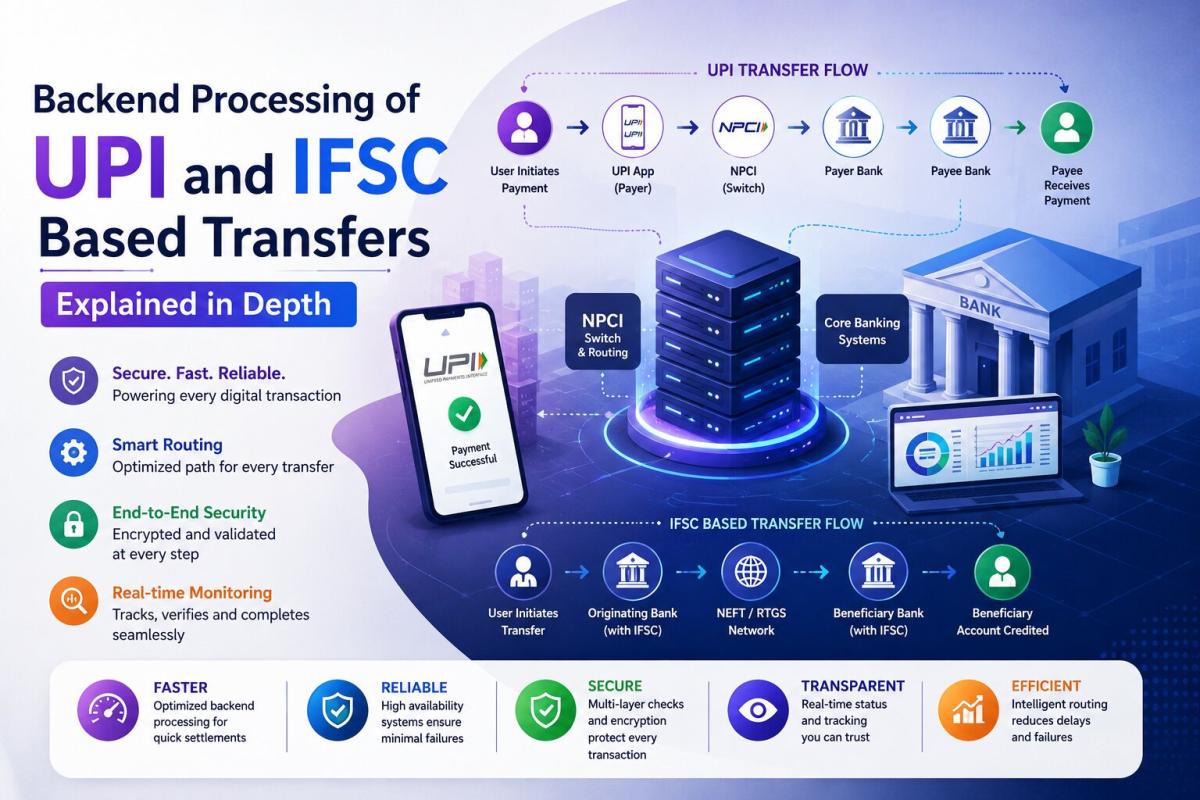
Backend Processing of UPI and IFSC Based Transfers Explained in Depth
Explore the backend processing of UPI and IFSC-based transfers, comparing real-time APIs, batch settlement systems, and how NPCI and RBI power secure digital payments in India.
Arjun Sharma
Content Lead – Banking & Payments
Published on May 06, 2026
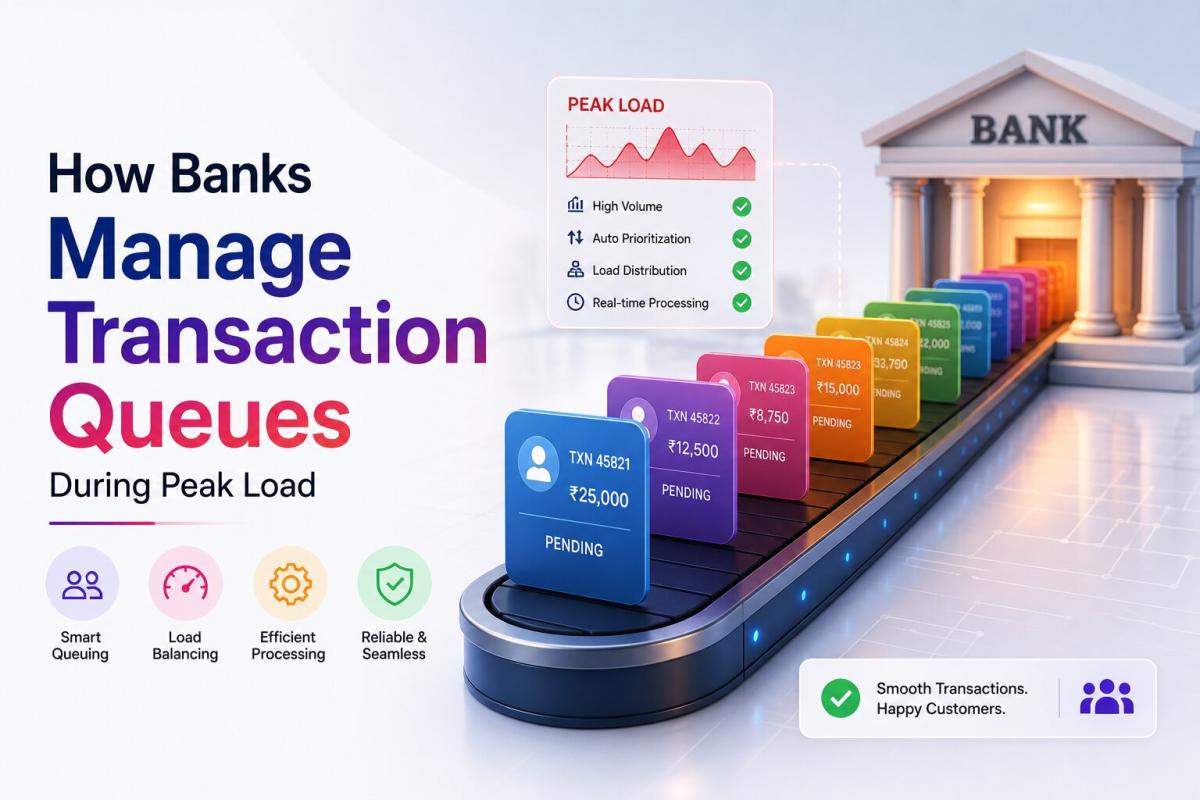
How Banks Manage Transaction Queues During Peak Load
Learn how banks manage transaction queues during peak load using distributed systems, priority queues, load balancing, and real-time processing to ensure fast and reliable payments. Author
Arjun Sharma
Content Lead – Banking & Payments
Published on May 06, 2026
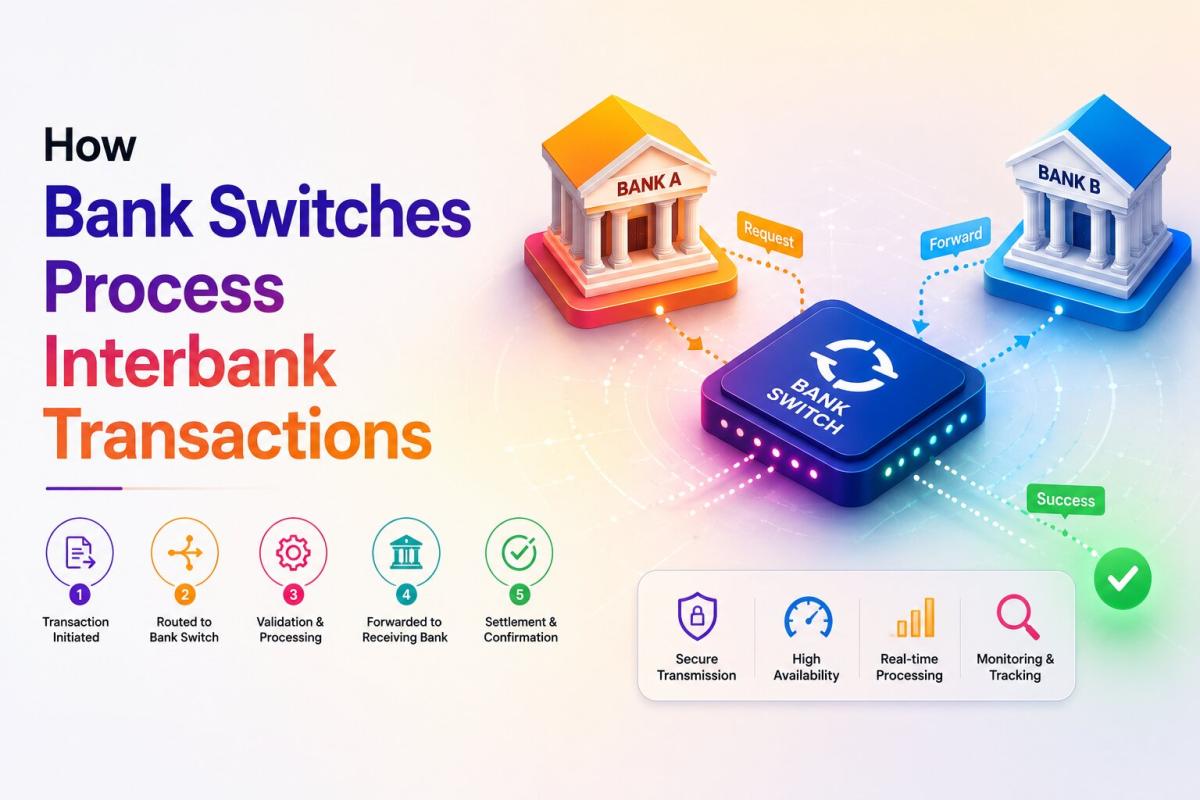
How Bank Switches Process Interbank Transactions
Learn how bank switches process interbank transactions by routing, authorizing, and securing payments between banks in real time using advanced switching systems and payment networks.
Arjun Sharma
Content Lead – Banking & Payments
Published on May 06, 2026
Technical Reasons Behind Delayed IMPS Transactions
Explore the technical reasons behind delayed IMPS transactions, including network latency, server downtime, bank processing delays, API failures, and high transaction volumes.
Arjun Sharma
Content Lead – Banking & Payments
Published on Apr 28, 2026
Internal Workflow of Failed NEFT Transaction Handling
Understand the internal workflow of failed NEFT transactions, including validation errors, settlement failures, automated reversals, and reconciliation processes in banking systems.
Arjun Sharma
Content Lead – Banking & Payments
calculate Financial Calculators
EMI Calculator
FD Calculator
GST Calculator
Lumpsum Calculator
Mutual Fund Returns Calculator
PPF Calculator
RD Calculator
SIP Calculator
SWP Calculator
article Latest Blog Posts
ELSS vs PPF vs NPS: Which Tax-Saving Investment Gives the Best Returns?
Compare ELSS vs PPF vs NPS to find the best tax-saving investment. Understand returns, lock-in periods, and features to choose what suits your goals.
SIP & Investing • 11 MINS READ
How to Start SIP with ₹500 Per Month: Beginner's Guide to Mutual Funds
Learn how to start a SIP with ₹500 per month in mutual funds. Simple beginner’s guide to investing, building wealth, and growing money with small steps.
SIP & Investing • 13 MINS READ
Senior Citizen FD Rates 2026: Which Banks Offer the Highest Interest?
Compare senior citizen FD rates in 2026 and find which banks offer the highest interest. Learn about returns, tenures, and tips to choose the best FD.
FD, PPF & Savings • 12 MINS READ
Sukanya Samriddhi Yojana (SSY): Interest Rate, Rules & Calculator Guide 2026
Learn about Sukanya Samriddhi Yojana (SSY) including eligibility criteria, required documentation, step by step application process, tax benefits explanation and comparison b/w SSY, PPF and FD
FD, PPF & Savings • 11 MINS READ
2 reasons why online banking is important in today’s COVID-19 situation
Discover why online banking became essential during COVID-19. Learn how digital banking ensured safety, convenience, and uninterrupted financial services.
Digital Banking • 4 MINS READ