Internal Workflow of Failed NEFT Transaction Handling
Understand the internal workflow of failed NEFT transactions, including validation errors, settlement failures, automated reversals, and reconciliation processes in banking systems.
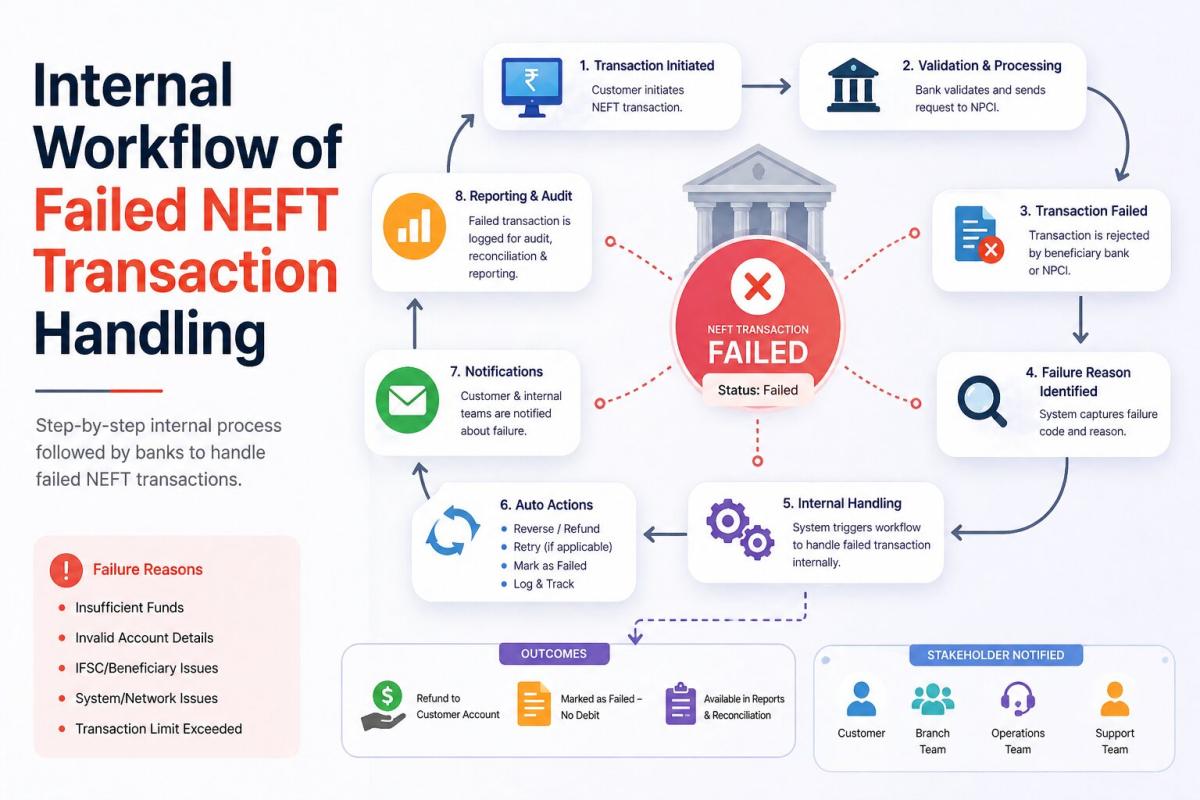
Table of Contents
- Understanding the Backbone of National Electronic Funds Transfer
- What Constitutes a Failed NEFT Transaction
- Step by Step Internal Workflow of Failed NEFT Transactions
- Stage 1 Transaction Initiation and Validation
- Stage 2 Transaction Queue and Batch Processing
- Stage 3 Clearing and Settlement Failure Handling
- Stage 4 Automated Reversal Mechanism
- Stage 5 Reconciliation and Audit Logging
- Common Reasons Behind NEFT Failures
- Comparison Table of NEFT Failure Stages and Actions
- How Banks Minimize NEFT Failures
- Practical Tips to Avoid NEFT Failures
- Frequently Asked Questions
- Conclusion
Understanding the Backbone of National Electronic Funds Transfer

The National Electronic Funds Transfer system is one of the most widely used electronic fund transfer mechanisms in India, operating under the supervision of the Reserve Bank of India. It enables seamless transfer of funds between bank accounts across the country through a structured and highly regulated process. Despite its efficiency, transaction failures do occur due to technical, operational, and compliance-related factors.
NEFT operates in batch-based settlements, processing thousands of transactions at regular intervals throughout the day. Given the scale and complexity, even a minor disruption can trigger a failure that activates a well-defined internal handling workflow within banking systems.
What Constitutes a Failed NEFT Transaction

A failed NEFT transaction is categorized based on the stage where the breakdown occurs. It is not a single type of error but a structured classification of failure events across different processing layers.
Common types include:
• Input validation failure due to incorrect account or IFSC
• Network or system timeout during processing
• Rejection at settlement by the receiving bank
• Compliance or security flag triggers
• Core banking system inconsistencies
Each category activates a specific backend workflow to resolve the issue efficiently and ensure fund safety.
Step by Step Internal Workflow of Failed NEFT Transactions
Stage 1 Transaction Initiation and Validation

When a transaction is initiated, the bank’s system performs multiple checks before allowing it to proceed:
• Account balance verification
• Beneficiary account structure validation
• IFSC code confirmation
• Transaction limit enforcement
If any of these checks fail, the transaction is rejected instantly without debiting funds. This is considered the first layer of defense, preventing invalid transactions from entering deeper processing stages.
Stage 2 Transaction Queue and Batch Processing

Once validated, transactions are queued and grouped into batches for processing. These batches are transmitted to the central settlement system.
Failures at this stage can occur due to:
• Corrupted batch files
• Communication failure between bank servers
• Incorrect data formatting
When such issues arise, either individual transactions or entire batches may be rejected, triggering internal logging and retry or reversal mechanisms.
Stage 3 Clearing and Settlement Failure Handling

During clearing and settlement, transactions are processed between the sending and receiving banks. Failures at this level are more complex and include:
• Invalid or closed beneficiary accounts
• Rejection by receiving bank systems
• Regulatory or compliance flags
In such cases, a return message is generated and sent back to the originating bank, containing structured failure codes that define the reason for rejection.
Stage 4 Automated Reversal Mechanism

Once a transaction is marked as failed, the system initiates an automated reversal process. This ensures that the debited amount is returned to the sender’s account.
Key internal actions include:
• Triggering reversal instructions in the core banking system
• Adjusting ledger balances
• Generating customer notifications
The reversal process is designed to be quick and reliable, minimizing the time funds remain unavailable to the customer.
Stage 5 Reconciliation and Audit Logging

After reversal, banks conduct reconciliation to ensure all transactions are accurately recorded and settled.
This involves:
• Matching transaction records with settlement reports
• Identifying discrepancies or unmatched entries
• Maintaining detailed audit logs for compliance
Reconciliation ensures transparency and accuracy, forming a critical part of the financial control framework.
Common Reasons Behind NEFT Failures
Technical Reasons
• Server downtime or maintenance
• API communication breakdown
• Network latency or interruptions
Operational Reasons
• Incorrect beneficiary details
• Insufficient account balance
• Duplicate transaction detection
Regulatory and Compliance Reasons
• Suspicious activity detection
• KYC or AML restrictions
• Transaction limit violations
Comparison Table of NEFT Failure Stages and Actions
Key Differences Across Workflow Stages
|
Stage |
Failure Type |
System Response |
Customer Impact |
Resolution Time |
|
Validation |
Input error |
Immediate rejection |
No debit |
Instant |
|
Batch Processing |
File or network issue |
Batch rejection |
Temporary debit |
Few hours |
|
Settlement |
Bank or compliance rejection |
Return message |
Debit then reversal |
Same day |
|
Reversal |
System delay |
Auto refund |
Temporary fund hold |
Within hours |
|
Reconciliation |
Data mismatch |
Manual review |
No direct impact |
Internal process |
How Banks Minimize NEFT Failures
Banks continuously upgrade their infrastructure to reduce failure rates and improve reliability.
Key improvements include:
• Advanced validation systems
• Real time monitoring dashboards
• Redundant server architecture
• Intelligent fraud detection mechanisms
These enhancements ensure faster detection of issues and quicker resolution, maintaining trust in digital banking systems.
Practical Tips to Avoid NEFT Failures
• Verify beneficiary details carefully before transfer
• Maintain sufficient account balance
• Avoid repeated rapid transactions
• Use correct and updated IFSC codes
These simple steps significantly reduce the chances of transaction failure.
Frequently Asked Questions
What happens if a NEFT transaction fails after amount deduction
The system automatically processes a reversal, and the amount is credited back to the sender’s account within a few hours.
How long does it take to receive a refund
Most refunds are completed within the same day depending on the failure stage and system processing time.
Can a failed transaction require manual intervention
In rare cases involving reconciliation mismatches, manual review may be required, but most failures are handled automatically.
Why do transactions fail even with correct details
Failures can still occur due to backend issues such as server downtime, network disruptions, or compliance checks.
Are charges applied on failed transactions
Generally, no charges are applied, and banks ensure the full amount is refunded.
Can the beneficiary bank cause failure
Yes, if the receiving bank rejects the transaction due to account or system-related issues.
Conclusion
The internal workflow of failed NEFT transaction handling reflects the complexity and resilience of modern banking systems. Each failed transaction triggers a structured process involving validation checks, batch handling, settlement communication, automated reversal, and reconciliation. This multi-layered approach ensures that even when failures occur, customer funds remain secure and traceable.
As digital banking continues to expand, the efficiency of these workflows plays a critical role in maintaining reliability and trust. While failures cannot be entirely eliminated due to the scale and interconnectivity of systems, the strength lies in how effectively they are managed. Understanding this workflow not only builds confidence in electronic fund transfers but also highlights the precision and safeguards embedded within the financial ecosystem.
Related Blogs
Published on May 06, 2026
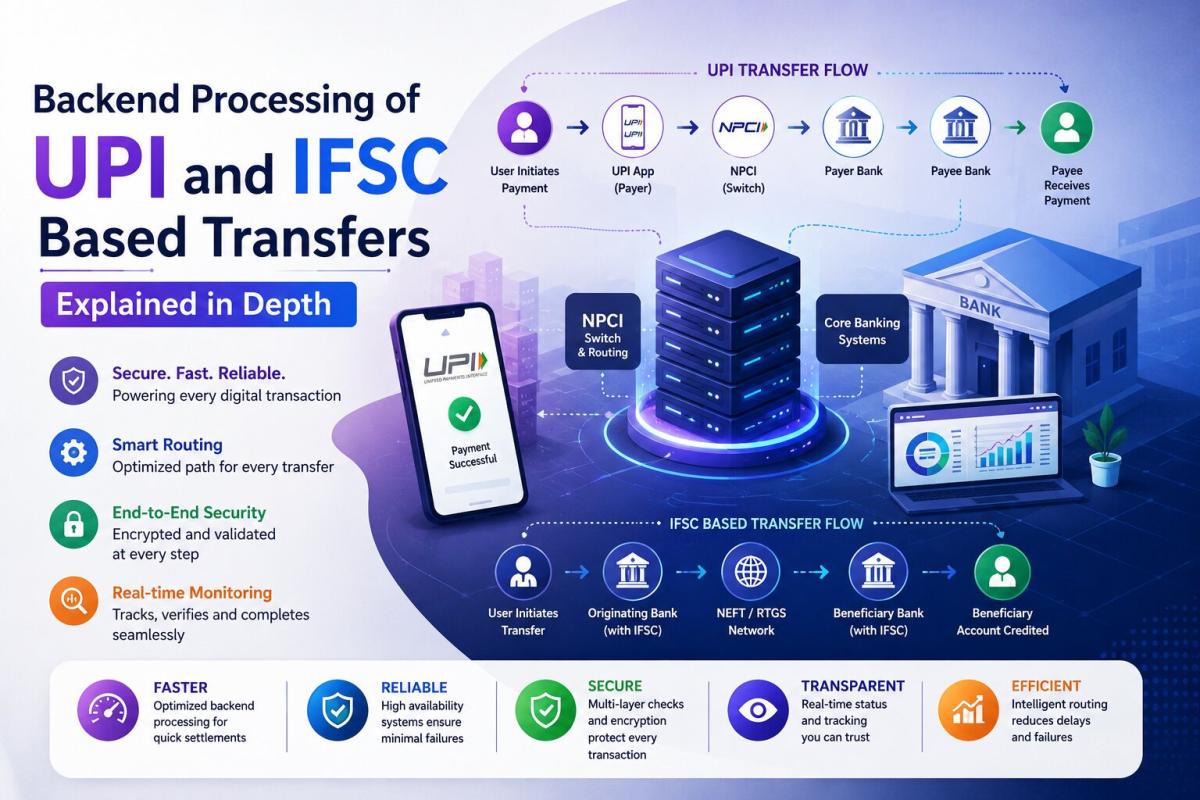
Backend Processing of UPI and IFSC Based Transfers Explained in Depth
Explore the backend processing of UPI and IFSC-based transfers, comparing real-time APIs, batch settlement systems, and how NPCI and RBI power secure digital payments in India.
Arjun Sharma
Content Lead – Banking & Payments
Published on May 06, 2026
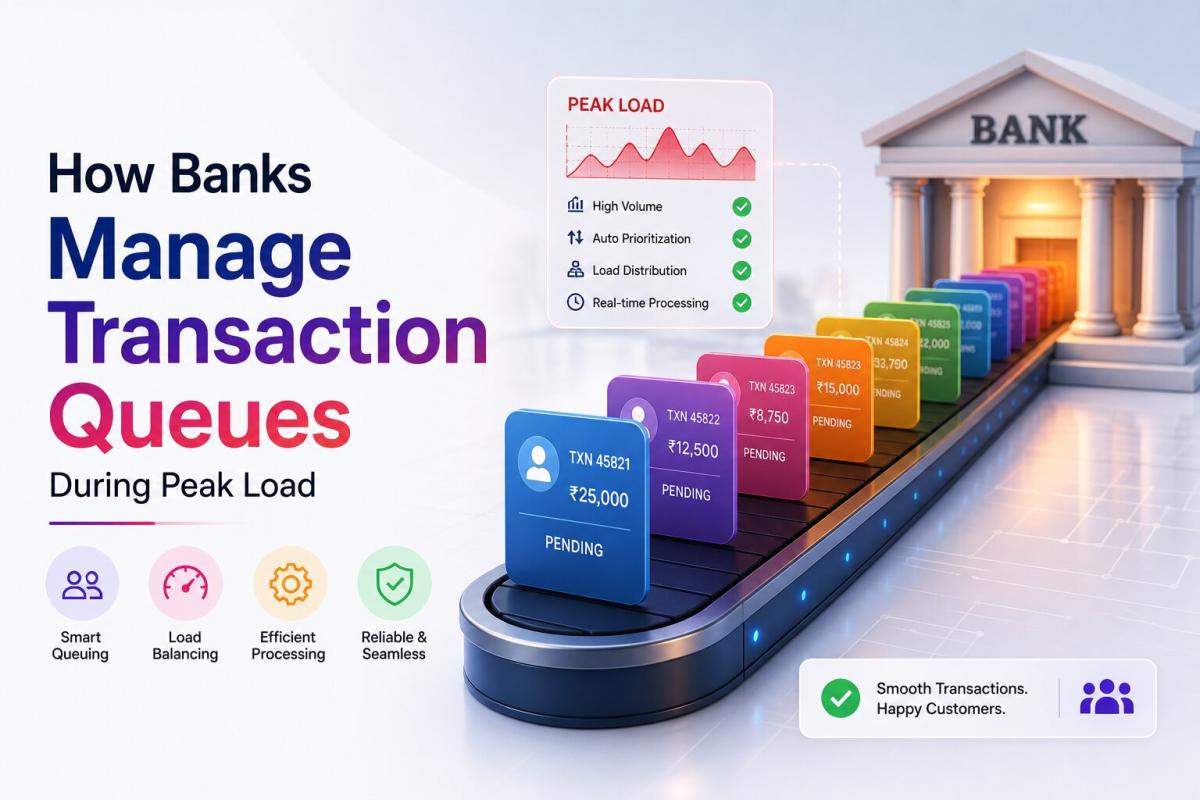
How Banks Manage Transaction Queues During Peak Load
Learn how banks manage transaction queues during peak load using distributed systems, priority queues, load balancing, and real-time processing to ensure fast and reliable payments. Author
Arjun Sharma
Content Lead – Banking & Payments
Published on May 06, 2026
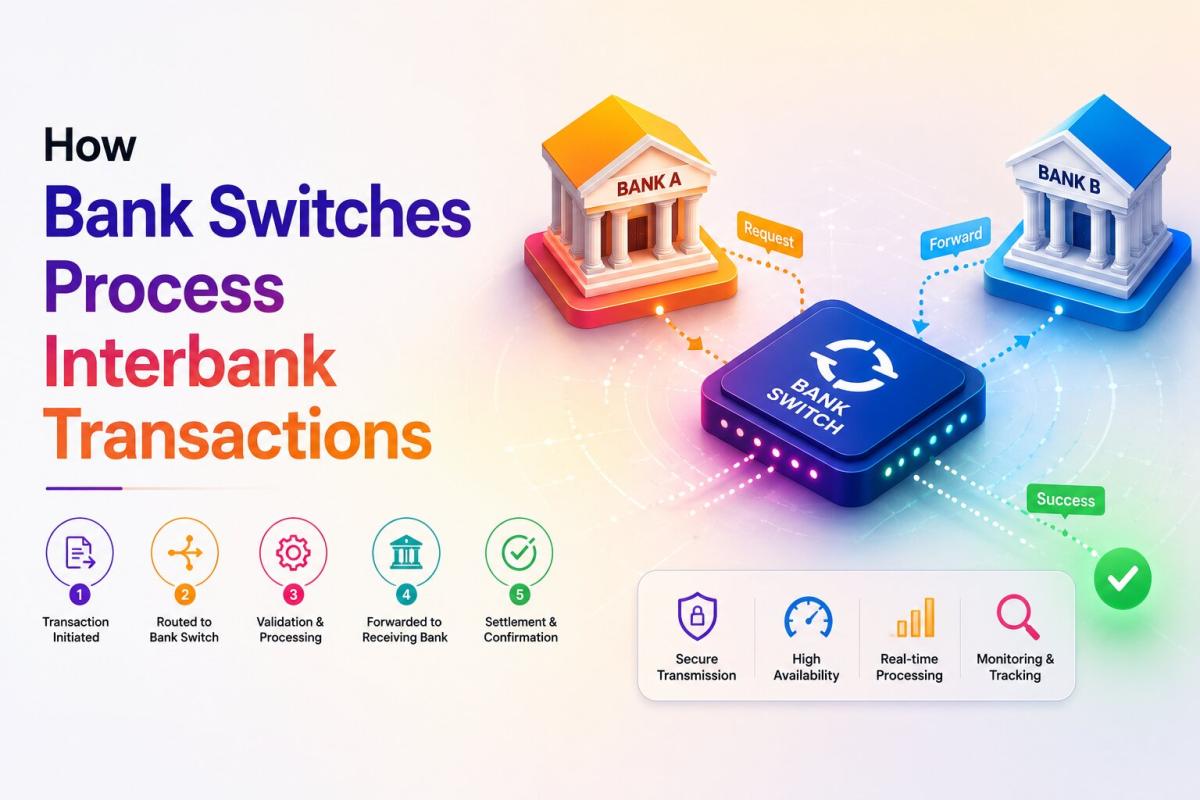
How Bank Switches Process Interbank Transactions
Learn how bank switches process interbank transactions by routing, authorizing, and securing payments between banks in real time using advanced switching systems and payment networks.
Arjun Sharma
Content Lead – Banking & Payments
Published on May 06, 2026
Technical Reasons Behind Delayed IMPS Transactions
Explore the technical reasons behind delayed IMPS transactions, including network latency, server downtime, bank processing delays, API failures, and high transaction volumes.
Arjun Sharma
Content Lead – Banking & Payments
Published on Apr 28, 2026
How Banks Sync Data Between Branches Instantly
Learn how banks sync data instantly across branches using core banking systems, real-time processing, high-speed networks, and secure database technologies.
Arjun Sharma
Content Lead – Banking & Payments
calculate Financial Calculators
EMI Calculator
FD Calculator
GST Calculator
Lumpsum Calculator
Mutual Fund Returns Calculator
PPF Calculator
RD Calculator
SIP Calculator
SWP Calculator
article Latest Blog Posts
ELSS vs PPF vs NPS: Which Tax-Saving Investment Gives the Best Returns?
Compare ELSS vs PPF vs NPS to find the best tax-saving investment. Understand returns, lock-in periods, and features to choose what suits your goals.
SIP & Investing • 11 MINS READ
How to Start SIP with ₹500 Per Month: Beginner's Guide to Mutual Funds
Learn how to start a SIP with ₹500 per month in mutual funds. Simple beginner’s guide to investing, building wealth, and growing money with small steps.
SIP & Investing • 13 MINS READ
Senior Citizen FD Rates 2026: Which Banks Offer the Highest Interest?
Compare senior citizen FD rates in 2026 and find which banks offer the highest interest. Learn about returns, tenures, and tips to choose the best FD.
FD, PPF & Savings • 12 MINS READ
Sukanya Samriddhi Yojana (SSY): Interest Rate, Rules & Calculator Guide 2026
Learn about Sukanya Samriddhi Yojana (SSY) including eligibility criteria, required documentation, step by step application process, tax benefits explanation and comparison b/w SSY, PPF and FD
FD, PPF & Savings • 11 MINS READ
2 reasons why online banking is important in today’s COVID-19 situation
Discover why online banking became essential during COVID-19. Learn how digital banking ensured safety, convenience, and uninterrupted financial services.
Digital Banking • 4 MINS READ