How Banks Use Fraud Detection Algorithms, Explained
Learn how banks use AI, machine learning, behavioral biometrics, and real-time monitoring to detect fraud, stop suspicious transactions, and protect customer accounts in 2026.
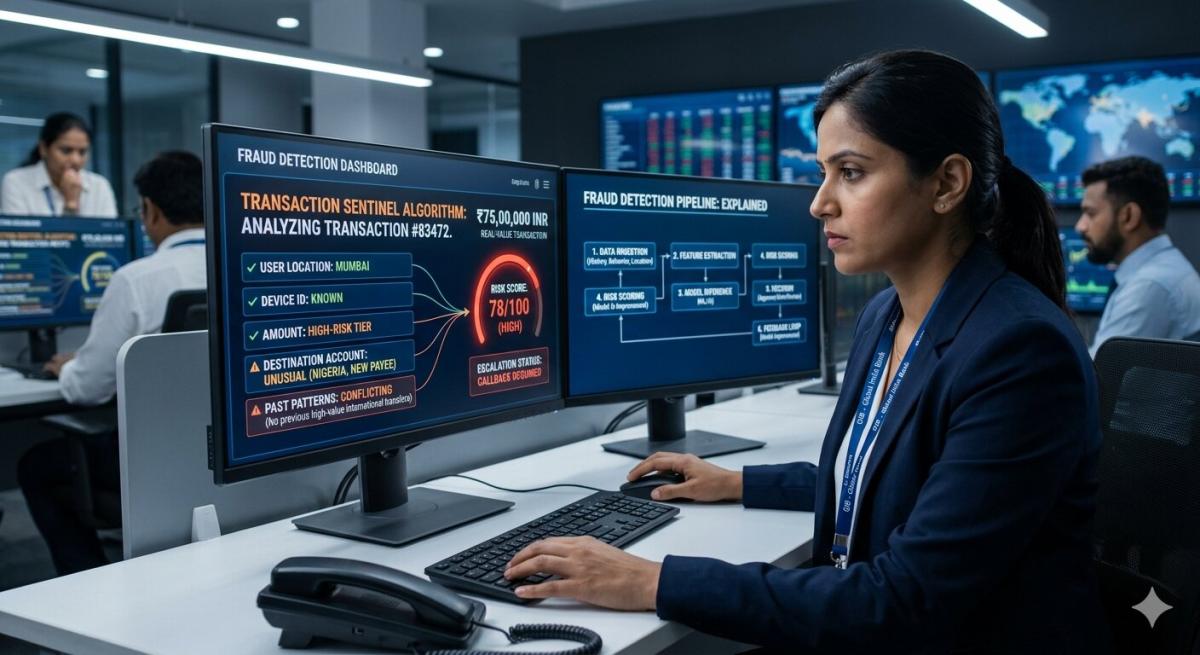
Table of Contents
I remember a few years ago, my bank called me about a suspicious transaction – a large online purchase from a retailer I’d never used, at 3 AM. Turns out, my card details had been compromised. It was a wake-up call, but also a testament to the incredible power of the fraud detection algorithms used by banks. These sophisticated systems are the unsung heroes working tirelessly behind the scenes, protecting our finances from increasingly cunning fraudsters. They’re not just lines of code; they’re our first line of defense, constantly evolving to stay ahead of criminal enterprises. Understanding how they work can offer immense peace of mind in our digital-first world.
The Evolution of Fraud Detection
For decades, fraud detection was largely a manual, reactive process, relying on human analysts sifting through transactions or simple, static rule-based systems. These early fraud detection algorithms were rudimentary, flagging transactions that exceeded a certain amount or occurred in unusual locations. While effective for basic scenarios, they were easily circumvented by sophisticated fraudsters and often generated a high number of false positives, inconveniencing legitimate customers. This approach was akin to using a blunt instrument when a surgeon’s scalpel was needed, proving increasingly inadequate as digital transactions soared.
Fast forward to 2026, and the landscape is dramatically different. Banks now leverage cutting-edge artificial intelligence and machine learning to power their fraud detection algorithms. This shift allows for proactive identification of suspicious activity, moving beyond static rules to dynamic, adaptive models. The sheer volume and complexity of data generated by modern banking necessitate these advanced computational methods, enabling banks to analyze millions of transactions in milliseconds, identifying subtle patterns that would be invisible to the human eye or simpler systems. It’s a constant arms race, and AI is our most powerful weapon.
Machine Learning’s Crucial Role
At the heart of modern fraud detection lies machine learning, a subset of AI that empowers systems to learn from data without explicit programming. Supervised learning models, for instance, are trained on vast datasets of historical transactions, labeled as either “fraudulent” or “legitimate.” The algorithm learns to identify features and patterns associated with known fraud, enabling it to classify new, unseen transactions with remarkable accuracy. This iterative learning process means the models continuously improve as more data becomes available, adapting to new fraud schemes as they emerge.
Unsupervised learning also plays a vital role, particularly in identifying novel forms of fraud that haven’t been seen before. These algorithms don’t rely on labeled data; instead, they cluster similar transactions and flag outliers – activities that deviate significantly from established norms. Imagine a transaction pattern suddenly shifting dramatically for a customer who typically makes small, local purchases, now buying high-value electronics internationally. An unsupervised model could detect this anomaly, even if it doesn’t fit a previously defined “fraud” category, providing an early warning system against emerging threats.
Behavioral Biometrics: A Deeper Dive
Beyond transaction data, banks are increasingly integrating behavioral biometrics into their fraud detection algorithms. This involves analyzing unique patterns in how users interact with their devices and banking applications. Think about the speed at which you type, the pressure you apply to your screen, your mouse movements, or even the way you hold your phone. These subtle, often subconscious behaviors create a unique digital fingerprint, incredibly difficult for fraudsters to replicate, even if they possess your login credentials. It’s a powerful layer of defense, making it harder for unauthorized users to masquerade as legitimate customers.
Understanding User Patterns
The beauty of behavioral biometrics lies in its ability to detect anomalies in real-time. If a user suddenly starts typing significantly slower, uses different navigation patterns, or accesses the account from an unfamiliar device with distinct interaction habits, the system can flag it. This goes beyond simple IP address checks, delving into the very essence of human interaction with digital interfaces. By continuously monitoring and learning each user’s typical behavior, these algorithms can swiftly identify deviations that suggest an account has been compromised, even before a suspicious transaction occurs. For more on this, you might check out resources from institutions like the Federal Reserve on fraud prevention initiatives.
Real-Time Transaction Monitoring
The speed at which fraud can occur today demands real-time detection capabilities. Imagine a stolen credit card being used across multiple online merchants within minutes. Traditional batch processing would be too slow, allowing significant damage to be done before detection. Modern fraud detection algorithms are designed for lightning-fast analysis, processing each transaction as it happens. This involves complex event processing and streaming analytics, where data is analyzed “in flight,” allowing banks to block suspicious transactions or issue immediate alerts before they are fully authorized.
Achieving real-time monitoring requires massive computational power and sophisticated infrastructure. Banks invest heavily in scalable cloud-based solutions and high-performance computing to handle the immense data throughput. The goal is to strike a delicate balance: identify genuine fraud instantly without introducing undue friction for legitimate customers. A false positive that delays a critical purchase can be just as frustrating as actual fraud, underscoring the importance of highly accurate, low-latency systems. This continuous, instantaneous vigilance is a hallmark of robust financial security in 2026.
Challenges and Future Trends
Despite the advancements, the battle against financial crime is far from over. Fraudsters are constantly innovating, employing new tactics like synthetic identity fraud and leveraging sophisticated social engineering techniques. One significant challenge for fraud detection algorithms is the rise of “adversarial AI,” where criminals use AI to bypass existing detection systems. This creates an ongoing arms race, requiring banks to continuously update and retrain their models, often incorporating techniques like explainable AI (XAI) to understand why a model makes a particular decision, improving trust and auditability.
Looking ahead, we’ll see even greater integration of diverse data sources, from open banking data to device telemetry, creating a more holistic view of customer behavior. Quantum computing, though still nascent, could eventually offer unprecedented processing power for even more complex models. The focus will also shift further towards predictive analytics – not just detecting fraud, but predicting where and how it might occur next. Collaboration across the financial industry, sharing anonymized threat intelligence, will also be crucial in building a collective defense against global fraud networks, as highlighted by organizations like Eurojust in their fight against financial fraud.
Key Takeaways
- Evolution from Reactive to Proactive: Banks have moved from simple rule-based systems to sophisticated AI and machine learning models that proactively identify and prevent fraud in real-time, adapting to new threats as they emerge.
- The Power of Machine Learning: Both supervised learning (trained on labeled data) and unsupervised learning (identifying anomalies) are critical. They enable algorithms to learn from vast datasets, detect subtle patterns, and flag unknown fraud types, constantly refining their accuracy.
- Behavioral Biometrics as a Key Defense Layer: Analyzing unique user interaction patterns (typing speed, mouse movements, device usage) adds a powerful, difficult-to-replicate layer of security. This helps detect account compromise even before a transaction is attempted, based on deviations from normal behavior.
- Continuous Innovation is Essential: The fight against fraud is an ongoing arms race. Banks must continually invest in advanced technologies, including explainable AI and predictive analytics, and foster industry collaboration to stay ahead of increasingly sophisticated fraudsters and adversarial AI tactics.
Frequently Asked Questions
How do banks distinguish between legitimate unusual spending and actual fraud?
This is where the sophistication of modern fraud detection algorithms truly shines. They don’t just flag “unusual” activity; they analyze a multitude of factors in real-time. This includes your typical spending habits, geographical locations, merchant types, transaction frequency, and even the device you’re using. If an unusual transaction aligns with other known legitimate behaviors (e.g., you’re traveling and using your card, which the bank might know), it’s less likely to be flagged. Conversely, a combination of unusual factors, like a large international purchase from a new merchant at an odd hour, using a new device, raises a higher alert.
Can fraud detection algorithms make mistakes?
Yes, absolutely. While incredibly accurate, no system is perfect. Fraud detection algorithms can sometimes generate “false positives,” meaning a legitimate transaction is flagged as fraudulent. This might lead to your card being temporarily declined or your bank calling you to verify a purchase. Conversely, a “false negative” occurs when actual fraud slips through undetected, though this is far less common with advanced systems. Banks continuously refine their models to minimize both types of errors, aiming for the highest possible accuracy while reducing customer inconvenience.
How do banks keep their fraud detection systems up-to-date with new fraud schemes?
Keeping pace with evolving fraud schemes is a continuous, multi-faceted effort. Banks constantly feed new data into their machine learning models, allowing them to learn from the latest successful and attempted fraud cases. They also employ dedicated teams of data scientists and fraud analysts who monitor emerging trends, share intelligence with industry peers and law enforcement, and actively update the algorithms’ parameters. Some models even have adaptive learning capabilities, automatically adjusting to new patterns without direct human intervention, ensuring they remain effective against the newest threats.
What role do customers play in helping these algorithms?
Customers play a crucial role, often without realizing it! Every time you confirm a legitimate transaction that was flagged by your bank, or report an unauthorized charge, you’re providing valuable feedback that helps train and improve the algorithms. Furthermore, practicing good cybersecurity habits – like using strong, unique passwords, enabling two-factor authentication, and being wary of phishing attempts – significantly reduces the chances of your account being compromised in the first place, making the algorithms’ job easier and more effective. Your vigilance is a key part of the overall defense.
Conclusion
The intricate world of fraud detection algorithms is a testament to human ingenuity in the face of persistent threats. These sophisticated systems, powered by advanced AI and machine learning, are the silent guardians of our financial well-being, constantly evolving to outsmart increasingly cunning fraudsters. From analyzing transaction patterns to understanding our unique digital behaviors, banks are deploying every available tool. While the battle against financial crime will undoubtedly continue, relentless innovation ensures our money remains secure in an ever-connected digital landscape.
Related Blogs

Published on May 06, 2026
How Bank Audit Systems Track Every Transaction Step
Discover how bank audit systems track every transaction step using audit trails, real-time logging, and AI monitoring to ensure transparency, fraud detection, and regulatory compliance.
Priya Nair
Senior Compliance Editor at IFSC.co
Published on May 06, 2026
Technical Architecture of Secure Online Banking Systems
Explore the technical architecture of secure online banking systems, including layered security, encryption, authentication, APIs, and fraud detection that protect digital transactions.
Priya Nair
Senior Compliance Editor at IFSC.co
Published on Apr 28, 2026
How Banks Verify Account Holder Identity Before Transfer
Learn how banks verify account holder identity before transfers using KYC, OTP, biometrics, and real-time fraud detection to ensure secure and compliant digital transactions.
Priya Nair
Senior Compliance Editor at IFSC.co
Published on Apr 28, 2026
What Causes Silent Bank Transaction Failures Without Alert
Discover the key causes of silent bank transaction failures, including network timeouts, API issues, system delays, and how banks resolve these hidden payment errors.
Priya Nair
Senior Compliance Editor at IFSC.co
Published on Apr 28, 2026
Real Time Bank Transaction Authentication Process Explained
Understand how real-time bank transaction authentication works using OTP, biometrics, encryption, and AI-driven fraud detection to secure digital payments instantly.
Priya Nair
Senior Compliance Editor at IFSC.co
calculate Financial Calculators
EMI Calculator
FD Calculator
GST Calculator
Lumpsum Calculator
Mutual Fund Returns Calculator
PPF Calculator
RD Calculator
SIP Calculator
SWP Calculator
article Latest Blog Posts
ELSS vs PPF vs NPS: Which Tax-Saving Investment Gives the Best Returns?
Compare ELSS vs PPF vs NPS to find the best tax-saving investment. Understand returns, lock-in periods, and features to choose what suits your goals.
SIP & Investing • 11 MINS READ
How to Start SIP with ₹500 Per Month: Beginner's Guide to Mutual Funds
Learn how to start a SIP with ₹500 per month in mutual funds. Simple beginner’s guide to investing, building wealth, and growing money with small steps.
SIP & Investing • 13 MINS READ
Senior Citizen FD Rates 2026: Which Banks Offer the Highest Interest?
Compare senior citizen FD rates in 2026 and find which banks offer the highest interest. Learn about returns, tenures, and tips to choose the best FD.
FD, PPF & Savings • 12 MINS READ
Sukanya Samriddhi Yojana (SSY): Interest Rate, Rules & Calculator Guide 2026
Learn about Sukanya Samriddhi Yojana (SSY) including eligibility criteria, required documentation, step by step application process, tax benefits explanation and comparison b/w SSY, PPF and FD
FD, PPF & Savings • 11 MINS READ
2 reasons why online banking is important in today’s COVID-19 situation
Discover why online banking became essential during COVID-19. Learn how digital banking ensured safety, convenience, and uninterrupted financial services.
Digital Banking • 4 MINS READ