Multi-Layer Security in Digital Banking: How It Protects Your Finances
Learn how multi-layer security in digital banking uses MFA, encryption, fraud detection, firewalls, and compliance measures to protect your finances in 2026.
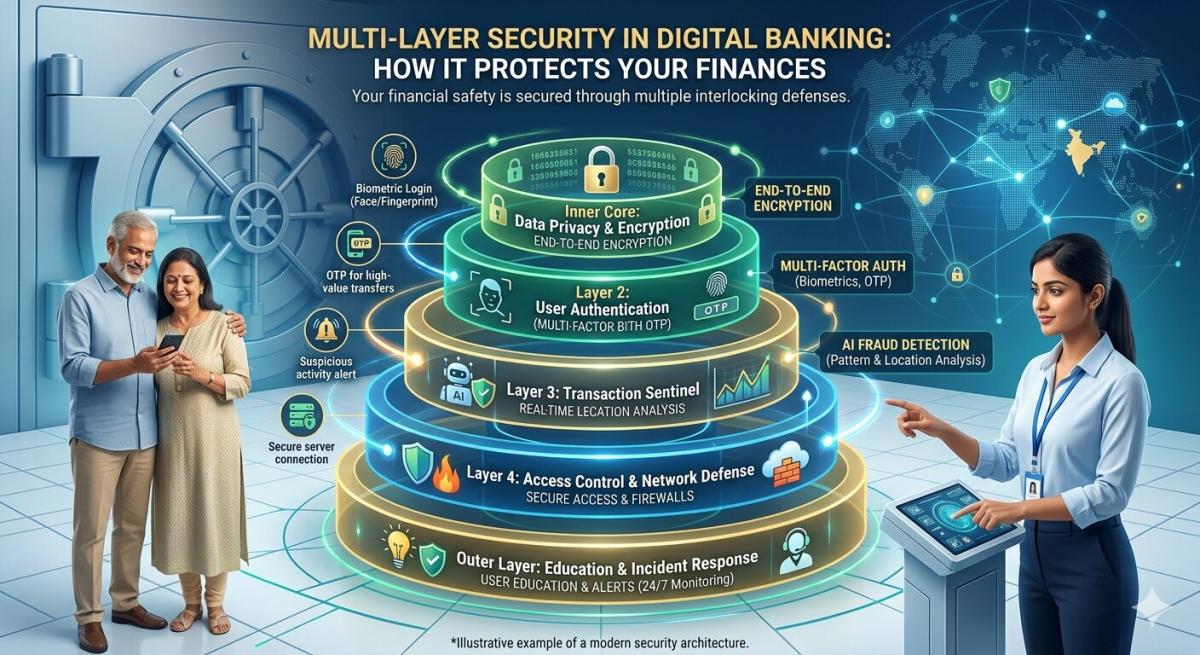
Table of Contents
- The Foundation: Strong Authentication
- Securing the Digital Highway: Encryption and Network Protection
- The Human Element: User Education and Fraud Detection
- The Power of Behavioral Analytics
- Inside the Vault: Secure Infrastructure and Data Protection
- Regulatory Compliance and Incident Response
- Key Takeaways
- Frequently Asked Questions
- Conclusion
I once spoke with a seasoned cybersecurity expert who confessed that even he, with decades of experience, occasionally feels a shiver down his spine when thinking about the sheer ingenuity of cybercriminals. It’s a sobering thought, but one that underscores the monumental task financial institutions face daily. In the rapidly evolving digital landscape, understanding multi-layer security in digital banking is no longer just for IT professionals; it’s crucial knowledge for everyone who trusts their finances to an app or a website. We’re talking about a sophisticated, interwoven tapestry of defenses, meticulously designed to protect your assets from an ever-growing array of threats. This article will pull back the curtain on these intricate systems, explaining how banks construct their digital fortresses to keep your money safe in an increasingly complex world.
The Foundation: Strong Authentication
At the very heart of multi-layer security in digital banking lies robust user authentication. This isn’t just about choosing a complex password, though that’s certainly a vital first step. Modern banking systems employ sophisticated algorithms to verify identity, often requiring a combination of elements you know (like a password or PIN), something you have (such as a registered mobile device or a hardware token), and increasingly, something you are (biometrics like fingerprints or facial recognition). This initial gatekeeper is continuously strengthened, adapting to new attack vectors and ensuring that only legitimate users gain access to their accounts.
The true power of authentication, however, shines through with Multi-Factor Authentication (MFA). Imagine trying to unlock a vault that requires not just one key, but two or three distinct keys from different sets. That’s MFA. It significantly elevates security by demanding verification through at least two independent methods before granting access. Even if a cybercriminal manages to steal your password, they’d still need access to your phone or your biometric data, making unauthorized entry exponentially harder. As we look towards 2026, MFA is becoming an indispensable standard, protecting millions from common phishing and credential stuffing attacks.
Securing the Digital Highway: Encryption and Network Protection
Think of your financial data traveling across the internet like a valuable package on a highway. Without proper protection, it’s vulnerable to interception. This is where data encryption steps in, transforming your sensitive information into an unreadable code during transit and when stored. Banks use industry-standard protocols like Transport Layer Security (TLS) to encrypt all communications between your device and their servers, ensuring that your account numbers, transaction details, and personal information remain private and impervious to eavesdropping. This commitment to encryption is a non-negotiable pillar of digital banking security.
Beyond individual data packets, the entire network infrastructure is guarded by an array of sophisticated defenses. Firewalls act as digital bouncers, meticulously controlling incoming and outgoing network traffic, blocking suspicious connections, and ensuring that only authorized data flows through. Complementing these are Intrusion Detection and Prevention Systems (IDPS), which constantly monitor for malicious activities, identify potential threats, and can even automatically block attacks in real-time. These proactive network safeguards form a crucial layer, creating a formidable barrier against external breaches and unauthorized access attempts into the bank’s core systems.
The Human Element: User Education and Fraud Detection
While technology forms the backbone of multi-layer security in digital banking, the human element remains a critical, and often the most vulnerable, link. Banks invest heavily in user education, providing resources and warnings about common cyber threats like phishing, social engineering, and malware. They understand that an informed customer is their best defense against scams designed to trick individuals into divulging sensitive information. Empowering users with the knowledge to recognize and report suspicious activity adds an invaluable, active layer to the overall security posture, reinforcing the collective defense.
The Power of Behavioral Analytics
One of the most impressive modern layers of defense is the application of advanced behavioral analytics and Artificial Intelligence (AI) in fraud detection. These systems continuously monitor billions of transactions and user behaviors, learning what constitutes “normal” activity for each customer. If a transaction occurs at an unusual time, from an unfamiliar location, or involves an uncharacteristic amount, the system flags it immediately for review or even blocks it outright. This proactive, intelligent layer can detect and prevent fraud in real-time, often before the customer even realizes their account might be compromised, adapting to new patterns faster than human analysts ever could.
Inside the Vault: Secure Infrastructure and Data Protection
The digital “vaults” where your financial data resides are protected by an array of physical and logical security measures that would make a spy movie proud. Data centers are fortified with biometric access controls, 24/7 surveillance, and environmental monitoring, ensuring physical integrity. Logically, access to sensitive systems is strictly controlled through principles like “least privilege” – meaning employees only have access to the information and systems absolutely necessary for their job roles. Data segregation further ensures that different types of information are isolated, minimizing the impact if one segment were ever compromised.
Maintaining this secure infrastructure is an ongoing process of vigilance and improvement. Banks regularly engage independent third-party experts to conduct comprehensive security audits, penetration testing, and vulnerability assessments. These proactive exercises simulate real-world cyberattacks, allowing institutions to identify and patch potential weaknesses before malicious actors can exploit them. This continuous cycle of testing, learning, and hardening is crucial, ensuring that security protocols remain robust against the latest threats and that the bank’s defenses are always a step ahead. For more insights on securing web applications, resources like the OWASP Foundation offer valuable guidelines.
Regulatory Compliance and Incident Response
The financial industry is one of the most heavily regulated sectors globally, and for good reason. Regulations like GDPR, PCI DSS, and national banking acts (e.g., those enforced by the FDIC in the U.S. or the European Central Bank) mandate stringent security standards for protecting customer data and financial transactions. These compliance requirements aren’t just bureaucratic hurdles; they serve as a powerful external layer of security, compelling banks to implement best practices, conduct regular risk assessments, and maintain a high level of accountability. Adherence to these standards is routinely audited, ensuring ongoing vigilance.
Despite the most robust multi-layer security, no system is entirely impervious to sophisticated attacks or unforeseen vulnerabilities. This is why a well-defined and rehearsed incident response plan is another critical layer. When a security incident occurs, banks must quickly contain the breach, eradicate the threat, recover affected systems and data, and learn from the experience to prevent future occurrences. Transparent communication with affected customers and regulatory bodies is also paramount, rebuilding trust and upholding accountability. This proactive preparedness, including collaboration with entities like CISA, ensures resilience even in the face of adversity, preparing institutions for challenges well into 2026 and beyond.
Key Takeaways
- Multi-layer security in digital banking is a comprehensive strategy combining technology, processes, and user education, not a single solution.
- Strong authentication, particularly Multi-Factor Authentication (MFA), is your most critical personal defense against unauthorized access.
- Advanced technologies like encryption, AI-driven fraud detection, and network firewalls work tirelessly behind the scenes to protect your data and transactions.
- Regulatory compliance and continuous security audits ensure banks maintain high standards and adapt to evolving cyber threats.
Frequently Asked Questions
What is multi-layer security in digital banking?
Multi-layer security refers to the practice of implementing several independent security measures to protect digital banking systems and customer data. Instead of relying on a single defense, it creates multiple barriers that an attacker would need to overcome, significantly increasing the difficulty of a breach. This layered approach ensures that if one defense fails, others are still in place to protect sensitive information.
Why is Multi-Factor Authentication (MFA) so important for online banking?
MFA is crucial because it adds a significant layer of security beyond just a password. Even if a criminal manages to steal your password (e.g., through phishing), they still wouldn’t be able to access your account without the second factor, such as a code sent to your phone or a biometric scan. This makes it exponentially harder for unauthorized individuals to gain access, protecting your account from many common cyberattacks.
Can I truly be 100% safe online with multi-layer security?
While multi-layer security makes digital banking incredibly secure, no system can guarantee 100% absolute safety. New threats emerge constantly, and human error can sometimes create vulnerabilities. However, banks are continuously enhancing their defenses, and by combining their robust security with your own vigilance (e.g., using strong passwords, being wary of scams), you can achieve an exceptionally high level of safety for your online banking activities.
How often do banks update their security protocols and systems?
Banks operate in a dynamic threat landscape, so their security protocols are under constant review and are updated frequently. This isn’t a yearly event but an ongoing process, often happening weekly or even daily, as new vulnerabilities are discovered and new technologies emerge. They conduct regular audits, penetration tests, and monitor global threat intelligence to ensure their systems remain resilient against the latest cyber threats, looking ahead to advancements in 2026 and beyond.
Conclusion
The intricate world of multi-layer security in digital banking is a testament to the dedication of financial institutions to protect your money and personal information. It’s a complex, ever-evolving ecosystem where technology, human vigilance, and regulatory oversight converge to create a formidable defense. While no system is entirely impervious, understanding these layers empowers you as a user and reinforces the confidence we place in our digital financial lives. As technology progresses, so too will these defenses, ensuring that the digital vault remains secure for years to come.
Related Blogs
Published on May 06, 2026
How Bank Audit Systems Track Every Transaction Step
Discover how bank audit systems track every transaction step using audit trails, real-time logging, and AI monitoring to ensure transparency, fraud detection, and regulatory compliance.
Priya Nair
Senior Compliance Editor at IFSC.co
Published on May 06, 2026
Technical Architecture of Secure Online Banking Systems
Explore the technical architecture of secure online banking systems, including layered security, encryption, authentication, APIs, and fraud detection that protect digital transactions.
Priya Nair
Senior Compliance Editor at IFSC.co
Published on Apr 28, 2026
How Banks Verify Account Holder Identity Before Transfer
Learn how banks verify account holder identity before transfers using KYC, OTP, biometrics, and real-time fraud detection to ensure secure and compliant digital transactions.
Priya Nair
Senior Compliance Editor at IFSC.co
Published on Apr 28, 2026
What Causes Silent Bank Transaction Failures Without Alert
Discover the key causes of silent bank transaction failures, including network timeouts, API issues, system delays, and how banks resolve these hidden payment errors.
Priya Nair
Senior Compliance Editor at IFSC.co
Published on Apr 28, 2026
Real Time Bank Transaction Authentication Process Explained
Understand how real-time bank transaction authentication works using OTP, biometrics, encryption, and AI-driven fraud detection to secure digital payments instantly.
Priya Nair
Senior Compliance Editor at IFSC.co
calculate Financial Calculators
EMI Calculator
FD Calculator
GST Calculator
Lumpsum Calculator
Mutual Fund Returns Calculator
PPF Calculator
RD Calculator
SIP Calculator
SWP Calculator
article Latest Blog Posts
ELSS vs PPF vs NPS: Which Tax-Saving Investment Gives the Best Returns?
Compare ELSS vs PPF vs NPS to find the best tax-saving investment. Understand returns, lock-in periods, and features to choose what suits your goals.
SIP & Investing • 11 MINS READ
How to Start SIP with ₹500 Per Month: Beginner's Guide to Mutual Funds
Learn how to start a SIP with ₹500 per month in mutual funds. Simple beginner’s guide to investing, building wealth, and growing money with small steps.
SIP & Investing • 13 MINS READ
Senior Citizen FD Rates 2026: Which Banks Offer the Highest Interest?
Compare senior citizen FD rates in 2026 and find which banks offer the highest interest. Learn about returns, tenures, and tips to choose the best FD.
FD, PPF & Savings • 12 MINS READ
Sukanya Samriddhi Yojana (SSY): Interest Rate, Rules & Calculator Guide 2026
Learn about Sukanya Samriddhi Yojana (SSY) including eligibility criteria, required documentation, step by step application process, tax benefits explanation and comparison b/w SSY, PPF and FD
FD, PPF & Savings • 11 MINS READ
2 reasons why online banking is important in today’s COVID-19 situation
Discover why online banking became essential during COVID-19. Learn how digital banking ensured safety, convenience, and uninterrupted financial services.
Digital Banking • 4 MINS READ